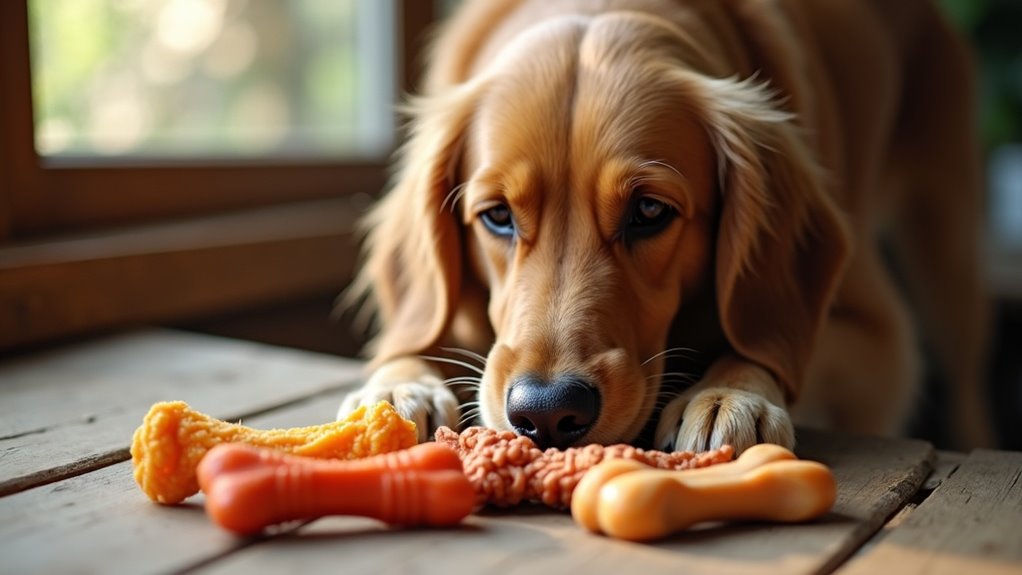
To encourage your picky dog to eat, establish a consistent feeding schedule by offering meals at the same times each day and removing any uneaten food after 15-30 minutes. Enhance the appeal of their food by adding flavorful toppers or warming it slightly. Create a distraction-free environment for meals, and monitor portion sizes carefully. If your dog’s appetite decreases or if you notice other symptoms, it might be time to consult a vet for further insights.
Key Takeaways
- Establish a consistent feeding schedule to create routine and expectations around mealtime.
- Enhance food appeal by adding toppers like fresh meat, warming food, or mixing wet and dry kibble.
- Optimize the eating environment by providing a distraction-free, comfortable space for your dog to eat.
- Monitor portion sizes and limit high-calorie treats to maintain your dog’s appetite for main meals.
- Consult a vet if appetite changes persist, as it may indicate underlying health issues.
Establish a Consistent Feeding Schedule
Establishing a consistent feeding schedule can greatly improve your picky dog’s eating habits, as it creates a routine that they can rely on.
Offer your dog’s feeding at the same times each day to encourage your dog to adapt. Allow food to sit out for only 15-30 minutes during mealtime to stimulate their appetite.
Avoid leaving food out all day, which can lead to picky eater behavior and diminish urgency. Designated mealtimes reinforce the expectation of food availability, helping to regulate their food habits.
Monitor closely and adjust the feeding schedule to align with your dog’s preferences for best results.
Enhance Food Appeal
To encourage your picky dog to eat, enhancing the appeal of their meals can be a game changer. Try adding food toppers like fresh meat or vegetables to boost flavor. Warming their food slightly or mixing in broth can increase aroma, enticing their appetite. Experiment with different protein sources and mix wet food with dry kibble to improve texture. Regularly rotating flavors and toppers can stave off boredom. Here’s a quick reference:
| Food Enhancer | Benefit |
|---|---|
| Fresh Meat or Veggies | Enhances flavor |
| Warm Water or Broth | Increases aroma |
| Mixing Wet & Dry | Improves texture and taste |
Optimize the Eating Environment
Creating an inviting eating environment can make a significant difference in encouraging your picky dog to enjoy their meals.
Designate a distraction-free area for feeding, ensuring it’s safe and comfortable for your dog. Place the food bowl in a consistent location to promote familiarity and routine, which can help improve their eating habits.
For senior or arthritic dogs, consider using elevated feeding bowls to make mealtime easier. Experiment with different spots, like cozy corners or their crate, to find where your dog feels most at ease.
A calm, comfortable eating space fosters a positive association with mealtime for picky eaters.
Monitor Portion Sizes and Treats
While it’s tempting to give your picky dog extra treats, monitoring portion sizes and the types of snacks you offer is essential for promoting healthy eating habits.
Assess your dog’s caloric needs based on their weight and activity level to determine appropriate food portions. Measure meals accurately to avoid overfeeding.
Limit high-calorie treats, as they can decrease your dog’s appetite for main meals. Monitor their total daily calorie intake, including treats, and establish a meal routine by feeding at set times.
Remove uneaten food after 15-30 minutes to encourage your dog to eat when food is offered.
Identify and Address Health Concerns
Monitoring portion sizes and the types of treats you give your picky dog is important, but it’s equally essential to pay attention to any changes in their appetite.
If your dog suddenly shows disinterest in eating, consider the possibility of underlying medical issues. Concerned about your dog’s health? A decrease in appetite lasting over 12 to 24 hours warrants a veterinary evaluation.
Sudden disinterest in food may signal health issues; consult your vet if appetite decreases for more than 12 to 24 hours.
Common reasons include dental disease, kidney problems, or gastrointestinal issues. Additionally, food allergies or sensitivities might play a role.
Keep an eye out for symptoms like vomiting or lethargy to provide your vet with valuable information for ensuring your dog’s good health.