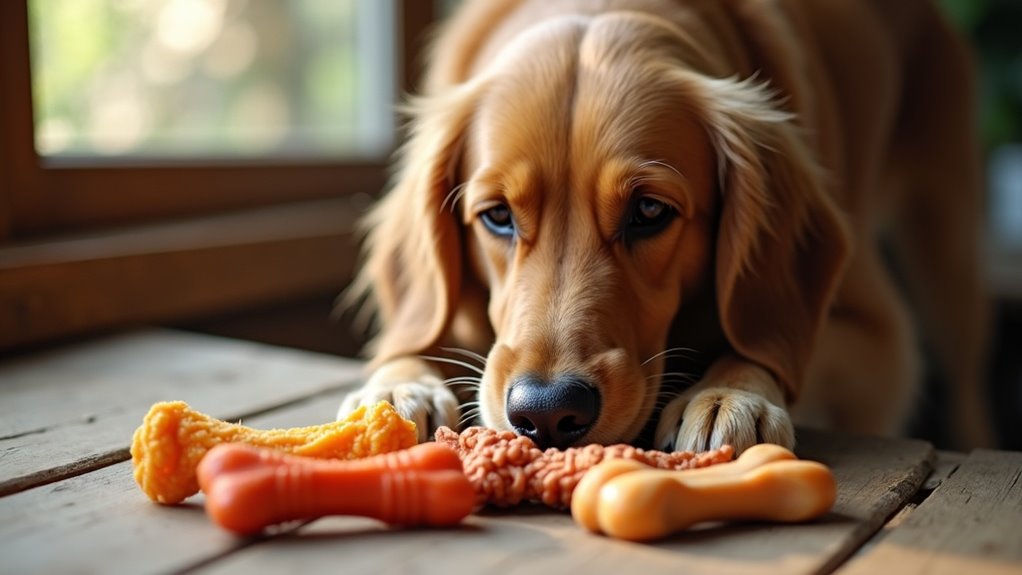
To sanitize dog toys properly, start by cleaning them regularly based on usage. For plush toys, machine wash on a gentle cycle or hand wash with a vinegar solution and air dry completely. For rubber, nylon, and plastic toys, soak them in diluted dish soap and warm water for ten minutes, scrubbing afterwards. Always rinse thoroughly to remove soap. Keep an eye on visible dirt or odors, as you might need to replace toys. Discover more effective methods and tips!
Key Takeaways
- Clean plush toys in a washing machine on a gentle cycle or by hand with a vinegar solution for effective sanitation.
- Use a diluted dish soap solution to soak rubber, nylon, and plastic toys for at least 10 minutes to eliminate bacteria.
- Scrub all toys thoroughly with a brush to ensure all surfaces are sanitized and free from dirt.
- Rinse toys well to remove any soap residue, preventing ingestion and ensuring safety for your pet.
- Replace toys with visible mold, unpleasant odors, or significant wear to maintain your dog’s health and safety.
Understanding the Importance of Sanitizing Dog Toys
When you consider how often your dog plays with their toys, it’s alarming to realize that these items can harbor harmful bacteria like E. coli and staph.
Regularly cleaning your dog’s toys is essential for preventing health risks not only for your pet but also for your family. Dog toys can become a breeding ground for bacteria, yeast, and mold, compromising overall health.
Recommended Cleaning Frequency for Dog Toys
To keep your dog’s toys safe and clean, you should establish a cleaning frequency based on how often they’re used.
Regularly inspect for signs of contamination, such as odors or visible dirt, and clean or replace any toys that show wear.
Frequency Based on Use
Regularly evaluating how often your dog plays with their toys is essential for maintaining cleanliness and hygiene. The frequency of cleaning your dog’s toys directly impacts their health. Here’s a quick reference:
| Use Frequency | Cleaning Routine | Notes |
|---|---|---|
| Daily | Clean weekly | Reduces bacteria buildup |
| Occasionally | Clean monthly | Maintain hygiene |
| Outdoor | Clean after each use | Remove contaminants |
Adjust your cleaning schedule based on visible dirt, odors, or wear and tear. Tailoring your routine helps guarantee your dog’s toys remain safe and enjoyable for playtime.
Signs of Contamination
How can you tell if your dog’s toys need cleaning?
Watch for signs of contamination like unpleasant odors, visible dirt, or mold growth. If you notice any discoloration, it’s a clear indication that it’s time for a thorough clean.
For hygiene, clean plush toys at least once a month and hard chew toys every two weeks to prevent harmful bacteria buildup. Heavy chewers should have their toys inspected regularly; replace dog toys that show signs of wear or damage.
Additionally, a lack of interest from your dog may suggest their toys are dirty, so don’t hesitate to clean or replace them.
Rotating Cleaning Schedule
Establishing a rotating cleaning schedule for your dog’s toys is essential to guarantee their playthings remain safe and hygienic.
For toys used daily, adopt a weekly cleaning schedule to prevent bacteria buildup and maintain hygiene.
Moderately used toys require cleaning bi-weekly or monthly, depending on visible dirt or odors.
Lightly used toys can generally be cleaned monthly or as needed.
Always consider the frequency of use and your dog’s slobbering habits when planning.
This approach not only helps sanitize dog toys but also promotes overall health, ensuring a fresh supply of clean toys is always available for your dog to enjoy.
Effective Methods for Cleaning Plush Toys
When it comes to cleaning plush toys, knowing the right methods can make all the difference in maintaining their integrity and hygiene.
You can either machine wash them on a gentle cycle or opt for hand washing with a vinegar solution, depending on the toy’s care instructions.
After cleaning, make sure you air-dry the toys completely to prevent mold and keep them safe for your furry friend.
Washing Machine Guidelines
To keep your dog’s plush toys clean and safe, machine washing can be an effective method, provided you follow some essential guidelines.
First, always check the manufacturer’s care instructions to verify the toys are machine-safe. Place plush dog toys in a mesh laundry bag and use a gentle cycle with pet-safe detergent. Wash them in hot water to effectively kill bacteria and viruses.
For toys with squeakers, consider hand washing instead to prevent damage. After washing, it’s best to air dry the toys, as this reduces moisture that could lead to mold while keeping them intact.
Hand Washing Techniques
For plush toys that can’t withstand machine washing or for those needing a gentler touch, hand washing is an ideal option. You can create a cleaning solution using equal parts water and white vinegar, which safely disinfects without harming your pets. Remember to use pet-safe detergents or skip detergent entirely. After washing, rinse thoroughly to eliminate any residue that could be harmful. To prevent mold growth, air dry the toys completely before returning them to the toy bin. Regular hand washing at least once a month is essential to maintain hygiene and reduce dirt and bacteria buildup.
| Step | Action | Purpose |
|---|---|---|
| 1. Prepare | Mix water and white vinegar | Create a cleaning solution |
| 2. Wash | Submerge and gently scrub | Remove dirt and bacteria |
| 3. Rinse | Rinse thoroughly | Eliminate harmful residues |
| 4. Dry | Air dry completely | Prevent mold growth |
| 5. Store | Return to toy bin | Maintain hygiene |
Drying Methods Explained
While drying plush toys might seem straightforward, selecting the right method is vital to confirm hygiene and longevity.
Always make sure toys are thoroughly rinsed to remove soap residue before drying. For effective results, consider using a dryer on a low-heat setting, but skip dryer sheets to avoid harmful residues.
Air-drying completely is essential to prevent mold growth; placing them in direct sunlight can enhance disinfection benefits through UV light. Additionally, using a fan in the drying area helps enhance airflow, speeding up the drying cycle.
Best Practices for Cleaning Rubber, Nylon, and Plastic Toys
Cleaning rubber, nylon, and plastic dog toys is essential for maintaining your pet’s health and hygiene.
To effectively sanitize these toys, use a diluted solution of dish soap and warm water. Soak them for at least 10 minutes to eliminate bacteria, then scrub with a brush.
If preferred, you can also place them on the top rack of the dishwasher, adhering to manufacturer instructions. Always rinse thoroughly to remove soap residue, which can be harmful if ingested.
Regular cleaning every two weeks minimizes bacterial buildup, ensuring your dogs enjoy their rubber, nylon, and plastic toys safely and cleanly.
Tips for Maintaining Rope Toy Hygiene
To keep your dog’s rope toys hygienic and safe, it’s essential to establish a regular cleaning routine. Follow these tips to maintain their hygiene:
- Soak rope toys in a solution of warm water and white vinegar or a mild detergent to remove dirt and eliminate bacteria.
- Wash them in a pillowcase or laundry bag to prevent fraying.
- Inspect rope toys regularly for signs of wear, like discoloration or unraveling.
- Air dry completely after cleaning, as moisture can promote bacterial growth and mold.
Recognizing When to Replace Dog Toys
How can you tell when it’s time to say goodbye to your dog’s toys? Start by recognizing when to replace them.
Check for visible mold, unpleasant odors, or accumulated dirt—these indicate health risks. If toys are frayed, torn, or worn-out, they can pose choking hazards or lead to ingestion of harmful materials, so discard them immediately.
Additionally, if your dog shows a lack of interest in certain toys, it might be time to replace them to keep them engaged.
Finally, for excessively dirty toys that cleaning won’t fix, prioritize your pet’s safety and hygiene by replacing them.