
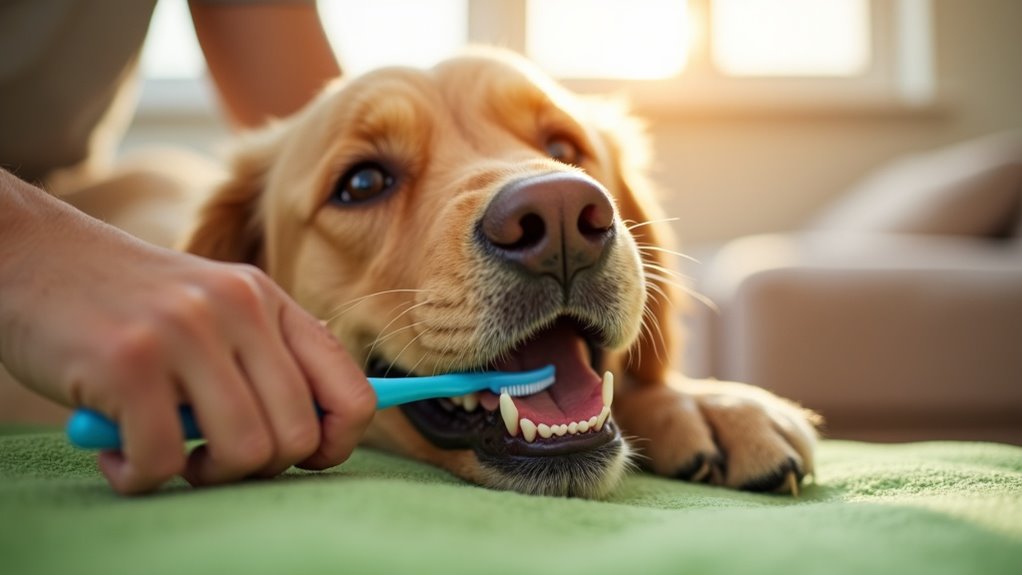
To brush your dog’s teeth safely, use dog-specific toothpaste and a soft-bristled toothbrush. Start by lifting their lips and brushing at a 45-degree angle to the gum line. Aim for daily brushing, gradually increasing to two minutes. For puppies, introduce the toothbrush gently, while older dogs may need a gradual approach with positive reinforcement. Alongside brushing, consider dental chews and rinses to support their oral health. Discover more effective techniques and alternatives to guarantee your dog’s dental hygiene.
Key Takeaways
- Use dog-specific toothpaste and a soft-bristled toothbrush to avoid harmful ingredients and ensure gentle cleaning.
- Start by lifting your dog’s lips to expose their teeth, focusing on plaque-prone areas.
- Brush at a 45-degree angle to the gum line with light pressure, aiming for daily brushing sessions.
- Incorporate positive reinforcement, such as treats or praise, to create a comfortable and enjoyable experience.
- For alternatives, consider dental chews, finger polishing, or oral rinses to maintain dental hygiene without brushing.
Importance of Dental Hygiene for Dogs
Dental hygiene is essential for your dog’s overall health and well-being. Over 80% of dogs over three years old suffer from periodontal disease, beginning with gingivitis caused by plaque buildup.
Plaque can form on your dog’s teeth just hours after a meal, leading to tartar within a day. Regular brushing is critical to prevent this buildup, as untreated periodontal disease can cause painful tooth loss and serious health issues.
Establishing a brushing routine not only enhances your dog’s oral hygiene but also contributes to their happiness. Aim for daily brushing, or at least three times a week, for ideal dental care.
Recommended Tools for Brushing
When it comes to brushing your dog’s teeth, having the right tools can make all the difference in ensuring a positive experience for both you and your furry friend.
Use dog-specific pet toothpaste, as human varieties can harm them. Choose a specialized toothbrush with soft bristles, or try a finger brush for better control and to detect dental issues.
For smaller or sensitive dogs, a soft-bristled toothbrush designed for babies may be suitable. Always consult your veterinarian for tailored recommendations on dental health products that address your dog’s needs, effectively combating plaque and tartar while making dental cleanings easier.
Techniques for Effective Brushing
Brushing your dog’s teeth effectively requires a few essential techniques to secure their dental health. Start by gently lifting your dog’s lips to expose their teeth, focusing on areas prone to plaque. Use a soft-bristle toothbrush with pet-safe toothpaste. Brush at a 45-degree angle to the gum line, applying light pressure. Aim for daily brushing, gradually increasing to two minutes. Reward your dog with praise or treats to foster a positive experience.
| Step | Action | Purpose |
|---|---|---|
| Lift Lips | Expose teeth | Target plaque |
| Choose Tools | Soft-bristle toothbrush | Prevent gum disease |
| Brush Technique | 45-degree angle, light pressure | Secure thorough cleaning |
Training Puppies and Older Dogs
When training your puppy to accept tooth brushing, start early by letting them nibble on a finger or toothbrush to create positive associations.
For older dogs, be patient and gradually introduce brushing, using pet-friendly toothpaste to build their comfort level.
Always incorporate positive reinforcement, such as praise and treats, to make the experience enjoyable and encourage cooperation.
Start Early With Puppies
Starting dental care early with your puppy can make all the difference in their acceptance of tooth brushing later in life.
By introducing teeth brushing as part of their daily routine, you create a positive association. Here are three effective strategies:
- Use a finger brush: This helps develop bite control and allows you to give feedback during training.
- Incorporate tasty canine-friendly toothpaste: This makes brushing enjoyable and encourages cooperation.
- Turn it into a fun trick: Utilize your puppy’s natural inclination to nibble to make the experience both comfortable and rewarding.
Brush your dog’s teeth regularly for ideal dental health!
Be Patient With Seniors
Though older dogs may be set in their ways, adapting them to a tooth-brushing routine is entirely possible with patience and care.
Start by letting your senior dog lick pet toothpaste off your finger, creating a positive association with the process. Once they’re comfortable, gently introduce the toothbrush, using soft motions to minimize stress.
Monitor their comfort level, adjusting your approach as needed. Incorporate dental treats as rewards and praise them during brushing sessions to make it enjoyable.
With consistent practice, you’ll help your senior dog feel relaxed about dental care, ensuring their mouth stays healthy and happy.
Positive Reinforcement Techniques
To guarantee your dog feels comfortable with tooth brushing, employing positive reinforcement techniques is essential. By fostering a positive association, you’ll make the process enjoyable.
Here are three effective strategies:
- Start Early: Let puppies nibble on a finger with pet-safe toothpaste to kick off a brushing routine.
- Reward Calm Behavior: For older dogs, use treats to reward calm behavior during mouth handling and brushing.
- Praise Consistently: Incorporate frequent praise and small rewards throughout the session to reinforce good dental habits.
Establish a regular brushing schedule, and watch your dog thrive in this new, stress-free routine!
Alternatives to Brushing
While brushing your dog’s teeth is the gold standard for maintaining oral health, there are several effective alternatives if your pup is resistant to the process.
Consider using dental chews approved by the Veterinary Oral Health Council, which can effectively reduce plaque.
Using Veterinary Oral Health Council-approved dental chews can significantly help in reducing plaque buildup in your dog’s mouth.
Finger polishing with pet-specific toothpaste allows for gentle cleaning using your fingers.
Dental treats containing C.E.T. enzymes help promote oral health without brushing.
Incorporating oral rinses or water additives can also maintain dental hygiene, reducing plaque and freshening breath.
For severe issues, don’t hesitate to seek professional dental cleaning from your veterinarian for a thorough solution.
When to Seek Professional Help
Knowing when to seek professional help for your dog’s dental health is essential for preventing serious issues.
Pay attention to these signs:
- Persistent bad breath or noticeable tartar buildup indicates the need for professional teeth cleaning.
- If your dog shows fear or resistance to brushing, it may be time for a veterinary check-up to assess potential dental disease.
- Pain while eating or sensitivity in the mouth requires immediate consultation with a veterinarian to guarantee your pet receives appropriate care.
Regular check-ups can help maintain your large dogs’ dental health and prevent severe issues, guaranteeing happy, healthy pets.






