
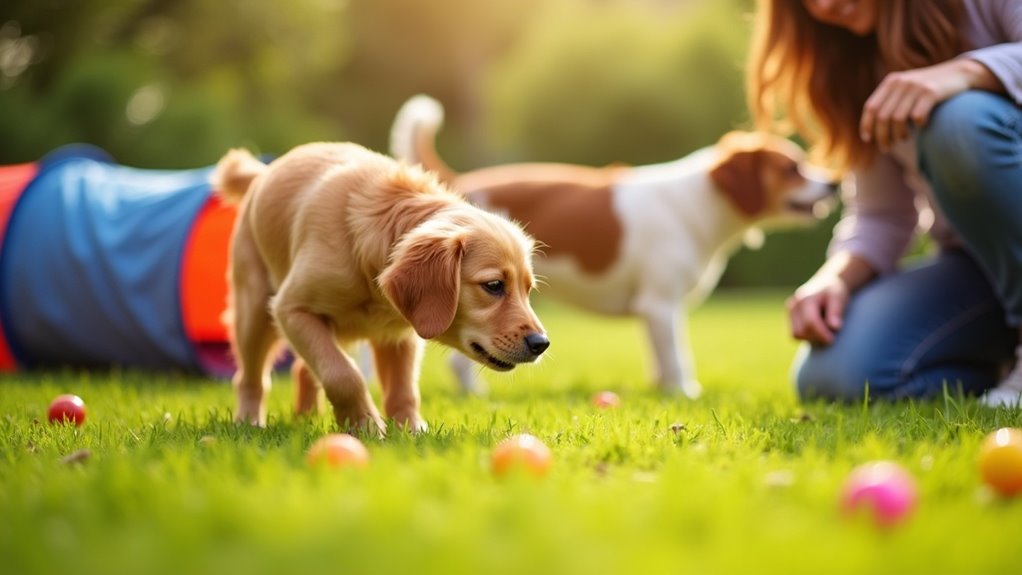
Confidence-building exercises for shy dogs can make a real difference in their anxiety levels. Try teaching them the “two feet on” command to boost their self-assurance, or the “middle” command to create a safe space during stressful moments. Engage them in the “cone game” for exploration, and introduce “cardboard chaos” to familiarize them with new textures. Tossing treats can also redirect anxious behavior, promoting curiosity. You’ll discover even more helpful strategies to support your furry friend.
Key Takeaways
- Teach the “two feet on” command to encourage your dog to confidently engage with their environment.
- Use the “middle” command to provide a safe space during stressful situations, fostering a sense of security.
- Play the “cone game” to promote exploration and independence in new settings.
- Introduce “cardboard chaos” to help your dog adapt to various textures and sounds, building resilience.
- Toss treats away to redirect anxious behavior, encouraging your dog to explore and interact positively.
Signs of Dog Anxiety
When you notice your dog acting differently, it’s essential to pay attention, as these changes can signal anxiety.
Your dog’s body language may reveal signs of low confidence, like a tucked tail or crouching posture, indicating fear. You might also see them panting, shaking, or excessively licking their lips, all signs of discomfort.
Yawning when not tired can signal unease, and excessive barking or trembling often occurs in overwhelming situations.
Recognizing these signs is vital, as understanding your dog’s anxiety can help you build confidence through supportive interventions and exercises tailored to their needs.
Causes of Low Confidence in Dogs
Recognizing signs of anxiety in your dog can help identify underlying issues, such as low confidence.
The causes of low confidence in dogs often stem from traumatic experiences or inadequate socialization during the vital development window of 3 to 14 weeks. Some breeds may naturally exhibit cautious behaviors due to genetic predisposition.
Overwhelming environments and excessive stimuli can heighten anxiety, making adaptation tough. Additionally, your own reactions and anxiety levels can markedly affect your dog’s confidence.
Understanding these factors is essential in building confidence through effective dog training, ensuring your furry friend feels secure and ready to face new experiences.
Importance of Confidence Building
Building confidence in your dog is essential, as it not only enhances their behavior but also enriches your relationship. By focusing on confidence building, you can help your dog thrive in various situations.
- Encourages positive experiences
- Reduces anxiety and fear-related issues
- Improves social skills with humans and other animals
- Fosters exploration and curiosity
- Strengthens your bond based on trust
When you prioritize confidence, you set your dog up for success. A confident dog engages more fully, learns commands effectively, and ultimately becomes a happier companion, enhancing both their life and yours.
Recommended Confidence Building Exercises
To help your shy dog gain confidence, incorporating specific exercises into your routine can make a significant difference.
Teaching the “two feet on” command encourages your dog to place their paws on surfaces, boosting their self-assurance.
Teaching the two feet on command helps your dog gain confidence by encouraging them to explore new surfaces.
The “middle” command offers security by positioning them between your legs during stressful moments.
Engage in the “cone game” to promote exploration and independence, while “cardboard chaos” exposes them to new textures and sounds.
Finally, tossing treats away can reset anxious behavior, encouraging exploration and a relaxed mindset.
These confidence building exercises are essential for helping fearful dogs thrive in various environments.
Utilizing Positive Reinforcement
While it’s natural for shy dogs to feel apprehensive in new situations, utilizing positive reinforcement can greatly boost their confidence. By rewarding your dog with treats or praise immediately after they show bravery, you help them understand which behaviors to repeat.
Here are some tips to build your dog’s confidence:
- Use consistent rewards for specific actions.
- Celebrate small achievements, like exploring new areas.
- Reinforce positive experiences during challenging situations.
- Make certain your dog feels safe by avoiding punishment.
- Gradually expose them to new experiences while providing encouragement.
This approach fosters a supportive environment where your dog can thrive.
Monitoring Progress
Monitoring your dog’s progress is essential for building their confidence.
Track Behavioral Changes
Tracking behavioral changes in your shy dog is essential for understanding their journey toward confidence. Keeping a journal helps you monitor progress and identify triggers or improvements over time.
Pay attention to subtle signs that indicate how your dog feels in various situations, allowing you to adapt training techniques effectively.
- Note specific reactions to different stimuli
- Regularly assess comfort levels during exercises
- Celebrate small victories to boost motivation
- Adjust confidence-building activities as needed
- Reflect on improvements to reinforce positive behavior
Set Achievable Goals
Recognizing the progress your shy dog makes is essential, and setting achievable goals can guide this journey.
Break down larger objectives into smaller, manageable tasks, like allowing your dog to approach a new person from a set distance. This way, you can monitor progress effectively.
Keep a journal to document your dog’s behaviors and reactions; it’ll help you see improvements over time. As you observe changes in confidence, like increased exploration or reduced anxiety, you can determine the next step to take.
Celebrate Small Milestones
As you guide your shy dog through their journey of building confidence, it’s crucial to celebrate small milestones along the way. Acknowledging these achievements won’t only help your dog feel better but also strengthen the bond you share.
Here are some ways to monitor progress:
- Keep a journal of your dog’s behavior and reactions.
- Celebrate achievements like meeting new people or exploring new places.
- Set achievable goals, like learning a new trick.
- Observe changes in body language and reactions.
- Acknowledge even minor milestones to boost self-esteem.
Each celebration reinforces positive behavior and encourages growth!






