
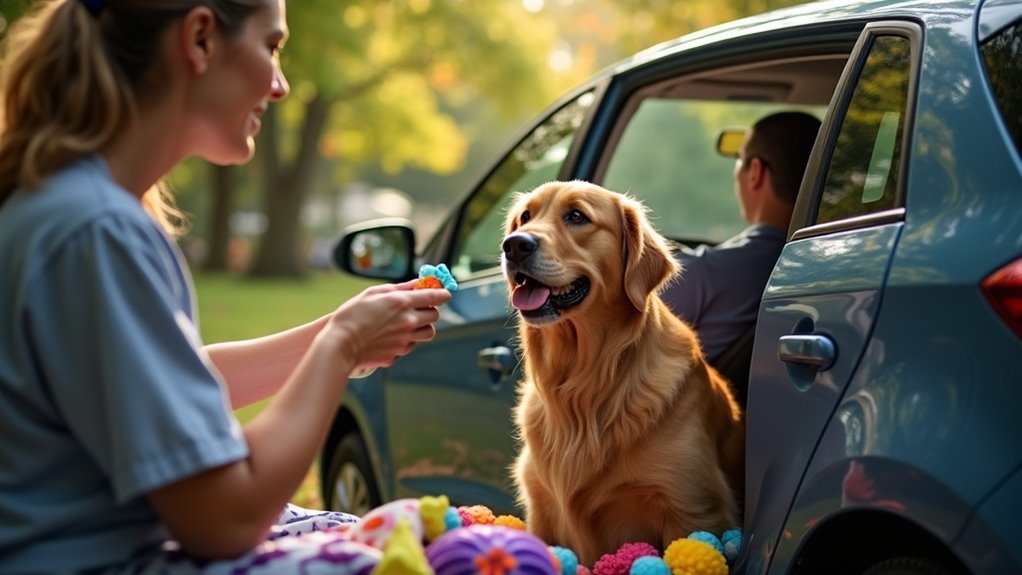
To desensitize your dog for car vet visits, start by creating positive associations with the car. Allow exploration and reward calm behaviors. Gradually expose them to the car environment, beginning with short trips around the block and using treats for good behavior. Prepare for vet visits by familiarizing them with the car and incorporating comforting items. Remember, each step builds confidence, leading to a smoother experience at the vet. You’ll discover more effective strategies to ease this process.
Key Takeaways
- Allow your dog to explore the parked car to create a sense of safety and familiarity.
- Conduct short, positive car rides, rewarding calm behavior with treats and praise.
- Gradually introduce the car environment by sitting inside with the engine off before starting it.
- Incorporate familiar items like blankets to provide comfort during car rides.
- Schedule vet visits during quieter times and take non-vet-related trips to reduce anxiety.
Understanding Your Dog’s Fear of Car Rides
Understanding your dog’s fear of car rides is essential, especially if you’ve noticed signs of anxiety during travel. Many dogs experience heightened stress due to unfamiliar environments, particularly during vet visits.
Past negative experiences, like painful procedures, can amplify this fear. The sensation of motion, confined space, and unusual sounds in the car contribute further to their anxiety.
You’ll likely observe signs such as panting, whining, or drooling, indicating that your dog needs support. Recognizing these triggers is the first step toward helping your furry friend feel more comfortable, ensuring a smoother experience during car rides and vet visits.
Creating Positive Associations With the Car
Creating positive associations with the car is essential for easing your dog’s anxiety and transforming their perception of car rides.
Start by letting your dog explore the vehicle with the doors open, fostering a safe environment. Gradually introduce short car rides, rewarding them with treats and praise afterward to build positive associations.
Allow your dog to explore the car freely, then gradually take short rides, rewarding them to create positive experiences.
Consider using a special treat they only receive during these rides to enhance excitement. Incorporate playtime with their favorite toys inside the car, reinforcing that it can be a fun space.
Consistently practice loading and unloading, rewarding calm behavior to guarantee stress-free interactions before that important car vet visit.
Gradual Exposure to Car Environment
As you begin the process of desensitizing your dog to the car environment, it’s crucial to take things one step at a time, ensuring your furry friend feels safe and comfortable.
Start by letting your dog explore the parked car, allowing them to sniff and investigate without pressure. Gradually introduce short periods of sitting inside the car with the engine off, rewarding them to create positive associations.
Once they’re at ease, start the engine while stationary, reinforcing calm behavior. Monitor stress levels closely, and always end each session positively, setting the stage for a successful car vet visit.
Short Trips to Build Confidence
Short trips can be a game changer for your dog’s confidence in the car.
By gradually exposing them to brief rides and using positive reinforcement, like treats and praise, you create a more enjoyable experience.
Remember to monitor their body language and adjust the trips accordingly to keep the process stress-free.
Gradual Car Exposure
While introducing your dog to the car can be a challenging task, gradual exposure through short trips can significantly build their confidence.
Start by letting them explore the vehicle in a calm environment, ensuring they feel safe. Take short trips around the block or to a nearby park, rewarding them with treats for staying calm.
Incorporate positive experiences by bringing favorite toys or treats to create a positive association with the car. Monitor your dog’s stress levels, ending sessions on a positive note to avoid anxiety.
As their confidence grows, gradually increase the duration and frequency of these trips.
Positive Reinforcement Techniques
Building on the gradual exposure to the car, positive reinforcement techniques can greatly enhance your dog’s comfort and confidence during short trips.
Start with brief rides around the block, rewarding your dog with treats and praise for staying calm. As their confidence builds, gradually increase trip durations.
Incorporate enjoyable stops, like a park or a pet store, to create positive associations with the car, making future vet visits less intimidating. Using a safe crate or harness can also help them feel secure.
Practicing these short trips at least twice a week reinforces positive feelings, aiding in effective desensitization.
Preparing for the Vet Visit
Preparing your dog for a vet visit requires thoughtful desensitization to make the experience less stressful. Start by introducing your dog to the car, allowing them to explore without the pressure of travel.
Use treats to reward calm behavior during short trips, gradually increasing the duration as they adjust. Frequently practice getting them in and out of the car, fostering positive associations.
Enhance comfort by including familiar items like their favorite blanket. Schedule veterinary visits during quieter times, and take non-vet-related car rides to help prepare your dog emotionally, reducing anxiety during their upcoming vet visit.
Tips for a Calm Journey
To guarantee a calm journey to the vet, it’s essential to create a stress-free environment from the moment you start the car. Allow your dog to explore the vehicle while it’s stationary, rewarding them with treats to foster positive associations.
Begin with short car rides to enjoyable destinations, gradually increasing their duration to help your dog feel comfortable. Utilize calming aids like pheromone sprays or anxiety wraps during car rides.
Confirm your dog’s safety with a crate or seatbelt harness, and maintain a calm demeanor while playing soothing music or using familiar scents to enhance the peaceful atmosphere.
Reinforcing Positive Behavior During the Visit
While you navigate the often-stressful environment of a vet visit, reinforcing positive behavior is essential for helping your dog feel secure and relaxed.
Consider these effective strategies:
- Use high-value, delicious treats exclusively for vet visits.
- Encourage vet staff to give treats, building rapport and reducing anxiety.
- Offer praise and gentle petting during examinations to create a soothing atmosphere.
- Gradually introduce handling exercises, rewarding calm responses with treats.






