
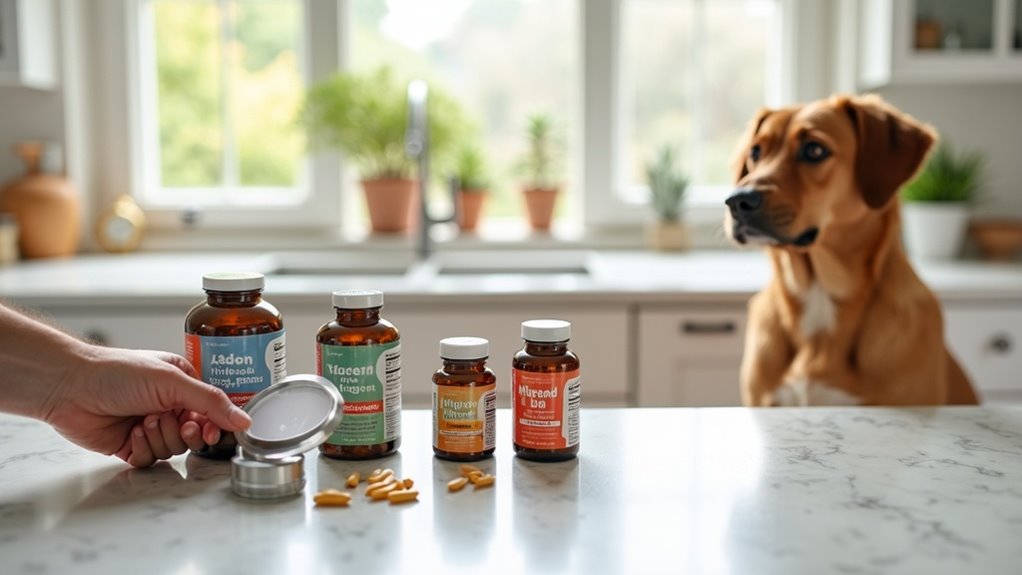
When selecting dog supplements, watch for unclear ingredient lists, exaggerated claims, and the absence of third-party testing. If you see vague terms or labels lacking essential information like specific ingredient amounts, be cautious. Also, poorly reviewed products or companies with questionable reputations raise red flags. Brands that lack transparency in sourcing or have no contact information for queries can signal potential issues. Understanding these aspects can help guarantee your pet’s health and safety. There’s more to explore on this topic.
Key Takeaways
- Look for vague terms like “proprietary blend” that may hide harmful additives or low-quality ingredients.
- Avoid products making exaggerated claims of instant relief or “cure all diseases” without scientific backing.
- Ensure the product has third-party testing and certifications to verify ingredient quality and safety.
- Check for consistent negative feedback or lack of veterinary endorsements, indicating potential reliability issues.
- Be wary of brands with poor customer service or transparency, which may reflect underlying quality concerns.
Unclear Ingredient Lists
When selecting dog supplements, it’s crucial to scrutinize ingredient lists, as unclear labeling can obscure harmful additives or allergens that may jeopardize your pet’s safety.
Always look for quality ingredients listed in descending order by quantity, ensuring active ingredients are clearly specified. If you encounter vague terms like “proprietary blend,” it’s a red flag; these can conceal ineffective or harmful components.
Products lacking specific amounts for each ingredient may compromise safety and effectiveness, risking overdosing or underdosing. Transparency in labeling reflects a manufacturer’s commitment to quality control, safeguarding your pet’s health and well-being.
Exaggerated Claims and “Miracle Cure” Promises
While it may be tempting to trust supplements that promise miraculous results, such claims are often misleading and lack scientific support. Products touting exaggerated claims frequently lack any credible research and may jeopardize your pet’s health. The FDA doesn’t regulate these assertions as strictly as pharmaceuticals, allowing vague language to proliferate. Remember, health benefits usually require time and consistency, not instant fixes. Approach any product claiming to be a miracle cure with caution.
| Claim Type | Example | Consideration |
|---|---|---|
| Exaggerated Claim | “Cures all diseases!” | Unfounded and misleading |
| Miracle Cure | “Instant relief!” | Lacks scientific backing |
| Health Benefits | “All-natural solution!” | Requires time to manifest |
Lack of Third-Party Testing and Certifications
Choosing dog supplements without third-party testing and certifications can pose significant risks to your pet’s health.
Third-party testing verifies that a product’s ingredients match the label, ensuring quality and safety. Supplements lacking certifications from reputable organizations may lack accountability, raising concerns about efficacy and potential contaminants.
Without a Certificate of Analysis (COA) from independent labs, you can’t confirm the supplement’s purity and potency. Products that skip third-party testing are more likely to contain harmful substances or inaccurate ingredient concentrations.
Reliable brands prominently display their testing results and certifications, empowering you to make informed choices for your dog’s well-being.
Insufficient Transparency in Ingredient Sourcing
When selecting dog supplements, you need to pay attention to ingredient origin disclosure.
Without clear information on where ingredients come from, you can’t effectively assess their quality or safety.
Brands that prioritize transparency typically outline their quality control standards and source verification practices, helping you make informed choices for your dog’s health.
Ingredient Origin Disclosure
Many consumers overlook the importance of ingredient origin disclosure in pet supplements, which can greatly impact their quality and safety. Transparency in sourcing is essential to avoid harmful additives and allergens, particularly in chewable forms. Without a Certificate of Analysis (COA), you can’t be sure of the ingredient purity or potency, raising serious concerns.
| Ingredient Type | Risks |
|---|---|
| Wild-Harvested | Contamination, legal restrictions |
| Commercially Cultivated | Reliable sourcing, correct ID |
| Unknown Origin | Potential harmful additives |
Choose reputable brands that disclose ingredient origins to make informed decisions for your pet’s health.
Quality Control Standards
Ingredient origin disclosure is just the starting point; quality control standards play a significant role in ensuring the safety and efficacy of dog supplements.
Insufficient transparency in sourcing information can lead to low-quality or untraceable ingredients, increasing contamination risks. Brands using vague terms like “natural” or “proprietary blend” often evade scrutiny, raising red flags about true ingredient quality.
Additionally, the absence of third-party testing or certifications signals potential issues, as reputable brands adhere to strict manufacturing standards. Products lacking lot numbers compromise traceability, making it difficult to address recalls or safety concerns effectively.
Choose wisely to protect your pet’s health.
Source Verification Practices
Although some brands claim to prioritize quality, a lack of transparency in ingredient sourcing can considerably undermine the safety and effectiveness of dog supplements. You should seek brands that clearly disclose their ingredient origins and provide Certificates of Analysis (COA) to guarantee purity and potency. Be cautious of vague terms like “natural,” as they can obscure ingredient quality.
| Source Verification Practices | Importance |
|---|---|
| Clear Ingredient Disclosure | Guarantees quality and traceability |
| COA Availability | Ensures purity and potency |
| Avoiding Vague Terms | Reduces risk of contamination |
| Wild Harvesting Transparency | Highlights potential legal risks |
| Quality Assurance | Enhances overall product safety |
Absence of Contact Information for Queries
How can you guarantee the safety and effectiveness of dog supplements if there’s no contact information provided? The absence of this vital detail raises red flags about product quality and transparency.
Here are key reasons to be cautious:
- Lack of accountability from the manufacturer.
- Difficulty contacting knowledgeable staff for ingredient inquiries.
- Challenges in reporting adverse reactions or clarifying usage.
- Potential risks to pet health without accessible support.
Choosing brands that prioritize customer service shows their commitment to the quality of their supplements for dogs.
Always look for clear contact information to guarantee you’re making informed decisions for your pet’s well-being.
Poor Reputation and Customer Reviews
When selecting dog supplements, pay close attention to the brand’s reputation and customer reviews.
Consistent negative feedback across platforms can indicate problems with product quality or effectiveness, while a lack of veterinary endorsements raises credibility concerns.
Additionally, transparency about ingredient sourcing is essential; brands that withhold this information may pose safety risks to your pet.
Brand Trustworthiness Factors
Choosing a dog supplement requires careful consideration of the brand’s trustworthiness, as a poor reputation can indicate potential issues with product quality or effectiveness.
Look for the following factors to assess brand credibility:
- Consistent positive reviews across multiple platforms
- Transparency in manufacturing practices and ingredient sourcing
- Veterinarian endorsements or scientific backing for products
- Reliable customer service with responsive support teams
Brands with negative reviews or limited transparency can reflect poorly on their reliability.
Prioritize established companies with a solid track record to guarantee you’re investing in a quality supplement for your dog’s health.
Red Flags in Ratings
While evaluating dog supplements, red flags in ratings and customer reviews can provide essential insights into product quality and effectiveness.
An overwhelming number of negative reviews, especially regarding adverse reactions or lack of results, often indicates low product effectiveness. Brands with consistently low ratings across platforms may signal systemic issues in manufacturing or ingredient sourcing.
Additionally, a lack of veterinary endorsements can question a supplement’s credibility. Frequent complaints about customer service, shipping delays, or refund difficulties further highlight a brand’s commitment to customer satisfaction.
Always scrutinize these factors to guarantee you’re choosing a reliable supplement for your dog.
Importance of Transparency
How can you guarantee the supplements you choose for your dog are safe and effective? Transparency is essential for ensuring product safety and quality.
Here are key indicators to take into account:
- Clear ingredient sourcing with specific amounts listed
- A history of positive customer reviews, free from negative feedback
- Easy access to customer support for inquiries
- Endorsements from veterinarians or pet care professionals
Brands lacking transparency often raise red flags about their commitment to quality.
Prioritize reliable and effective supplements to keep your furry friend healthy and happy. Don’t compromise on what goes into their bodies!






