
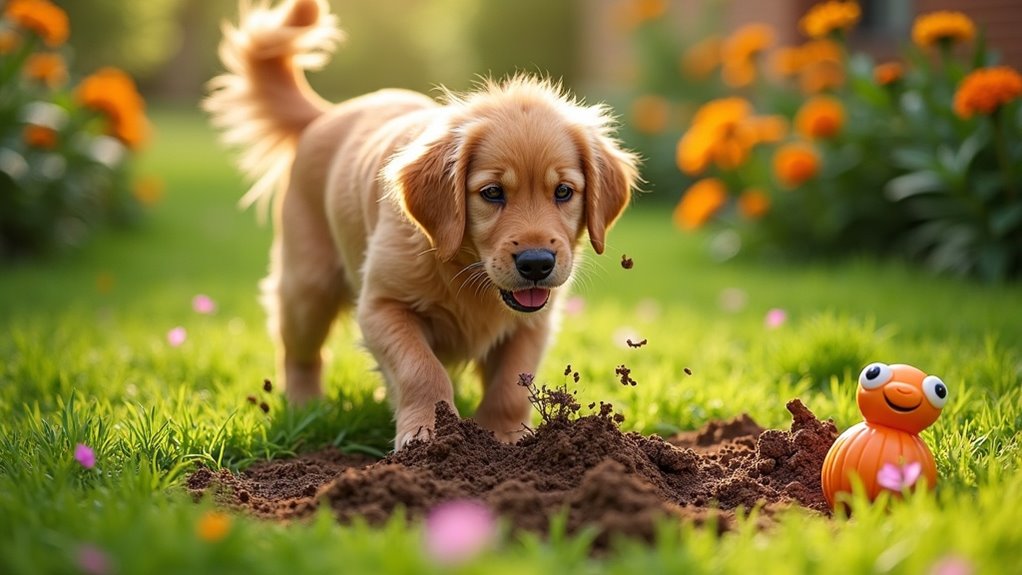
Dogs dig in gardens for several reasons, including their natural instincts to hunt small animals or insects. They may also create cool resting spots in hot weather or respond to boredom, anxiety, or excess energy. Certain breeds, like terriers and hounds, dig more due to their lineage. Understanding these motivations is key to addressing the behavior effectively. Exploring different strategies can help you manage and redirect this digging tendency in a more constructive way.
Key Takeaways
- Dogs dig in gardens to uncover small animals or insects, reflecting their natural hunting instincts.
- They may dig to create cool resting spots in the soil, especially during hot weather.
- Pregnant females dig to establish a safe den for their puppies.
- Emotional factors such as boredom, anxiety, or excess energy can drive dogs to dig.
- Breed-specific tendencies influence digging behavior, with terriers and scent hounds being particularly prone to it.
Motivations Behind Digging Behavior
While it might seem puzzling at first, understanding why dogs dig in the garden reveals a mix of instinctual behaviors and emotional needs.
Dogs dig to uncover small animals or insects, tapping into their natural instincts. They may also create cool resting spots in the soil, especially during hot weather.
Pregnant females often exhibit digging behavior to establish a safe den for their puppies.
Emotional factors like boredom, anxiety, or excess energy can drive this digging behavior, highlighting the need for mental stimulation.
Providing a designated digging area can help satisfy these instincts while preserving your garden.
Understanding Breed-Specific Digging Tendencies
Understanding the digging tendencies of dogs often hinges on their breed characteristics, as each breed has been developed with specific traits and instincts.
For instance, terriers excel at dog’s digging due to their bred instincts, while scent hounds like Beagles dig to track enticing scents.
Working breeds, such as Border Collies, may dig from boredom, necessitating mental stimulation and exercise.
Guardian breeds, like German Shepherds, often dig to create a cozy resting area or patrol their territory.
Strategies to Prevent Digging in the Garden
Managing your dog’s digging behavior in the garden requires a proactive approach tailored to their specific needs. To keep your dog from digging, increase their physical and mental stimulation through longer walks and interactive games.
Implement barriers like fencing or landscape rocks to shield your garden while allowing outdoor enjoyment. Supervise your dog closely and use commands like “leave it” to redirect unwanted digging.
Regularly assess your garden, removing enticing scents or items that attract digging. These strategies will help create a harmonious outdoor space, ensuring your dog remains entertained and engaged without compromising your garden.
Creating a Designated Digging Area
Creating a designated digging area can considerably reduce unwanted behavior in your garden, as it provides your dog with a specific space to indulge their natural instincts.
Establish a sandbox or a section of loose soil, burying puzzle toys or chews to encourage your dog to use this area for digging. Train your normal dog by guiding them there and rewarding them with praise when they dig in the approved spot.
Regularly monitor and assess this designated digging area to keep it engaging, reinforcing its use over time and preventing your dog from reverting to unwanted digging in other places.
Redirecting Digging Behavior Effectively
While dogs may dig for various reasons, effectively redirecting this behavior can help you maintain a harmonious garden.
Dogs dig for many reasons, but redirecting their behavior can ensure a peaceful garden.
To stop your dog from digging in undesired areas, consider these strategies:
- Establish a designated digging area, like a sandbox.
- Use positive reinforcement, rewarding them for digging in the right spot.
- Incorporate interactive toys and puzzles for mental stimulation.
- Supervise outdoor time and redirect them to the designated area.






