
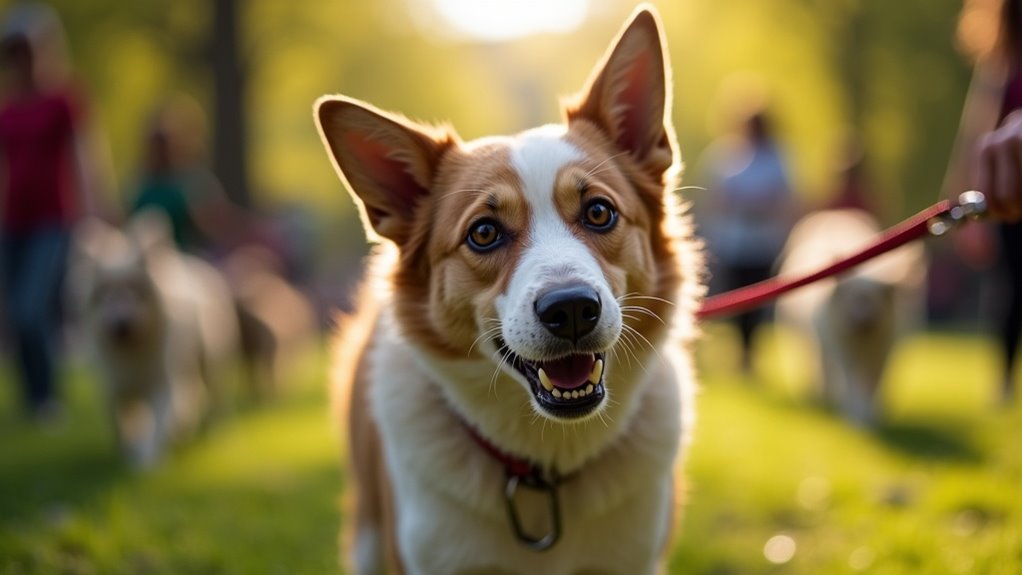
Some dogs become reactive on leash due to fear and anxiety. They often feel trapped, which amplifies their frustration, causing barking or lunging. This behavior isn’t about aggression; it’s an emotional response to perceived threats. Lack of socialization can worsen this, making unfamiliar sights seem threatening. A tight leash can signal stress, so keeping it loose may help. Understanding your dog’s triggers is key, and you’ll discover valuable insights to improve their behavior.
Key Takeaways
- Leash reactivity often stems from fear or anxiety, making dogs feel trapped and unable to escape perceived threats.
- Past negative experiences can create lasting anxiety, leading to heightened reactivity when encountering triggers.
- Lack of proper socialization during critical development periods can cause dogs to view unfamiliar people or dogs as threats.
- Handler stress and tension can transfer through the leash, amplifying the dog’s anxiety and reactivity.
- A tight leash can signal stress; maintaining a loose leash helps dogs feel more secure and less reactive.
The Most Common Misconception About Reactivity
While it might seem like reactive dogs are simply enthusiastic to greet or play with other dogs, the truth is often far more complex. Most of these dogs are driven by fear or frustration, attempting to increase distance from perceived threats.
Understanding common behaviors, like barking, helps clarify their motivations. For instance, dogs over two rarely bark for attention; instead, their reactivity signals discomfort.
Early socialization can reduce reactivity, as puppies under 12 weeks generally don’t show leash reactivity. By recognizing your dog’s body language, you can better understand their feelings and respond compassionately to their needs.
Why Are Dogs Reactive?
Your dog’s reactivity often stems from fear and anxiety, especially when they feel trapped by the leash.
Without proper socialization during critical development stages, they may struggle with unfamiliar people or dogs, leading to reactive behavior.
Understanding these underlying issues can help you address and reduce their reactivity effectively.
Fear and Anxiety
Understanding why dogs become reactive on leash often involves delving into their fear and anxiety.
Fearful or frustrated dogs may react due to various factors, including:
- Past negative experiences, like being attacked, which create lasting anxiety.
- The restrictive nature of the leash that limits their escape options, heightening stress.
- Handler stress that can transfer to the dog, increasing their own anxiety.
Addressing leash reactivity requires identifying specific triggers.
Lack of Socialization
Many dogs become reactive on leash because they haven’t had enough socialization during their critical developmental periods. This lack of socialization can lead to fear and anxiety around unfamiliar people and dogs, causing them to perceive others as threats.
As a result, you might see reactive behaviors like barking or lunging. Proper socialization teaches dogs appropriate body language and greeting behaviors, helping them navigate new situations calmly.
Adult dogs lacking this early exposure may exhibit rude behaviors, escalating their leash reactivity. By prioritizing socialization, you can promote a confident, well-adjusted dog, reducing the chances of these challenging reactions.
Motivation When a Dog Is Off Leash vs. On Leash
When your dog is off-leash, they can control their distance from potential threats, which helps reduce anxiety and reactive behaviors.
Conversely, being on-leash limits their escape options, making them feel trapped and more likely to react aggressively.
Understanding these differences can help you create a more positive experience for your dog, whether they’re exploring freely or walking by your side.
Control Over Distance
Although dogs often feel more at ease off-leash, their reactivity can greatly increase when they’re confined to a leash. Limited control over distance makes them feel trapped, heightening stress and reactive behaviors.
Here are key points to reflect upon:
- Autonomy: Off-leash, dogs can increase the distance from perceived threats, reducing anxiety.
- Frustration: On-leash, they can’t retreat or explore, leading to frustration and reactivity.
- Handler Influence: Your tension can transmit through the leash, amplifying their stress.
Understanding these factors can help you, with the guidance of a professional dog trainer, support your dog’s emotional well-being.
Limited Escape Options
While dogs thrive on freedom, their behavior changes considerably when they’re leashed, creating a stark contrast in how they respond to perceived threats. Limited escape options can heighten a dog’s reactivity, especially when encountering another dog. Feeling trapped can trigger anxiety, pushing them toward aggressive behaviors as they struggle to communicate their discomfort.
| Dog Status | Escape Options | Likely Reaction |
|---|---|---|
| Off-Leash | High | Engage or avoid |
| On-Leash | Limited | React aggressively |
| Calm | Abundant | Explore peacefully |
| Anxious | Restricted | Increased reactivity |
| Confident | Flexible | Approach with curiosity |
Alternative Behaviors Available
Leashing a dog can drastically change their behavior and the options they’ve for managing stress. When your dog is on a leash, it’s essential to understand how this limits their ability to cope.
By allowing off-leash time, you enable them to choose alternative behaviors that reduce reactivity. Consider these points:
- Create Space: Off-leash allows dogs to distance themselves from stressors.
- Explore: Larger areas facilitate positive interactions with their environment.
- Instincts: Dogs can navigate social cues better, minimizing confrontations.
Using effective training techniques can help manage your reactive dog and promote healthier responses in various situations.
Understanding the Role of the Leash
When you walk your dog on a leash, it’s easy to overlook how much that simple tool influences their behavior and emotional state. A tight leash can signal stress, increasing leash reactivity as your dog feels confined and anxious.
Body language plays an essential role; if you’re tense, your dog may mirror that anxiety. Understanding this connection is fundamental for effective behavior modification.
Focus on maintaining a loose leash to help your dog feel more secure. When they respond positively, remember to reward your dog, reinforcing calm behavior and promoting a more enjoyable experience for both of you.
Identifying Triggers and Thresholds
How can you effectively identify the triggers that cause your dog to react on leash? Understanding your dog’s specific triggers and thresholds is crucial.
Here are three steps to help:
- Keep a Journal: Track your dog’s reactions to different stimuli, noting patterns and specific triggers.
- Observe Behavior: Pay attention to the situations where your dog exhibits reactivity, differentiating between fear-based and frustration-based responses.
- Identify Thresholds: Recognize the point at which your dog begins to display reactive behaviors, allowing you to manage their exposure effectively.
Management and Treatment Strategies
Managing a leash-reactive dog can feel overwhelming, but with the right strategies in place, you can create a more enjoyable walking experience for both of you.
Start by implementing management strategies like maintaining a loose leash and avoiding head-on encounters. Watch for warning signs that indicate your dog’s stress.
Utilize behavior modification techniques, such as desensitization and counterconditioning, to help reshape emotional responses to triggers. Keeping a journal can help identify specific stimuli.
Don’t hesitate to seek professional assistance; trainers can offer tailored strategies and ongoing guidance to address complex issues effectively.
Your dog deserves a safer, happier walk!
Learning More About Leash Reactivity
Understanding leash reactivity is essential for any dog owner, especially since it often arises from feelings of fear or frustration.
To help you manage this behavior, consider these strategies:
- Observe your dog’s body language for signs of discomfort, like raised fur or stiff posture.
- Maintain a loose leash to reduce tension and avoid head-on encounters with other dogs.
- Use training techniques like counterconditioning, pairing triggers with positive experiences, such as treats.






