
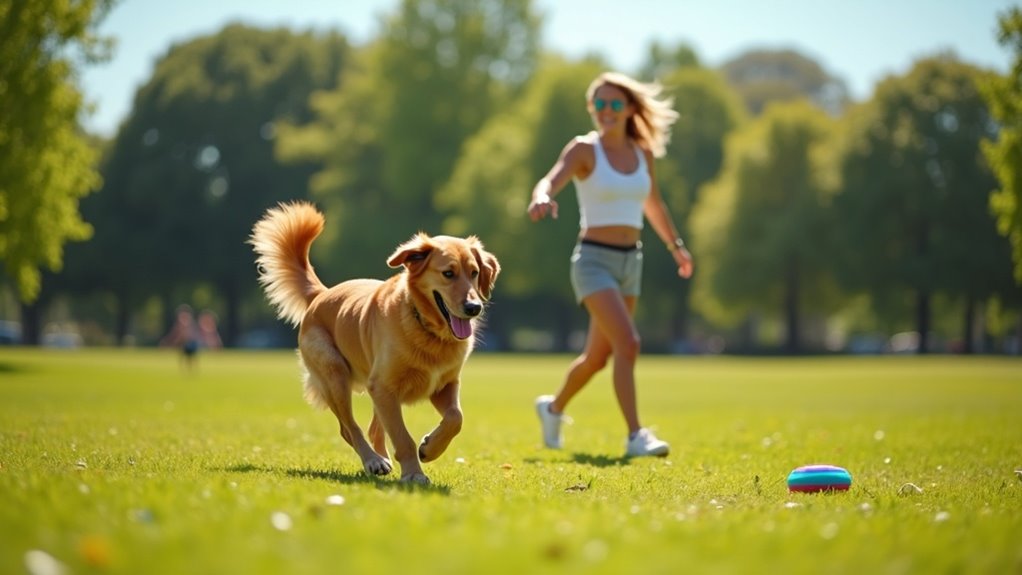
To teach a reliable recall, start in low-distraction areas. Use high-value treats or toys to grab your dog’s attention. When you call your dog, reinforce their approach with enthusiastic praise and rewards. Keep sessions short and fun, practicing around 10 minutes, two to three times a day. Avoid overusing the recall cue to maintain its effectiveness. If you want to explore more engaging games and advanced techniques, there’s plenty more to discover!
Key Takeaways
- Start training in low-distraction environments, using high-value treats to reinforce the recall cue effectively.
- Use the cue “come” consistently, rewarding your dog immediately when they respond positively.
- Engage your dog with fun recall games like “Catch Me” or “Find Me” to maintain enthusiasm.
- Gradually increase distance and distractions as your dog becomes more confident in their recall.
- Avoid overusing the recall cue to ensure it retains its effectiveness and prevents negative associations.
Understanding Reliable Recall
Understanding reliable recall is essential for keeping your dog safe, especially during off-leash play or when emergencies arise.
To achieve a reliable recall, you’ll want to start with a clear recall cue that your dog associates with positive experiences. Focus on training in low-distraction environments before gradually introducing more challenging settings.
Always use high-value treats to reinforce the desired behavior, ensuring your dog finds returning to you more appealing than distractions.
Be cautious of creating a poisoned cue by overusing the recall cue or calling your dog in unfavorable situations.
Consistency and positive reinforcement will help you build a dependable recall.
Importance of a Solid Recall
A solid recall is essential for every dog owner, as it not only guarantees your dog’s safety but also enhances the overall enjoyment of outdoor adventures.
A reliable recall allows your dog to explore freely while minimizing risks in emergencies. When you focus on coming when called, you inspire confidence in your dog, even in high-level distractions.
Use training tips like positive reinforcement to reward your dog, making returns enjoyable. Solid recalls strengthen your bond and improve communication, making your dog more versatile in roles like service or therapy.
Invest time in training for countless memorable moments together outdoors!
Getting Started With Recall Training
Starting recall training can be a rewarding experience for both you and your dog.
Begin in a low-distraction environment, like indoors, to help your dog focus. Use high-value treats or toys as rewards to capture their attention. When your dog is moving towards you, use the cue “come” to reinforce positive outcomes.
Gradually increase the distance between you and your dog during practice sessions to boost their confidence and reliability. Keep sessions short and engaging—aim for 10 minutes, 2-3 times daily.
Celebrate successes with praise to make recall training enjoyable for both of you!
Effective Recall Games
Building on the foundation of recall training, incorporating fun and engaging games can greatly enhance your dog’s response to the recall cue.
Try the “Catch Me Game” by calling your dog’s name and running a few steps away—reward them with a treat when they come!
In “Find Me,” call your dog from another room, and celebrate their arrival with a reward.
The “Hot Potato Game” involves multiple people calling your dog back and forth, making recall exciting.
Remember, vary rewards to keep them interested, and avoid linking recall to the end of fun.
Keep it playful, and watch your dog thrive!
Common Mistakes to Avoid
When teaching your dog a reliable recall, it’s essential to avoid overusing the recall cue; if you call your dog and they don’t respond, it can weaken the command’s effectiveness.
Also, make sure you reward your dog consistently when they come to you; inconsistent timing can confuse them about what behavior gets praised.
Overusing Recall Cues
Overusing recall cues can inadvertently lead to a “poisoned cue,” where your dog starts ignoring the command altogether.
To keep your recall cue effective, consider these tips:
- Use the recall cue only when you’re confident your dog will respond.
- Avoid calling them to end fun activities, preventing negative associations.
- Call your dog just once, reinforcing the significance of the cue.
- Make it exciting with high-value treats or toys to create a positive experience.
Inconsistent Reward Timing
While you may intend to reinforce your dog’s recall, inconsistent reward timing can create confusion, making it harder for them to understand what behavior you’re praising.
To build a reliable recall, always provide an immediate reward when your dog returns. Delays can weaken their understanding.
Start with high-value treats to spark excitement, then gradually shift to intermittent rewards to keep them engaged.
Be mindful to avoid negative associations by never returning your dog to undesirable situations after they respond.
Consistent, timely reinforcement encourages your dog to embrace the recall cue, leading to a stronger bond and a more reliable response.
Introducing Distractions and Distance
As you work on your dog’s recall, introducing distractions and increasing distance can greatly enhance their training experience.
Here’s how to effectively implement this:
- Use a long leash to give your dog freedom while ensuring safety.
- Start in a controlled environment, introducing distractions like toys or other animals.
- Gradually increase the distance between you and your dog, encouraging them to return to you with the recall cue.
- Always reward them for coming back, reinforcing positive behavior.
Advanced Recall Techniques
As you move into advanced recall techniques, practicing long-distance recalls with a long line can really boost your dog’s confidence and reliability.
You’ll want to manage distractions effectively, gradually introducing new environments to test their skills.
Remember to celebrate each successful recall to reinforce their positive behavior and keep them engaged!
Long-Distance Recall Practice
To guarantee your dog has a reliable long-distance recall, start by practicing in safe areas with a long line. Gradually increase the distance you call your dog from, building their confidence in coming back.
Here are some effective tips:
- Use high-value treats to reward them for returning quickly.
- Introduce an automatic sit command upon their arrival to reinforce the behavior.
- Touch their collar during practice, familiarizing them with being handled.
- Test recalls with distractions in new environments, ensuring they generalize their skills.
With consistent practice, your dog will excel in their long-distance recall!
Distraction Management Strategies
Building on your dog’s long-distance recall skills, managing distractions is key to ensuring they respond reliably in real-world situations. Start with low-level distractions and progressively increase intensity. Use a long line for safety and control while practicing recalls. Celebrate successes to create positive associations, reinforcing that returning to you is rewarding, even amidst distractions. Adjust rewards based on the environment; higher-value treats can motivate your dog effectively. Here’s a quick reference to guide you:
| Distraction Level | Reward Type | Training Focus |
|---|---|---|
| Low | Regular | Basic Recall |
| Medium | High-value | Moderate Distractions |
| High | Super Treat | High Distractions |
| Extreme | Favorite Toy | Real-World Scenarios |
| Consistent | Treat + Play | Generalization |
Addressing Running Away Issues
Why does your dog seem to have a knack for running away? It could be due to excitement or lack of confidence in their recall.
To address this, try these strategies:
- Use a long lead during training to maintain control.
- Always reward your dog when they come back.
- Practice in secure areas; allow off-lead play only in fenced spaces.
- Take turns calling your dog to strengthen their recall.
If these methods don’t help, consider seeking professional training assistance.
Keeping your dog safe is a priority, so invest time in building their confidence and reliability.






