
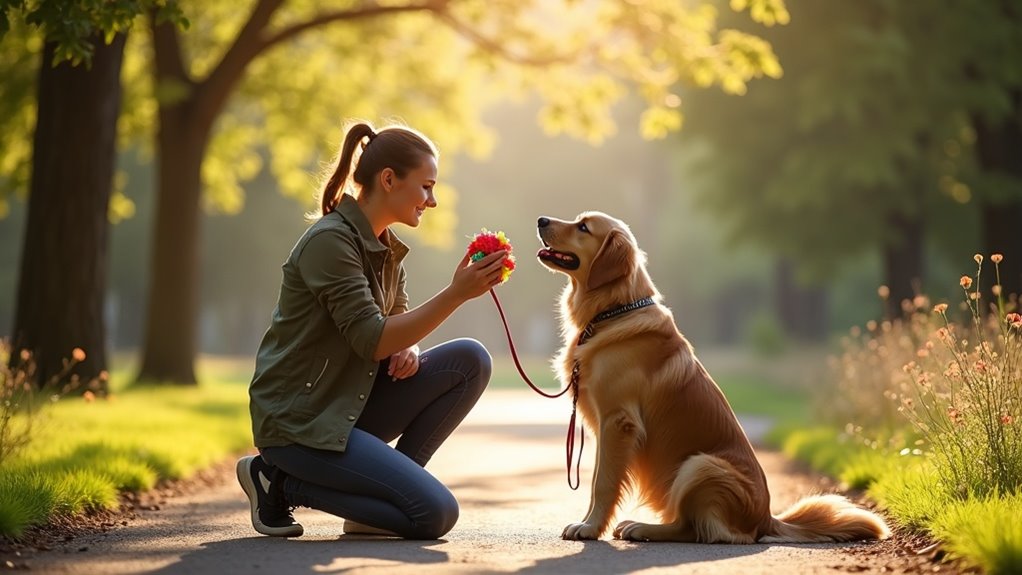
To teach loose-leash walking, start by using a comfortable collar or harness with a 4 to 6-foot leash. Focus on keeping the leash slack and reward your dog with treats for staying close by your side. If they pull, stop immediately or change direction to reinforce the behavior you want. Practice in low-distraction areas and gradually move to more challenging environments. With consistency and positivity, you’ll create a joyful walking routine together. There’s much more to explore on effective techniques!
Key Takeaways
- Use a comfortable collar or front-clip harness with a 4 to 6-foot leash for better control during training.
- Start in low-distraction areas, designating a side for your dog to walk while keeping the leash loose.
- Stop walking immediately if your dog pulls, rewarding them when they return to your side.
- Use positive reinforcement, like treats, to reward your dog for walking calmly beside you.
- Practice consistently in various environments to build confidence and reinforce good loose-leash walking habits.
Understanding Loose-Leash Walking
When you teach your dog loose-leash walking, you’re not just aiming for a pleasant stroll; you’re fostering a stronger bond between you and your furry friend.
This training technique focuses on maintaining a slack leash, which helps prevent pulling and encourages calm behavior. Using positive reinforcement, reward your dog for staying close beside you.
Consistency is key—set clear expectations with each session. Start practicing in low-distraction areas to build their confidence before tackling more challenging environments.
Essential Equipment for Training
To train your dog for loose-leash walking, having the right equipment is essential.
Choose a comfortable collar or harness and a 4 to 6-foot leash to keep your dog close and manageable.
Don’t forget to grab some small treats for positive reinforcement and wear shoes that support your feet during your training sessions.
Training Gear Selection
Selecting the right training gear is essential for effective loose-leash walking, as it can greatly enhance your control and your dog’s comfort during walks.
Consider using a front-clip harness, like the Easy-Walk or Freedom No-pull, to discourage pulling. A 4 to 6-foot leash offers better management of your dog’s movements, while retractable leashes should be avoided.
Don’t forget a treat pouch for quick access to rewards during dog training sessions. If your dog tends to pull, a head halter, such as the Gentle Leader, provides excellent control.
Finally, invest in comfortable walking shoes for yourself to enjoy the process.
Leash and Collar Options
Finding the right leash and collar options is essential for successful loose-leash walking. Here are some effective choices to reflect upon for your training sessions:
- Collars: Use buckle collars for everyday walks or Martingale collars for extra control.
- Harnesses: Opt for front-clip harnesses like Easy-Walk or Freedom No-pull to discourage pulling.
- Leashes: A 4 to 6-foot leash provides control and freedom; avoid retractable leashes for training.
Initial Steps for Teaching Loose-Leash Walking
Teaching your dog to walk on a loose leash starts with a few essential steps that lay the groundwork for success.
First, fill a treat pouch with rewards to keep handy during training. Choose a designated side for your dog to walk on, holding treats on that side while keeping the leash loose in your opposite hand.
Prepare a treat pouch with rewards, select a side for your dog to walk, and keep the leash loose for effective training.
Take a step forward, then stop to reward your dog at the seam of your pants. If your dog pulls ahead, stop and call them back, reinforcing that loose leash walking leads to rewards.
Practice consistently in various environments to build their skills!
Addressing Pulling Behavior
When your dog starts pulling ahead, it’s essential to address this behavior immediately to set clear boundaries.
Here are three effective strategies to help you:
- Stop Walking: Immediately halt when your dog pulls ahead. This teaches them that pulling means the fun stops.
- U-Turn Technique: Change direction when they pull. Reward them for following you back to the correct position.
- Be a Tree: Stand still if the leash tightens, encouraging your dog to return to your side.
Always reward them for walking on a loose leash.
Consistent practice will help reinforce these behaviors!
Techniques for Reinforcing Desired Behaviors
To reinforce desired loose-leash walking behaviors, you’ll want to focus on positive reinforcement techniques that resonate with your dog.
Using treats and consistent markers, like a clicker, can help your dog associate good behavior with rewards.
As you practice, remember to stay engaged and handle distractions effectively to keep your dog motivated and focused.
Positive Reinforcement Techniques
Positive reinforcement techniques are essential for encouraging desired behaviors, like loose-leash walking.
Here are three effective strategies to help you reward your dog:
- Use treats immediately when your dog walks beside you on a loose leash, creating a strong association between good behavior and positive outcomes.
- Implement a clicker or say “Yes!” to mark the exact moment they exhibit the desired behavior, enhancing their understanding.
- Gradually increase the time before rewarding, helping your dog maintain good behavior longer.
Handling Distractions Effectively
While rewarding your dog for loose-leash walking is essential, handling distractions effectively can make a significant difference in their training.
Use the “Watch” cue to redirect their attention away from distractions, rewarding them for focusing on you. When the leash tightens, stop and “Be a tree,” encouraging them back to a loose leash position before moving forward.
If they pull, practice “Penalty yards” by backing up, reinforcing that pulling means moving away. Scatter feeding can also redirect focus, allowing foraging behavior.
Consistently reinforce eye contact with treats to strengthen their attention on you, improving overall walking behavior.
Engaging Training Methods to Maintain Focus
How can you keep your dog engaged during loose-leash walking? Using engaging techniques can make a big difference. Consider these methods:
- Change direction suddenly or make full circles to maintain attention and reduce pulling.
- Incorporate rewards, like treats and verbal praise, to encourage engagement during training sessions.
- Practice eye contact exercises by rewarding your dog each time they look at you, enhancing focus.
Practicing in Various Environments
Practicing loose-leash walking in various environments is essential for helping your dog adapt to different distractions. Start in low-distraction areas like quiet parks or your backyard, then gradually introduce busier settings. This helps your dog generalize skills effectively.
Consider incorporating practice sessions at different times of day, allowing your pup to experience various sights and sounds. Use positive reinforcement consistently to strengthen good walking behavior.
As you progress, assess and adjust your training techniques based on the challenges you encounter. These additional tips will help guarantee your dog remains focused, even when moving further away from familiar surroundings during dog walks.
Creating a Positive Walking Experience
Creating a positive walking experience for your dog is key to making each outing enjoyable for both of you. Here are three ways to enhance your walks:
- Positive Reinforcement: Use treats to reward good behavior immediately, reinforcing your dog’s loose-leash skills.
- Relaxed Atmosphere: Keep a calm demeanor, as a serene environment helps both of you feel less stressed.
- Engaging Experiences: Allow your dog to explore different scents and surroundings, turning each walk into an adventure.
End each session with praise or a treat, ensuring your dog associates walks with enjoyable experiences. Together, you’ll create a joyful routine!






