
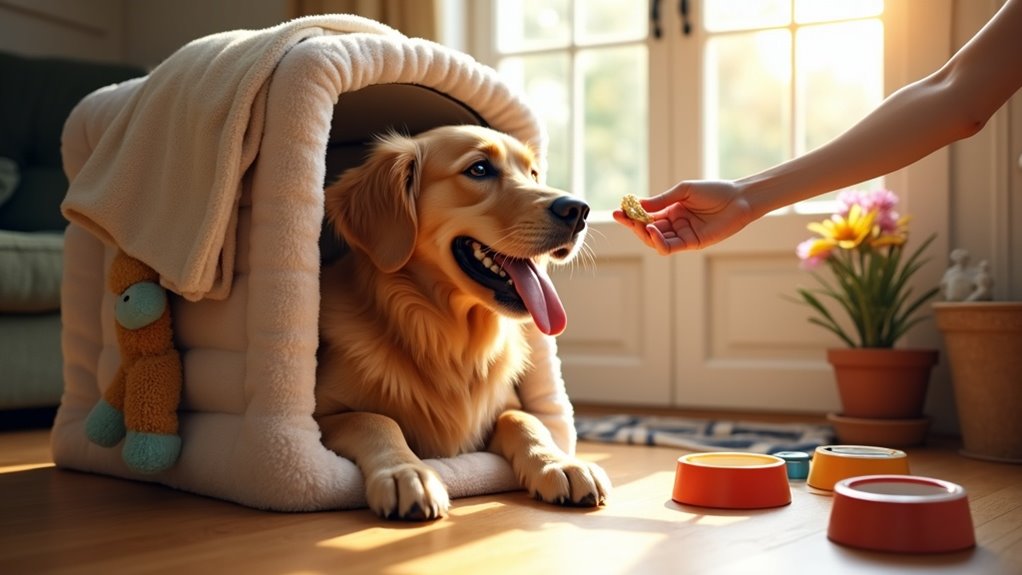
To teach your dog to enjoy the crate, start by creating a cozy environment with soft bedding and light cover. Gradually introduce them to the crate using high-quality treats, rewarding them for exploring further inside. Incorporate crate time into their routine by feeding meals there and closing the door for short periods. Address any anxiety with patience and positive reinforcement. Continue your efforts, and you’ll discover even more effective strategies for crate training.
Key Takeaways
- Create a cozy crate environment with soft bedding and a covered top for a den-like feel.
- Gradually introduce the crate with high-value treats, moving them further inside over time.
- Establish a routine by feeding meals in the crate and closing the door during meals gradually.
- Use positive reinforcement, rewarding calm behavior with treats and praise when the dog is in the crate.
- Monitor for signs of anxiety and adjust training pace to ensure the dog feels safe and comfortable.
Creating a Cozy Crate Environment
Creating a cozy crate environment is vital for helping your dog feel comfortable and secure. Start by adding proper bedding, like a vintage sheet or soft blanket, which won’t restrict airflow.
Cover the crate with a light fabric to create a den-like atmosphere, making it cozy and inviting. Position the crate in a main living area so your dog feels part of the family, avoiding isolation.
Use high-quality treats and toys exclusively for crate time to create a positive association. Cozy elements like warm blankets or heating pads during colder months guarantee your dog is comfortable and happy in their crate.
Gradual Introduction to the Crate
To help your dog feel comfortable in their crate, start with a gradual introduction that fosters positive associations. Begin by placing their favorite treats just inside the crate, encouraging exploration. Gradually move the food further back over several sessions, allowing your dog to enter willingly. Close the door for short periods, starting with seconds and gradually increasing the time. Use high-value treats and praise to reward calm behavior, reinforcing that the crate is a safe space.
| Step | Action |
|---|---|
| 1 | Place treats just inside the crate |
| 2 | Gradually increase the distance |
| 3 | Close the door for short periods |
Building Positive Associations With Treats
Once your dog is comfortable entering the crate, it’s time to build on that positive experience with treats. Use high-quality treats exclusively for crate time to create a strong positive association.
Start by placing treats just inside the crate to encourage your dog to explore without pressure. Gradually move the treats further back, rewarding each step they take inside.
Incorporate meals in the crate, starting with the door open, then gradually closing it as they become more comfortable.
Surprise your dog with special treats, like a stuffed Kong, to make crate time exciting and enjoyable while building confidence.
Establishing a Routine for Crate Time
To help your dog feel secure in the crate, establish a consistent feeding schedule that aligns with crate time.
Regular exercise sessions before crate time can also help your dog settle down more easily.
Consistent Feeding Schedule
Establishing a consistent feeding schedule is essential for helping your dog feel comfortable in the crate. By feeding all meals in the crate, you create a positive association with this space. Start with the door open, then gradually close it during meals. This routine reinforces predictability and safety for your dog.
| Feeding Time | Action |
|---|---|
| Morning | Feed with door open |
| Midday | Gradually close door for 5 minutes |
| Evening | Close door during feeding for 10 minutes |
Using high-quality treats during crate time further encourages your dog to see the crate as a rewarding space.
Regular Exercise Sessions
Regular exercise sessions are essential for ensuring your dog feels calm and comfortable in the crate. Aim for at least 30 minutes of physical activity daily, like walks or playtime, to help your dog expend excess energy.
Incorporate mental stimulation through training or puzzle toys to further tire them out. By establishing a consistent routine for exercise and crate time, you create predictability, which can ease separation anxiety.
Monitor your dog’s behavior and adjust their activity level as needed, as different breeds and ages may require varying amounts of exercise to feel adequately tired before you crate your dog.
Addressing Crate Anxiety and Resistance
If your dog shows signs of crate anxiety, it’s essential to address it with patience and care.
You can use gradual desensitization techniques and positive reinforcement strategies to help your dog feel more comfortable in the crate.
Signs of Crate Anxiety
Recognizing the signs of crate anxiety in your dog is essential for ensuring their comfort and well-being.
Look for excessive whining, barking, pacing, or drooling, as these indicate discomfort. Destructive behaviors like chewing or scratching can also signal anxiety.
If your dog’s crate feels too small, it may increase stress. Negative associations often stem from improper introduction, making the crate feel like a punishment.
Gradual Desensitization Techniques
To help your dog overcome crate anxiety, gradual desensitization techniques can be incredibly effective.
Start by placing treats and toys inside the crate, encouraging your dog to explore it voluntarily. Reward any positive behavior related to the crate.
Once your dog feels comfortable entering, begin closing the door for short periods while they’re calm, slowly increasing the duration.
Incorporate the crate into daily routines, like feeding or giving special chews, to reinforce positive experiences.
Always monitor your dog’s body language for stress, adjusting the pace as needed to guarantee a calm and supportive environment during this training process.
Positive Reinforcement Strategies
While addressing crate anxiety and resistance, positive reinforcement is key to helping your dog feel comfortable and secure in their crate.
Use high-value treats exclusively during crate time to create a Great Place for your dog. Start by placing food and toys inside, encouraging your dog to explore voluntarily.
Reward calm behavior and wait for moments of silence before opening the door; this reinforces that calmness is rewarded.
Incorporate short training sessions to extend crate time gradually, while maintaining a consistent routine, such as feeding meals in the crate.
With patience, your heavy-duty crate can become a safe haven for your furry friend.
Tips for Successful Crate Training
Creating a positive experience around crate training is essential for your dog’s comfort and acceptance.
Start by introducing the crate gradually, allowing your dog to explore inside the crate voluntarily. Use high-quality treats and feed meals there to create a positive association.
Confirm the crate is large enough for your dog to stand and turn comfortably. Cover it with a vintage sheet to create a cozy den-like environment.
Initially, keep the door open, then start shutting the door for short periods. Consistently use the crate at regular times, and avoid using it solely for confinement to support your dog’s life positively.






