
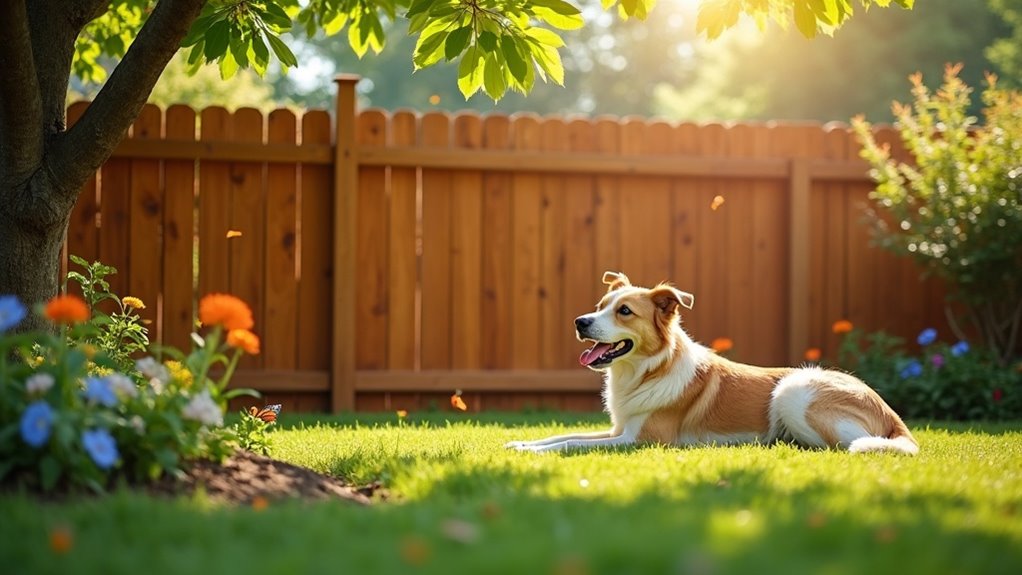
To reduce fence reactivity in dogs, you’ll want to combine several strategies. Start by using visual barriers, like privacy fences or tall shrubs, to limit your dog’s view of triggers. Employ positive reinforcement methods by rewarding calm behavior when your dog encounters these stimuli. Regularly assess their reactions and adjust your tactics accordingly. Engaging with your community can also help create a more supportive environment. There’s more you can explore to foster a peaceful experience for both you and your dog.
Key Takeaways
- Install visual barriers like privacy fences or tall shrubs to block your dog’s line of sight to potential triggers.
- Use positive reinforcement techniques by rewarding calm behavior with high-value treats when your dog encounters triggers.
- Gradually expose your dog to triggers while consistently reinforcing calmness to build positive associations.
- Educate neighbors about your dog’s reactivity and encourage quiet passing to minimize disturbances.
- Organize community meet-ups for supervised interactions, fostering a supportive network for shared experiences and solutions.
Understanding Fence Reactivity in Dogs
Fence reactivity in dogs can be a frustrating challenge for both pets and their owners. This behavior often arises when dogs feel trapped by the barrier, leading them to bark, lunge, or act aggressively towards passing people, other dogs, or moving objects.
Their heightened sensitivity stems from frustration, protectiveness, or fear, altering their perception of the environment. Understanding this barrier reactivity is essential for fostering a peaceful living space.
Positive Reinforcement Techniques for Calm Behavior
When your dog encounters triggers near the fence, it can be overwhelming for both of you, but positive reinforcement techniques can effectively encourage calm behavior. Reward your dog with high-value treats immediately upon seeing people or other stimuli to foster positive associations. Consistently reinforce calmness with praise and rewards when they remain relaxed.
| Trigger | Response | Reward |
|---|---|---|
| People | Quiet | Treat |
| Other Dogs | Relaxed | Praise |
| Cars | Calm | Treat |
| Sounds | Focus | Attention |
Gradually increase exposure to triggers while rewarding their calm demeanor.
Management Strategies to Control Reactivity
You’ve likely noticed how visual stimuli can trigger your dog’s reactivity, and managing their environment is key.
By implementing visual barriers and creating controlled exposure, you can greatly reduce their stress and barking.
Let’s explore some effective strategies that combine these elements with positive reinforcement to foster a calmer atmosphere for your furry friend.
Visual Barrier Modifications
To effectively manage fence reactivity, visual barrier modifications play an essential role in creating a calm environment for your dog.
By reducing your dog’s stress, you can foster a more peaceful outdoor experience. Consider implementing these strategies:
- Install privacy fences or use frosted window decals to block visual stimuli.
- Incorporate shrubs or trees to create natural barriers that limit distractions.
- Place outdoor furniture strategically to act as additional visual barriers.
- Use wind screens with varying opacities to maintain airflow while limiting visibility.
Regularly assess these modifications to guarantee they continue to meet your dog’s needs.
Controlled Exposure Techniques
While managing your dog’s reactivity can feel challenging, controlled exposure techniques offer a structured approach to help them cope with triggers in their environment.
Start by gradually introducing your dog to potential triggers at a safe distance, rewarding them for calm behavior. Use visual barriers to limit their view, reducing instances of barking and lunging.
Keep training sessions brief, ideally 1-3 minutes, to prevent overwhelming them. Pay close attention to their body language and adjust your distance if they show signs of stress.
Consistently reward desired behaviors during low-distraction times to help your dog form positive associations with triggers.
Positive Reinforcement Practices
Positive reinforcement practices play an essential role in managing your dog’s reactivity, as they help create a more positive environment for both you and your pet.
To encourage calm behavior, consider these strategies:
- Reward high-value treats when your dog sees triggers to build positive associations.
- Gradually expose your dog to distractions and only reward relaxed responses.
- Use privacy fences or landscaping to limit view of potential triggers.
- Educate neighbors about your dog’s reactivity to foster calm interactions.
Environmental Modifications to Limit Visibility
Creating a serene outdoor space for your dog often hinges on how well you manage their visibility of external stimuli.
Installing a privacy fence along the fence line can effectively block their line of sight, while using materials like vinyl or wood enhances safety.
A privacy fence made of vinyl or wood can effectively shield your dog from outside distractions while ensuring their safety.
Additionally, consider tall shrubs or decorative plants to create natural visual barriers that beautify your yard.
Wind screens or outdoor curtains made of opaque materials can further obstruct views without sacrificing airflow.
Regularly observe your dog’s reactions to these modifications, making adjustments as needed.
Combining these barriers with calming sounds can also help minimize reactivity.
Community Engagement for Better Interactions
Managing your dog’s reactivity goes beyond environmental changes; engaging with your community can play a vital role in fostering better interactions.
Consider these strategies to create a supportive environment:
- Encourage neighbors to understand your dog’s reactivity, discussing behaviors and calm strategies.
- Educate others on how to pass your home quietly, minimizing triggers for your dog’s barks.
- Organize community meet-ups for supervised dog interactions with another dog.
- Build a network of fellow dog owners to share experiences and solutions.
Long-Term Training Goals for Reactive Dogs
While it might feel overwhelming at times, setting long-term training goals for your reactive dog is essential for fostering a more harmonious relationship.
Focus on helping your dog consistently engage with you instead of their triggers. Structured dog training sessions can gradually reduce the frequency and intensity of reactive behaviors.
Incorporate impulse control exercises, like “leave it” or “watch me,” to strengthen their attention on you. Keep a log of their reactions to monitor progress and adjust your approach as needed.
Collaborating with a certified trainer guarantees you’re tailoring strategies that meet your dog’s unique needs, promoting lasting behavior change.






