
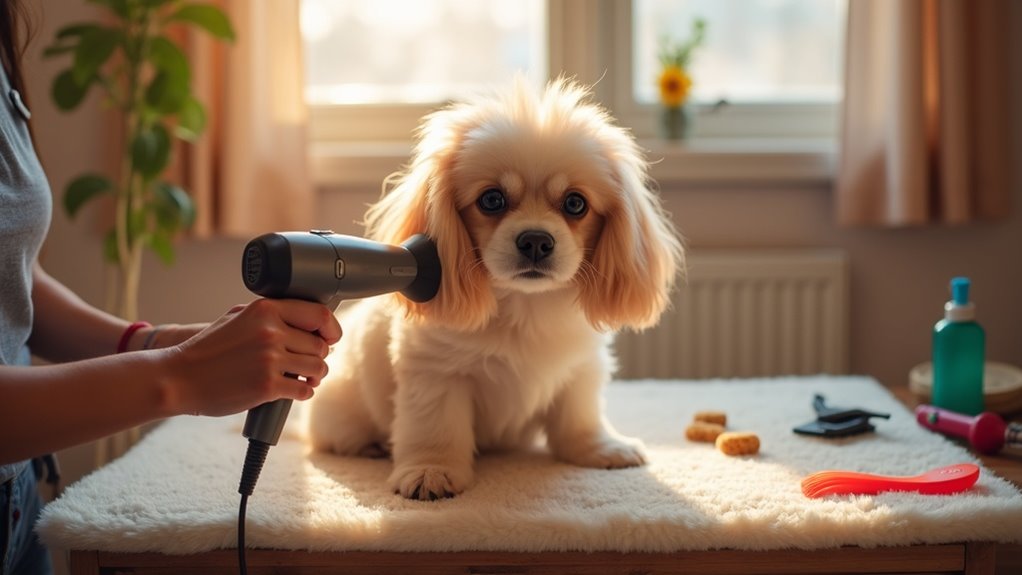
To guarantee a positive grooming experience for your dog, start by creating a comfortable space and slowly introduce grooming tools. Use treats and praise to build a good association with each tool. Break down brushing into manageable steps, monitoring your dog’s body language for signs of stress, and adjust as needed. For blow-drying, start at a distance to desensitize your dog to the sound. Stick around to discover more strategies for successful grooming sessions!
Key Takeaways
- Designate a comfortable grooming area and introduce tools gradually for exploration and familiarity.
- Break the grooming process into manageable steps, using verbal cues for predictability.
- Use positive reinforcement, such as treats and praise, to build a positive association with grooming.
- Monitor your dog’s body language closely, pausing if signs of discomfort appear.
- Keep sessions short and allow breaks, ensuring a calm atmosphere to foster trust and cooperation.
Understanding Cooperative Care in Grooming
Understanding cooperative care in grooming is essential for guaranteeing a positive experience for both you and your dog. This approach prioritizes your dog’s comfort and consent, allowing them to participate willingly in grooming activities.
Start by desensitizing them to grooming tools, using positive reinforcement to foster a good association with brushes and dryers. Establish a predictable routine for brushing and blow-drying, which helps your dog feel secure.
Focus on short training sessions, introducing one tool at a time to avoid overwhelming them. Always monitor your dog’s body language, adjusting or taking breaks as needed to guarantee their comfort throughout the process.
Preparing Your Dog for Grooming
Preparing your dog for grooming is essential to guarantee a stress-free experience for both of you. Start by designating a familiar and comfortable grooming area, where your dog feels secure.
Gradually introduce grooming tools, allowing your dog to sniff and explore them while offering treats to build positive associations. Break the grooming process into manageable steps, rewarding your dog after each success to encourage cooperation.
Use verbal cues before touching specific body parts to create predictability. Always monitor your dog’s body language for signs of stress, and be prepared to pause if necessary, ensuring a positive experience throughout.
Introducing Grooming Tools
When introducing grooming tools like brushes and blow-dryers, start in a calm environment where your dog can explore them at their own pace.
Use treats and praise to build a positive connection, rewarding any curiosity they show.
Gradually expose your dog to these tools, keeping sessions brief to guarantee they remain comfortable and engaged.
Familiarizing With Grooming Tools
Introducing your dog to grooming tools can be an essential step in building a positive grooming experience. Start in a calm environment, allowing your dog to sniff and explore brushes and blow-dryers, fostering positive associations. Reward their curiosity with high-value treats, reinforcing comfort.
To desensitize your dog to the blow-dryer, play it on a low setting while treating them, gradually increasing the volume as they adapt. Keep sessions short, one to two minutes, to maintain engagement without overwhelming them.
Always monitor your dog’s body language, stopping immediately if you notice any signs of stress or discomfort.
Positive Association Techniques
Creating a positive association with grooming tools is essential for helping your dog feel comfortable during grooming sessions.
Start by presenting brushes and blow dryers while offering high-value treats. Allow your dog to sniff and investigate these tools at their own pace, and reward your dog with praise for calm behavior.
Gently introduce the brush, using it for short periods, and gradually increase the duration as your dog relaxes. Use a clicker or verbal marker to acknowledge positive interactions.
Incorporate grooming into playtime or relaxation, making it a natural, enjoyable part of your dog’s day.
Gradual Exposure Strategy
To guarantee your dog feels at ease with grooming tools, start by presenting them in a calm environment, allowing your pet to explore without any pressure.
Use a gradual exposure strategy to build comfort:
- Introduce brushes and blow dryers, rewarding your dog with treats or praise for showing interest.
- Gradually desensitize to the blow dryer’s sound by starting it at a distance, rewarding calm behavior as you bring it closer.
- Practice short brushing sessions, gradually increasing duration while monitoring your dog’s body language for signs of discomfort.
This approach assures a positive, stress-free grooming experience.
Step-by-Step Brushing Techniques
To guarantee a positive brushing experience, start by preparing a calm and familiar grooming space where your dog feels secure.
Gradually introduce brushing techniques, focusing on one area at a time while keeping sessions short and rewarding your dog for their calm behavior.
Preparing the Grooming Space
While preparing the grooming space, it’s essential to guarantee it feels safe and inviting for your dog.
Here are three steps to create a positive environment:
- Designate a quiet area with a non-slip mat for security during the brushing process.
- Use a verbal cue to signal the start of grooming, helping your dog anticipate the activity and easing anxiety.
- Gradually introduce grooming tools, allowing your dog to sniff them first, fostering positive associations.
Gradual Brushing Techniques
Once you’ve set up a safe and inviting grooming space, it’s time to focus on gradual brushing techniques that can help your dog feel more at ease during the grooming process.
Introduce the brush with treats, letting them sniff and explore it. Start brushing small sections, rewarding calm behavior. Use gentle, slow strokes, gradually increasing duration as they adjust.
Always monitor your dog’s body language; if they show discomfort, pause and reassure them. Incorporate brushing into a routine with positive reinforcement, like treats or playtime, so your dog associates brushing with enjoyable experiences.
Patience and empathy are key to success!
Positive Reinforcement Strategies
When introducing your dog to brushing, using positive reinforcement strategies can make all the difference in creating a calm and enjoyable experience.
Follow these steps to build your dog’s confidence:
- Introduce the brush slowly, letting your dog sniff it while offering treats.
- Keep initial brushing sessions short (1-2 minutes), rewarding your dog after each attempt.
- Gradually increase the session length as your dog becomes comfortable, praising frequently.
Always monitor your dog’s body language for discomfort, allowing them to opt out if needed.
This approach fosters trust and cooperation, ensuring brushing becomes a positive routine for both of you.
Positive Reinforcement During Grooming
Positive reinforcement during grooming is an essential strategy that can transform a potentially stressful experience into a positive one for your dog. Use treats, praise, or play to reward calm behavior, reinforcing the idea that grooming is enjoyable.
Incorporate short training sessions to maintain interest and reduce stress. Gradually desensitize your dog to grooming tools while offering rewards, allowing them to build confidence and tolerance.
Establishing a routine with specific cues can create predictability, making your dog feel more secure. Always monitor their body language, rewarding comfort signals to enhance cooperation and improve the overall grooming experience for both of you.
Acclimating Your Dog to Blow-Drying
After establishing a positive grooming routine, it’s time to help your dog get used to the blow dryer, an important tool for drying their coat.
Follow these steps for successful acclimating:
- Introduce the blow dryer at a distance while rewarding with treats.
- Gradually reduce the distance, keeping the noise low and rewarding calm behavior.
- Start with a low setting, exposing your dog to airflow without directly directing it at them.
Always monitor your dog’s body language for signs of stress.
Use positive reinforcement to build their confidence and guarantee a comfortable experience during this essential grooming step.
Building a Positive Grooming Experience
Creating a positive grooming experience for your dog is essential for building trust and cooperation. Introduce grooming tools calmly, rewarding your dog with treats to foster positive associations. Utilize gradual desensitization by encouraging sniffing and exploring the brush before gentle strokes. Use a verbal cue to signal grooming sessions, promoting predictability.
| Step | Action | Reinforcement |
|---|---|---|
| Tool Introduction | Calmly show tools | Treats for exploration |
| Desensitization | Allow sniffing, then brush gently | Praise for calm behavior |
| Control | Offer breaks, let them opt out | Rewards for cooperation |
Tips for Ongoing Grooming Success
Establishing a consistent grooming routine can make a significant difference in your dog’s comfort and cooperation. Here are some tips for ongoing grooming success:
- Use positive reinforcement, rewarding your dog with treats and praise for calm behavior.
- Gradually introduce grooming tools, letting your dog sniff and explore them first.
- Monitor your dog’s body language; if you notice signs of discomfort, pause and reassure them.
Incorporate short, enjoyable breaks during sessions to keep the experience positive.
With patience and empathy, you’ll create a grooming routine that fosters trust and keeps your dog feeling secure and loved.






