
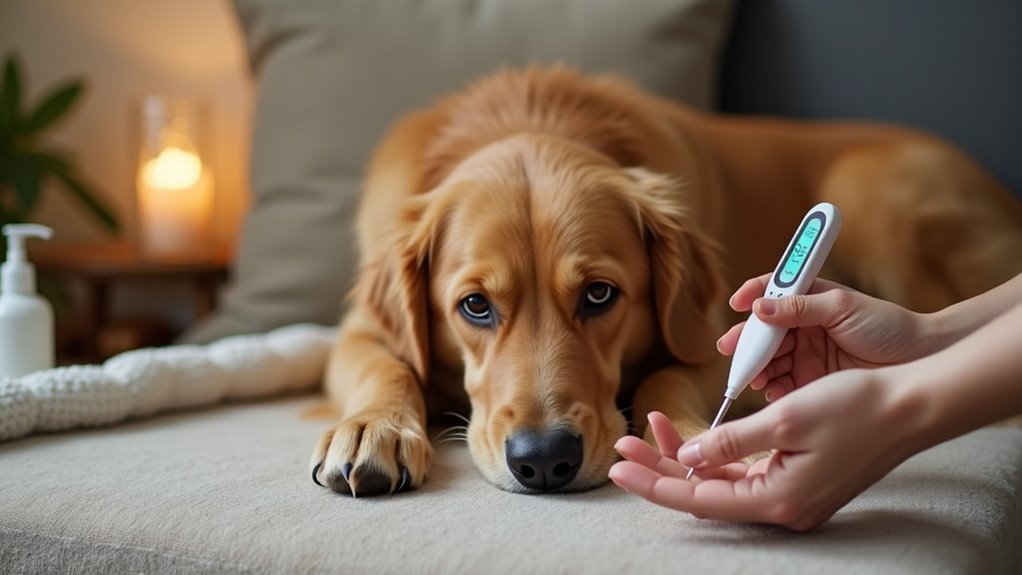
To guarantee cooperative care during thermometer use in dogs, start by familiarizing your pet with the thermometer and using gentle techniques. Use positive reinforcement, like treats, and practice calm tail handling. Conduct short sessions to build trust, monitor body language, and employ cooperative strategies. When inserting the thermometer, use lubricant and remember to maintain a stress-free environment. If you’re curious about the specifics of the temperature-taking process and handling abnormal readings, you’ll find useful insights ahead.
Key Takeaways
- Familiarize your dog with the thermometer gradually to reduce anxiety and build comfort.
- Use positive reinforcement, such as treats, to encourage cooperation during the process.
- Practice gentle tail lifting and mock thermometer insertion to desensitize your dog.
- Keep training sessions short, ideally under two minutes, to maintain engagement and reduce stress.
- Monitor your dog’s body language for signs of comfort or anxiety, adjusting your approach accordingly.
Understanding Cooperative Care in Temperature Taking
Understanding cooperative care in temperature taking is essential for ensuring your dog’s comfort and cooperation during the process.
Cooperative care training emphasizes consent-based behaviors, allowing your dog to willingly participate rather than being restrained. Employ positive reinforcement techniques to teach your dog to accept handling around the tail area, which can greatly reduce fear during thermometer insertion.
Create a calm environment, allowing your dog to explore the thermometer, enhancing emotional well-being. Conduct short practice sessions to build comfort gradually.
Pay attention to your dog’s body language and stress signals to maintain trust, ensuring a successful experience during veterinary visits.
Preparing Your Dog for Temperature Measurement
To effectively prepare your dog for temperature measurement, start by familiarizing them with the thermometer. Allow your dog to sniff and explore it, reducing any anxiety.
Use positive reinforcement, like treats or praise, to create a positive association with checking your dog’s temperature. Gradually introduce handling by practicing gentle tail lifting and mock thermometer insertion, ensuring your dog feels safe and comfortable.
Conduct short practice sessions, keeping them under two minutes to prevent frustration. Regular, low-pressure practice sessions will help build trust, making it easier to take a dog’s temperature during future veterinary care visits.
Step-by-Step Guide to Taking Your Dog’s Temperature
Taking your dog’s temperature requires careful preparation and execution to guarantee accuracy and comfort.
Start by gathering a digital rectal thermometer, lubricant, and disinfectant wipes. Have a second person hold your dog securely to prevent sudden movements.
Clean the thermometer with a disinfectant wipe and apply lubricant to its tip. Insert the thermometer gently about 1 inch into the rectum, applying gentle pressure. Wait for it to beep or for 60 seconds to obtain an accurate reading, which is essential for pet health.
After use, clean the thermometer again to maintain sanitation and prevent cross-contamination in future medical care.
Tips for Reducing Anxiety During the Process
While your dog may initially feel anxious about having their temperature taken, employing effective techniques can considerably reduce their stress.
Start with gradual desensitization by letting your dog explore the thermometer, rewarding them with treats to create positive associations. Use cooperative care strategies, like the “chin rest” behavior, to signal readiness for handling.
Keep training sessions short—2-3 minutes—to avoid overwhelming them. Incorporate familiar comforts, such as favorite toys or calming scents, to foster a relaxed environment.
Maintain a calm demeanor and soothing voice throughout the process to further alleviate anxiety and promote cooperation during thermometer use.
What to Do if Your Dog’s Temperature Is Abnormal
When you notice that your dog’s temperature is abnormal, it’s crucial to take immediate action to guarantee their well-being.
If you find a temperature above 102.5°F but under 103°F, monitor their behavior closely. A high temperature exceeding 103°F requires prompt veterinary attention, especially with symptoms like lethargy or vomiting.
Monitor your dog’s behavior closely if their temperature is between 102.5°F and 103°F; seek veterinary care if it exceeds 103°F.
To cool your dog, apply cool, wet washcloths to their body and encourage small sips of cool water.
If the temperature drops below 99°F, it may indicate hypothermia—provide warmth and contact your veterinarian.
Always consult your vet before administering any medications, as human drugs can be dangerous.






