
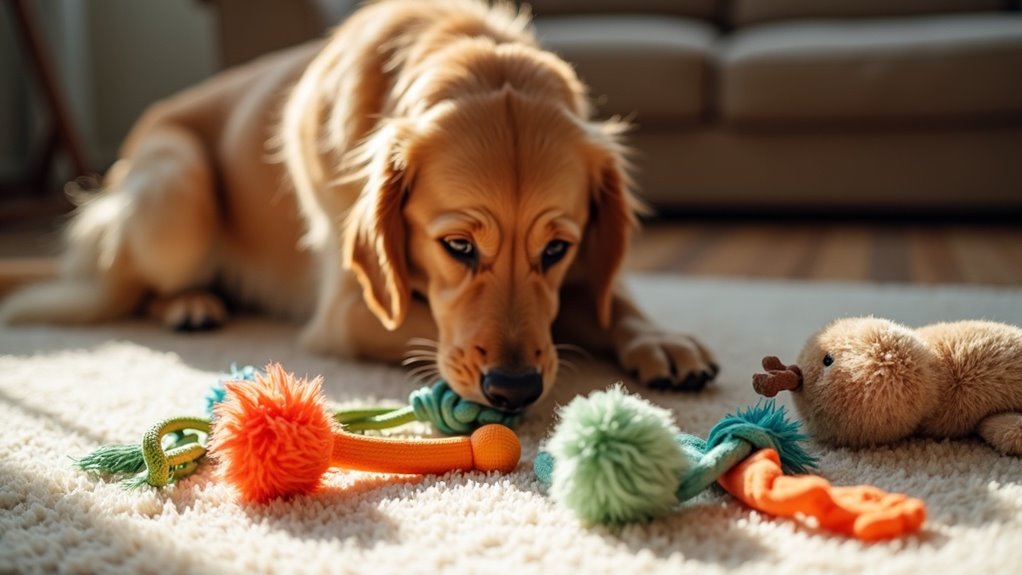
To keep your dog’s playtime exciting, rotate their toys every 7-10 days. Gather all their toys and categorize them for variety. Choose 3-5 engaging toys for each rotation and store the rest out of sight. When you switch toys, watch your dog’s reactions—tail wagging and playful barking are good signs! Adjust the schedule based on their enthusiasm and preferences. If you want to maximize your toy rotation strategy further, there’s plenty more to explore.
Key Takeaways
- Sort toys into categories and select 3-5 engaging toys for each rotation set.
- Store unused toys out of sight to maintain novelty and excitement.
- Rotate toys every 7-10 days, or sooner for dogs that bore quickly.
- Monitor your dog’s reactions to adapt the rotation system based on their preferences.
- Include a variety of toy types such as chew, puzzle, and plush for diverse engagement.
Understanding the Importance of Toy Rotation for Dogs
When you rotate your dog’s toys, you not only keep their interest alive but also help prevent boredom that can stem from repetitive play.
Regular rotation sparks excitement and engagement, as your dog perceives previously stored toys as new. This process offers essential mental stimulation, encouraging exploration during playtime.
Regularly rotating toys ignites your dog’s curiosity, transforming old favorites into fresh adventures full of mental stimulation.
Keeping a limited selection of toys accessible enhances focus, promoting longer engagement sessions.
By implementing a systematic rotation, you not only maintain your dog’s interest but also extend the lifespan of toys, minimizing wear and tear.
Embrace novelty in play, and watch your dog thrive with joyful enthusiasm!
Signs Your Dog Will Enjoy Toy Rotation
If you notice your dog becoming more playful and energetic, it might be time to contemplate rotating their toys.
Increased curiosity when exploring different toys can signal that they’re craving novelty in their playtime.
Keeping an eye on these behaviors can help you create a more engaging environment for your furry friend.
Increased Playfulness Observed
Introducing toy rotation can greatly boost your dog’s playfulness, as they often respond with renewed excitement to “new” items.
You’ll notice increased playfulness through tail wagging, playful barking, and engaging in active play like chasing and tugging. When you rotate toys, dogs enjoy longer play sessions, driven by the novelty of reintroduced toys.
Curiosity also spikes when you change their environment, encouraging exploration and interaction. Your furry friend may paw, sniff, and display enthusiasm, indicating heightened engagement during playtime.
Engaged Exploration Behavior
Engaged exploration behavior in dogs often emerges when they encounter rotated toys, as the novelty sparks their curiosity and enthusiasm.
You’ll notice signs like enthusiastic sniffing, pawing, and playful barking, indicating your dog’s excitement. Fresh toys enhance playtime interactions, leading to increased curiosity and sustained interest.
Watch for problem-solving attempts, such as figuring out how to access treats in interactive toys—this shows they’re mentally stimulated.
When your dog exhibits tail wagging and high energy around novel toys, it confirms that toy rotation boosts their overall engagement and satisfaction, making playtime more enjoyable for both of you.
How to Create a Toy Rotation System
Creating a toy rotation system can greatly enhance your dog’s playtime experience, ensuring they stay excited and stimulated.
Start by gathering all your dog’s toys and sorting them into categories for a diverse selection. Choose 3-5 engaging toys for each rotation set and store unused toys out of sight to maintain their novelty and interest.
Establish a rotation schedule, typically every 7-10 days, to keep playtime fresh. Remember to monitor your dog’s reactions to these toys, allowing you to adapt your rotation system based on their preferences.
- Sort toys by type
- Rotate every 7-10 days
- Store unused toys away
Recommended Schedule for Rotating Dog Toys
To keep your dog engaged, aim to rotate their toys every 7-10 days.
If your pup tends to get bored quickly, consider switching them out every 3-5 days for a fresher experience.
Watch for signs that your dog enjoys specific toys, and adjust your schedule to maximize their playtime fun!
Weekly Rotation Guidelines
While it might seem simple to toss your dog’s toys in a corner, rotating them every 7-10 days keeps playtime fresh and exciting.
Following a schedule helps maintain novelty, ensuring your pet stays mentally stimulated and engaged.
- Create sets of 3-5 toys for variety: chewing, tugging, and interactive play.
- Store unused toys in a clean, out-of-sight bin to preserve their appeal.
- Time rotations around significant events like vet visits for added excitement.
Signs Your Dog Enjoys
Recognizing when your dog truly enjoys their toys can greatly enhance their playtime experience. Look for signs like a wagging tail, playful barks, and energetic engagement with the toy.
If your dog shows excitement when you reintroduce a previously stored toy, it’s a clear indication of their interest and enjoyment.
To maintain novelty, consider rotating toys every 7-10 days. If you notice your dog growing bored or disinterested, it may be time to refresh their toy selection.
Monitoring their playtime can help you understand which toys spark joy and keep their engagement levels high.
Types of Toys to Include in Your Rotation
When you rotate your dog’s toys, including a diverse mix is key to keeping their playtime exciting and engaging.
Incorporate various types of toys to cater to their needs and preferences:
- Chew toys: Durable options are great for power chewers, ensuring extended fun.
- Puzzle toys: These stimulate your dog’s mind, reducing boredom and enhancing engagement.
- Plush toys: Offer comfort and companionship, perfect for snuggling or carrying around.
Observing Your Dog’s Preferences During Rotation
How can you truly understand what your dog loves during playtime? Start by observing their preferences with each toy.
Take note of which toys spark excitement and keep them engaged longer. Record their reactions to new toys; enthusiasm signals a love for novelty, while hesitation might mean a gradual introduction is needed.
Monitor changes in their behaviors, like increased enthusiasm or reduced boredom, to see if your rotation method works.
By refining your rotation schedule based on these insights, you can prioritize their favorites, ensuring playtime remains fresh and fun for your furry friend.
Happy observing!
Tips for Managing Your Dog’s Reaction to Changes
Understanding your dog’s preferences during toy rotations is just the first step; managing their reaction to these changes is equally important.
Recognizing your dog’s toy preferences is crucial, but it’s equally vital to navigate their responses to those changes.
To guarantee a smooth changeover, consider these tips:
- Monitor your dog’s body language for signs of anxiety or discomfort.
- Gradually introduce new toys, allowing time for adjustment.
- Keep a few familiar favorites accessible for comfort.
Enhancing Playtime With Additional Activities
While rotating your dog’s toys can spark interest, enhancing playtime with additional activities takes their enjoyment to the next level. Incorporate interactive games like hide-and-seek or treasure hunts to boost mental stimulation alongside your toy rotation.
Regular training sessions using these rotated toys as rewards reinforce desired behaviors while keeping things exciting. Schedule playdates with other dogs for new social dynamics and exploration of different toys.
Puzzle feeders and treat-dispensing toys provide challenges during mealtime. Finally, plan outdoor adventures or new walks to stimulate curiosity and offer fresh experiences that go beyond just toy rotation.






