
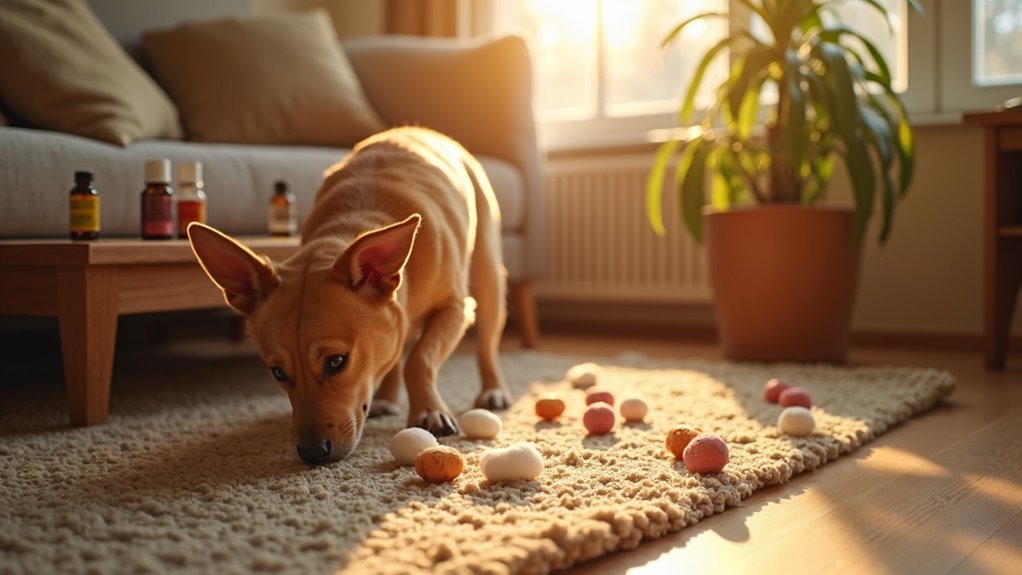
To start scent work at home, gather a few essential items like high-value treats and a basic birch scent kit. Begin by encouraging your dog to find hidden treats around your home. Use a lidded container with holes to introduce a target odor, like birch essential oil. Gradually increase difficulty by varying hiding spots and incorporating more complex exercises. This engaging activity not only stimulates your dog’s mind but also strengthens your bond. You’ll discover even more tips to enhance your training!
Key Takeaways
- Begin with high-value treats to motivate your dog and encourage engagement during scent work activities.
- Use a basic birch scent kit to introduce your dog to target odors effectively.
- Start with simple hiding exercises in familiar locations to help your dog learn to find scents.
- Gradually increase difficulty by using varied containers and locations to challenge your dog’s scent detection skills.
- Prepare scents properly in a lidded container and maintain integrity with gloves and tweezers for effective training sessions.
What Is Scent Training for Dogs?
Scent training for dogs, also known as scent work or nosework, taps into your dog’s incredible sense of smell, turning it into a fun and rewarding activity.
This training utilizes their natural ability to detect specific scents, enhancing focus and providing much-needed mental stimulation.
Utilizing their innate scent detection skills, this training sharpens focus and offers essential mental stimulation for your dog.
What’s great is that scent work is accessible to all dogs, regardless of breed or ability, requiring no prior training.
It effectively tires them out without extensive physical exercise, making it perfect for senior dogs, puppies, or those on crate rest.
Plus, it strengthens the bond between you and your furry friend, fostering optimism and teamwork.
Who Is Scentwork For?
Scent work is perfect for any dog, regardless of age or breed, making it an inclusive activity for all pet owners.
If you have an excitable or reactive dog, this training can provide a calming outlet while boosting their confidence.
It’s also a fantastic option for senior dogs or those needing limited exercise, offering them mental stimulation without the physical strain.
All Breeds Welcome
If you’re looking for an engaging activity that suits every dog, regardless of breed or age, scent work is an excellent choice. It’s accessible to all dogs, including excitable, nervous, or senior pets. This focused task calms them while building confidence.
| Dog Type | Benefits |
|---|---|
| Excitable Dogs | Helps calm and focus |
| Nervous Dogs | Builds confidence |
| Senior Dogs | Provides mental stimulation |
| Puppies | Engages their natural instincts |
| Retired Sports Dogs | Offers fun without extensive exercise |
Scent work enhances your bond, fostering a positive relationship through shared successes.
Suitable for All Ages
Many dog owners are surprised to learn that scent work is a fantastic activity for dogs of all ages and abilities.
It’s accessible for everyone, from energetic puppies to senior dogs.
Here’s why scent work can benefit your dog:
- Engages dogs mentally and physically
- No prior training needed
- Builds confidence for excitable or nervous dogs
- Suitable for all breeds and sizes
- Perfect for dogs with limited mobility
Ideal for Reactive Dogs
For countless dog owners, scent work emerges as an excellent option for reactive dogs, offering a unique way to channel their energy and focus.
You can teach your dog to engage in this rewarding activity without prior training, allowing them to participate at their own pace.
Scent work provides a safe outlet, reducing anxiety while improving behavior. This mental stimulation can substitute for physical exercise, making it ideal for dogs who struggle with traditional training.
Plus, as you bond through trust-building exercises, you’ll boost your dog’s confidence, promoting a more relaxed demeanor in various situations.
Benefits of Scent Training for Dogs
While you might think of exercise as the primary way to keep your dog healthy and happy, scent training offers a wealth of benefits that go beyond physical activity.
Here are some key advantages of scent training:
- Enhances the bond between you and your dog through trust and communication.
- Provides essential mental stimulation, perfect for all dogs, including seniors.
- Improves focus and helps dogs disengage from distractions.
- Builds confidence and optimism in both you and your dog.
- Can be practiced anywhere, fitting easily into your daily routine.
Scent training is an enjoyable way to enrich your dog’s life while strengthening your connection!
Essential Equipment for Scent Work
Getting started with scent work at home requires some essential equipment to set you and your dog up for success.
You’ll need a basic birch scent kit, which includes Q-tips, a glass jar, tweezers, and a metal scent holder. Birch essential oil is perfect for beginners, recognized by organizations like NACSW and AKC.
A basic birch scent kit, complete with Q-tips and essential oil, is ideal for beginners in scent work.
Keep high-value treats handy to reward your dog as they identify the target scent. A lidded plastic container with holes will help contain the scent while allowing your dog to detect it.
Always handle scented items with gloves and tweezers to maintain scent integrity and avoid contamination.
Getting Started With Scent Training
To get started with scent training, you’ll need a few essential items, like high-value treats or toys to keep your dog motivated.
Begin with simple training steps, such as hiding a favorite item and encouraging your dog to find it.
As your dog becomes more skilled, you can gradually increase the challenge to enhance their scent detection abilities.
Essential Equipment Overview
Starting scent work at home requires a few essential supplies to set you and your dog up for success. Here’s what you’ll need to get started with AKC Scent training:
- Birch essential oil
- Cotton swabs cut in half
- Tweezers for handling scented swabs
- A small glass jar with a lid (consider modifying it with holes)
- High-value treats for rewarding your dog
Using gloves while applying the oil guarantees the scent stays fresh.
Vary the containers you use to create engaging challenges, helping your dog learn to locate scents effectively.
Enjoy this rewarding journey together!
Simple Training Steps
When you introduce your dog to scent work, it’s important to make the experience enjoyable and engaging from the start.
Begin with a motivating item, like food or a favorite toy, encouraging them to search in an open space. Set up a simple scent trail by hiding the item, rewarding your dog when they find it.
Gradually increase difficulty by hiding it in various locations or using multiple containers. Incorporate a target odor, such as birch essential oil, and reward them for identifying it.
For advanced training, reduce food rewards to foster independent scent detection skills, a technique often recommended by Certified Trainers.
How to Prepare the Scent
Preparing the scent for your training sessions is a crucial step, as it sets the foundation for effective scent work.
Preparing the scent for training is essential, laying the groundwork for successful scent work.
Follow these guidelines to guarantee success and help your dog learn to find:
- Wear gloves when applying two drops of birch essential oil to half-cut cotton swabs.
- Use tweezers to handle the scented swabs, avoiding direct contact with your hands.
- Store the swabs in a small glass jar with a lid to maintain scent integrity.
- Dispose of gloves properly to prevent odor transfer.
- If uncontaminated, reuse cotton swabs for future sessions.
Remember to say Yes, Dog to Find!
Training Steps for Scent Detection
Scent detection training can be an exciting and rewarding experience for both you and your dog. Start by introducing your dog to a scent-filled container, like one with food, to spark their curiosity. Reward them when they find it.
Gradually increase the challenge by hiding the container in various locations or using multiple boxes. Implement a lid with holes to encourage searching without direct access.
Introduce a target odor, such as birch essential oil, rewarding them for indicating the scent source. As they improve, reduce food rewards, focusing on their desire for the target odor to reinforce their skills.
Engaging With Local and Online Training Resources
Finding the right training resources can greatly enhance your experience as you commence your scent work journey at home.
Consider exploring both local and online options to find what best suits your needs:
- Local trainers from organizations like NACSW for hands-on learning.
- Online mini-courses and webinars from experts like Stacy Barnett for flexibility.
- In-person classes at facilities such as Pawsitive Partners or My Best Friends Dog Training.
- Community groups for sharing tips and support with fellow enthusiasts.
- Training providers like UK Sniffer Dogs for versatile options.
Engaging with these resources will enrich your training experience and foster connections in the scent work community.






