
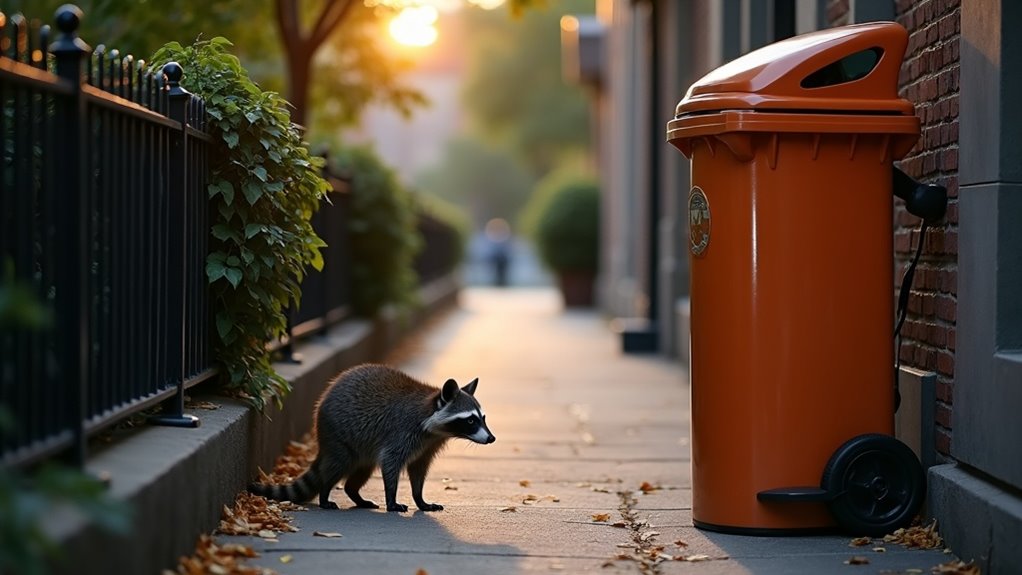
To stop trash raiding safely, secure your garbage cans with locking lids or bungee cords. Keep them inside until pickup morning and double-bag food waste to minimize odors. Regularly clean trash cans to deter wildlife and monitor for leaks. Utilize motion-activated lights and deterrent devices to startle scavengers. Engage your community to promote responsible trash practices and wildlife management. These strategies can greatly reduce raccoon visits, leading to more effective measures as we explore further.
Key Takeaways
- Secure trash cans with locking lids or bungee cords to prevent easy access by scavengers like raccoons.
- Keep garbage cans inside until the morning of pickup to reduce nighttime attraction.
- Regularly clean trash cans with a bleach solution to eliminate odors that attract wildlife.
- Use motion-activated lights or devices to startle and deter approaching raccoons.
- Double-bag food waste and store it in sturdy bags to minimize spills and odors.
Understanding Raccoon Behavior and Risks
Raccoon behavior greatly impacts the challenges of managing trash in urban environments.
These agile animals are adept scavengers, easily accessing garbage cans in search of food. Their dexterous front paws allow them to manipulate latches and pry open lids, rendering standard trash containers vulnerable.
Active primarily at night, raccoons raid trash when you’re less likely to notice, contributing to unsightly messes. Additionally, food waste can attract other pests like rats, leading to larger infestations.
Health risks also arise, as raccoons can carry diseases such as rabies, spreading harmful bacteria through contaminated debris left in your garbage.
Common Scavengers and Their Attraction to Trash
You’ll find that common scavengers like raccoons, opossums, and rats are drawn to trash cans primarily due to the enticing scent of food waste.
Raccoons, with their nimble paws and intelligence, can easily break into bins, while opossums scavenge for accessible snacks.
Rats utilize trash for both food and nesting.
This attraction not only leads to repeated raids but also increases mess and potential health risks in your neighborhood.
Common Animal Scavengers
When food waste is left unsecured in trash cans, it becomes a beacon for common animal scavengers, such as raccoons, opossums, and rats.
Raccoons, known for their agility and intelligence, can easily open lidded cans, leading to messes and potential health risks. Opossums opportunistically feed on spoiled food, disrupting local ecosystems.
To help deter raccoons and other scavengers, keep your garbage secure by using sturdy, lidded cans. This prevents the strong scents of food waste from attracting unwanted visitors.
Trash Appeal Factors
Trash cans are irresistible to common scavengers, as the potent scent of food waste easily lures them in from afar.
Raccoons, opossums, and rats see unsecured trash as a buffet, leading to potential messes and health risks. Effective trash management is essential for keeping your home clean and preventing animals from accessing your garbage.
By securing trash cans with tight-fitting lids, you can deter animals and minimize the risk of infestations.
Remember, the presence of food debris not only attracts scavengers but can also harm pets who might ingest toxic substances.
Prioritize cleanliness to maintain a safe environment for all.
Effective Deterrent Strategies for Raccoons
To effectively deter raccoons from raiding your trash, consider installing motion-activated floodlights around your garbage cans.
These lights can startle nocturnal raccoons, making your trash less inviting.
Additionally, secure your cans with locking lids or bungee cords to prevent access to the food inside.
Motion-Activated Deterrents
While raccoons are clever scavengers that can easily access your garbage, motion-activated deterrents offer an effective solution to keep them at bay. These devices use sensors to detect movement, triggering lights, sounds, or even water sprays that startle and deter animals from approaching your garbage cans. Consistent use of these deterrents adds an extra layer of protection, considerably reducing wildlife encounters.
| Type of Deterrent | Effectiveness |
|---|---|
| Lights | Startles animals |
| Sound devices | Creates noise |
| Water sprays | Surprises intruders |
| Sensor-triggered | Immediate response |
| Combined systems | Enhanced protection |
Secure Trash Can Solutions
Securing your garbage is essential in the battle against raccoon raids. Start by investing in heavy-duty trash cans with locking lids. These secure trash can solutions make it considerably harder for raccoons to access food waste.
You can also use bungee cords to further secure the lids, adding an extra layer of difficulty for these clever creatures. Storing trash cans in a garage or shed overnight minimizes access during their active hours.
Additionally, regularly clean your cans with strong-scented soaps to mask odors that attract raccoons. Motion-sensor floodlights can also deter them, disrupting their scavenging behavior effectively.
Modifying Your Trash Disposal Habits
Modifying your trash disposal habits is essential for reducing the likelihood of wildlife rummaging through your garbage.
Start by keeping garbage cans inside until the morning of pickup to deter nocturnal animals from raiding. Double-bagging food waste helps minimize odors, making it less appealing to critters.
Always secure trash bags inside the can and avoid overfilling to prevent spills. Regularly clean your trash cans with a bleach and water mixture to eliminate lingering smells that attract wildlife.
Utilizing professional trash can cleaning services can also help maintain cleanliness, ensuring your area remains uninviting to unwanted animals.
Importance of Cleanliness in Trash Management
Keeping your trash disposal habits in check naturally leads to the importance of cleanliness in trash management.
Regularly cleaning your garbage cans helps eliminate lingering smells that attract animals raiding your garbage. By removing sticky residues and food particles, you’ll deter pests while promoting a hygienic environment.
Clean cans contribute to community standards, maintaining an orderly neighborhood. Consistent cleaning not only protects local wildlife and pets from hazards but also supports sustainability efforts.
Clean trash cans uphold community standards, safeguard local wildlife, and enhance sustainability efforts for a better neighborhood.
Ultimately, keeping your trash areas clean fosters a safer, cleaner space for everyone, benefitting both you and your community in the long run.
Utilizing Wildlife-Proof Trash Cans
Wildlife-proof trash cans are an essential investment for anyone looking to prevent animals from raiding their garbage.
These cans help guarantee you keep wildlife away from your garbage areas by using features designed for effectiveness.
Consider these three aspects:
- Locking lids that prevent easy access to food.
- Heavy-duty materials that withstand scratching and biting, guaranteeing durability.
- Odour-sealing features that minimize scents attracting wildlife.
Additionally, motion-activated options can deter animals with sounds or sprays.
Community Involvement in Responsible Trash Practices
While it’s easy to overlook the impact of individual actions on community cleanliness, your involvement can make a significant difference in responsible trash practices.
Organizing neighborhood clean-up events fosters community engagement and promotes shared responsibility. Educating residents about wildlife-proof garbage cans reduces the risk of attracting animals to trash areas.
Collaborating with local animal control can provide resources for effective wildlife management. Encourage participation in local recycling programs to enhance awareness of environmental issues.
Additionally, creating a community watch for monitoring wildlife activity allows residents to take proactive measures, anticipating potential issues and preventing trash raiding before it occurs.
Key Takeaways for Preventing Trash Raiding
To effectively prevent trash raiding, you can implement several practical strategies that substantially reduce the risk of attracting wildlife.
Consider these key takeaways:
- Secure trash cans with locking lids and heavy-duty materials to deter animals like raccoons and skunks.
- Store garbage cans in enclosed areas, such as garages or sheds, to minimize visibility and accessibility.
- Clean trash cans regularly using a bleach solution to eliminate odors, and always double-bag food waste to prevent spills.
Additionally, utilize repellents, like ammonia-soaked rags or citrus peels, to keep curious wildlife at bay.






