
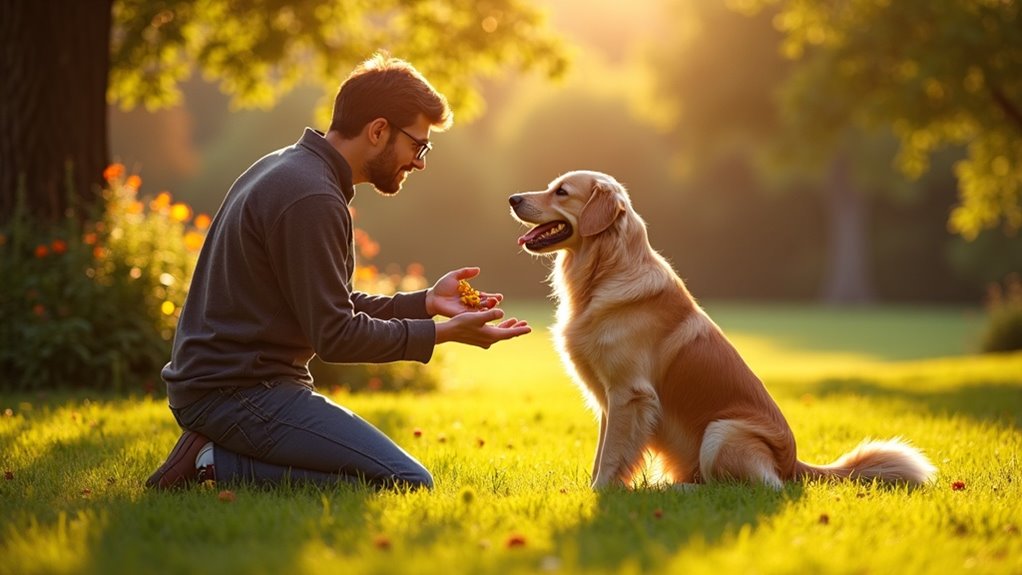
To use life rewards in dog training, incorporate enjoyable experiences like playtime, attention, or a favorite toy as positive reinforcement for desired behaviors. Start by communicating expectations clearly and practice in calmer environments to build your dog’s confidence. Gradually replace food treats with these engaging rewards, ensuring your dog learns to associate good behavior with fun activities. This natural approach strengthens your bond and enhances training effectiveness. Discover practical examples and tips to maximize this approach for lasting results.
Key Takeaways
- Use enjoyable activities like playtime or attention as rewards to reinforce desired behaviors during training sessions.
- Communicate clear expectations to your dog before introducing life rewards for better understanding and confidence.
- Gradually reduce food treats while incorporating life rewards in everyday scenarios to strengthen the bond and maintain engagement.
- Start training in quiet environments and slowly introduce distractions as your dog consistently performs desired behaviors.
- Manage your dog’s environment to facilitate success by positioning them in situations where good choices are easy to make.
Understanding Life Rewards in Dog Training
When you think about dog training, consider how life rewards can transform the experience for both you and your dog. Life rewards include enjoyable experiences like toys, attention, or activities that reinforce good behavior.
By rewarding your dog with these natural reinforcements, you enhance daily interactions and strengthen your bond. It’s essential to communicate desired behaviors clearly before introducing life rewards so your dog knows what to expect.
Use these rewards in everyday life, like asking for a sit before opening the door. This approach promotes calm behavior, making training feel joyful and integrated into both your lives.
Transitioning From Treats to Life Rewards
As you begin to shift from treats to life rewards in your dog training, remember that clear communication is key to your dog’s understanding and confidence. Ascertain your dog confidently performs a behavior before expecting it for non-food rewards. Practice in less stimulating environments to enhance focus. Gradually reduce treat rewards while incorporating life rewards like attention or play. This fosters a more engaging experience and strengthens your bond.
| Step | Action |
|---|---|
| 1 | Clarify desired behavior |
| 2 | Reduce treats gradually |
| 3 | Incorporate life rewards |
Practical Applications of Life Rewards
Incorporating life rewards into your dog training not only enhances learning but also makes everyday interactions more meaningful.
Use life rewards by asking your dog to sit before throwing a ball or allowing outside access. Reinforce polite behavior at mealtime by requiring a sit or stay before placing the food bowl down.
Incorporate life rewards by asking for a sit before playtime or meals, reinforcing good behavior in daily routines.
During play dates, request a sit or eye contact before letting your dog engage with others; this builds social skills.
Additionally, use attention as a reward—praise and physical touch reinforce desired behaviors, making training enjoyable for you and your dog.
Train your dog with these practical applications for lasting results.
Managing the Environment for Success
To set your dog up for success, it’s vital to manage their environment effectively.
Start training in quieter spaces to minimize distractions and set clear expectations around desired behaviors. As your dog shows reliable behavior, gradually introduce them to more stimulating scenarios to build their confidence.
Guarantee training sessions remain positive and frustration-free by adjusting your expectations when needed. Position your dog in succeed scenarios, where making good choices is easy.
This approach helps reinforce desired behaviors, ultimately leading to a more confident and well-trained companion.
Benefits of Using Life Rewards
When you use life rewards in dog training, you create a natural learning environment that encourages good behavior through everyday interactions. This method motivates your dog to exhibit desired behaviors, as they’re tied to activities your dog loves. For instance, when your dog learns to sit before you open the door, it fosters better manners and strengthens your bond. Life rewards can reduce reliance on food treats, making training more versatile.
| Benefit | Emotional Connection | Practical Application |
|---|---|---|
| Encourages good manners | Joyful experiences | Real-life situations |
| Increases motivation | Strengthens bond | Reduces need for treats |
| Promotes engagement | Builds trust | Enhances training effectiveness |
Examples of Life Rewards in Everyday Situations
Life rewards can be seamlessly integrated into your daily routines, making training a natural part of your dog’s life.
For instance, ask your dog to sit before you throw their favorite ball, combining play with training. Request eye contact before placing down their food bowl, teaching focus and patience.
Have your dog wait at the door, reinforcing impulse control. Require a sit before attaching the leash, promoting calmness for loose leash walking.
Finally, encourage your dog to perform a down or stay before playtime with other dogs, helping them navigate social situations. Your dog knows these behaviors lead to great rewards!






