
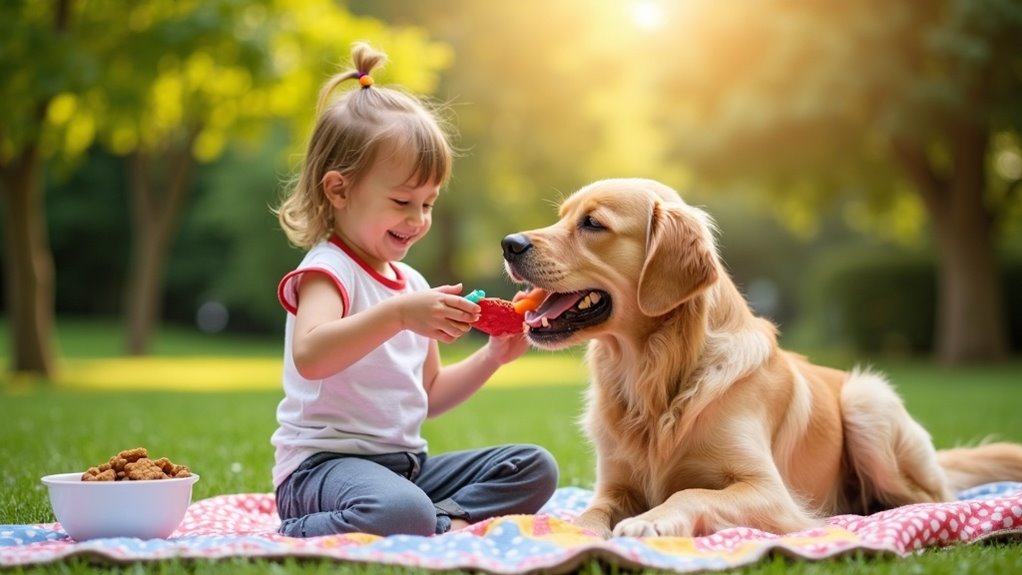
To prevent resource guarding in dogs, you need to create a structured environment and establish consistent routines. Supervise your dog’s interactions with high-value items and use positive reinforcement to build trust. Gradual desensitization to triggers is essential, as is teaching surrender cues like “drop it.” Early intervention is key to fostering a positive relationship and reducing anxiety. By understanding specific triggers and adjusting your strategies, you can create lasting behavioral changes. Learn more about practical techniques to strengthen your approach.
Key Takeaways
- Establish a consistent feeding routine and designated area to reduce anxiety around food resources.
- Use positive reinforcement techniques to encourage sharing and cooperation with high-value items.
- Gradually desensitize the dog to triggers by introducing them in a controlled environment.
- Teach surrender cues like “drop it” and “leave it” to promote desirable behavior around guarded items.
- Seek professional guidance for tailored strategies and early intervention to strengthen the bond and address issues promptly.
Understanding Resource Guarding in Dogs
Understanding resource guarding in dogs is essential for fostering a harmonious relationship between you and your pet. This behavior often manifests as growling or lunging, reflecting a dog’s instinct to protect valuable items like food or toys.
Recognizing the signs of resource guarding, such as stiff body posture or freezing, is vital for early intervention. It’s important to remember that this isn’t a breed-specific issue; individual history and environment play significant roles.
Misinterpreting a dog’s body language can exacerbate aggressive behavior. For effective resource guarding treatment, seeking professional help can guide you in preventing resource guarding and improving your dog’s well-being.
Common Triggers for Resource Guarding
Resource guarding in dogs often arises from specific triggers that can escalate their protective instincts. High-value items like food, toys, or even personal spaces such as beds can provoke guarding behavior.
Additionally, dogs may guard stolen items, perceiving them as valuable resources. The presence of other pets or children can heighten anxiety, increasing competition for resources and intensifying guarding tendencies.
Environmental factors, including a history of scarcity, play a significant role in shaping these behaviors. Furthermore, certain breeds have a genetic predisposition to resource guarding, making it essential to understand these triggers to effectively support your dog.
Creating a Structured Environment
To effectively address resource guarding, creating a structured environment for your dog can greatly reduce anxiety and competition over valuable items.
Establish a consistent feeding routine in a designated area to minimize distractions and competition. Identify objects your dog guards and restrict access when not in use.
Implement a structured approach during playtime by supervising and removing high-value items. Use gates to limit access to valued areas, ensuring safety first for all.
Encourage a calm environment during feeding and play, fostering security and reducing the likelihood of your dog’s resource guarding behaviors.
Compassionate training supports a harmonious home.
Implementing the 333 Rule
When you introduce a new dog into your home, understanding the 333 Rule can greatly ease the shift.
This approach emphasizes giving your dog three days to acclimate, three weeks to adjust to routines, and three months to fully settle in, all of which can help reduce anxiety and the likelihood of resource guarding.
Understanding the 333 Rule
Implementing the 333 Rule can be a game-changer for newly adopted dogs, providing them with a structured approach to acclimate to their new home.
This rule emphasizes a gradual shift: three days for initial adjustment, three weeks for settling in, and three months for full acclimation.
During those first days, create a secure environment with minimal stressors and essential supplies.
Over the next three weeks, focus on consistent routines, including training sessions, to foster trust among family members.
After three months, observe your dog’s behavior; they should exhibit comfort, reducing the likelihood of resource guarding in their new environment.
Practical Application Examples
How can you effectively apply the 333 Rule in your home to prevent resource guarding in your newly adopted dog?
Start by providing a quiet space for those first three days, minimizing distractions and competition.
In the following three weeks, introduce your dog to household routines and family members while watching for signs of resource guarding, especially around food bowls.
After three months, your dog should feel secure and integrated.
Throughout this process, consistently reinforce positive behaviors with treats and praise.
For additional guidance, consider consulting a professional dog trainer to develop a tailored treatment plan for your dog’s needs.
Training Techniques for Prevention
To effectively prevent resource guarding, you should focus on positive reinforcement strategies that reward your dog for sharing items.
Gradual desensitization techniques can help your dog feel more comfortable around high-value resources, while teaching surrender cues like “drop it” or “leave it” reinforces desirable behavior.
These methods create a foundation of trust and cooperation, making resource sharing a positive experience for both you and your dog.
Positive Reinforcement Strategies
While many dog owners may feel frustration when faced with resource guarding, employing positive reinforcement strategies can effectively transform this behavior.
Reward your dog with high-value treats when they willingly share or relinquish items, fostering a positive association with giving up resources. Use cues like “drop it” and “leave it,” starting with low-value items and progressing as your dog gains comfort.
Engage in fetch games, reinforcing the idea that returning items brings rewards. Incorporate regular training sessions focused on mental stimulation and trust-building.
These techniques help create a secure environment, easing anxiety around sharing and enhancing your relationship with your dog.
Gradual Desensitization Techniques
Positive reinforcement techniques lay a solid foundation for addressing resource guarding, but incorporating gradual desensitization can further enhance your dog’s comfort around valued items.
Start by placing a low-value item on the floor, allowing your dog to observe it from a distance. As your dog grows more comfortable, gradually decrease that distance.
Use treats to create positive associations, tossing them near the item to reinforce calm behavior. Always monitor your dog’s body language for signs of stress.
Practice these exercises in different environments to help generalize your dog’s comfort with resources, ultimately fostering a relaxed attitude towards sharing.
Teaching Surrender Cues
Establishing effective surrender cues is essential in preventing resource guarding, as it fosters trust and cooperation between you and your dog.
Here are some techniques to teach these cues:
- Drop It: Start with low-value toys, rewarding your dog with treats for relinquishing them.
- Leave It: Place a treat on the floor, instructing your dog to ignore it until given permission.
- Treat Exchanges: Offer higher-value treats for items your dog guards, creating positive associations.
- Monitor Body Language: Pay attention to your dog’s comfort, adjusting your approach to guarantee a positive experience.
Using positive reinforcement throughout builds lasting trust.
Importance of Early Intervention
Early intervention in resource guarding is essential for fostering a positive and harmonious relationship between you and your dog. By implementing proactive training and early socialization, you can create trust and reduce anxiety-related behaviors.
Observing your dog’s body language allows you to identify discomfort signs and address potential guarding before it escalates. Research shows that dogs trained with positive reinforcement during their formative years are less likely to develop resource guarding tendencies.
Engaging a certified dog trainer can provide tailored strategies, ensuring you effectively manage and prevent these issues, ultimately fostering a safer environment for your beloved pet and family.
Seeking Professional Guidance
When dealing with resource guarding, seeking professional guidance can be a game-changer for you and your dog. A certified dog trainer can help you understand your dog’s behavior and develop tailored strategies.
Seeking professional guidance can transform your approach to resource guarding and strengthen your bond with your dog.
Here are four key benefits of professional support:
- Assessment: They evaluate the severity of resource guarding issues.
- Structured Plans: Experts create management techniques and positive reinforcement strategies.
- Safe Environment: Training occurs in a controlled setting, minimizing risks.
- Early Intervention: Addressing issues promptly can prevent escalation, ensuring a safer home for everyone.
Investing in professional help fosters a harmonious relationship with your beloved pet.






