
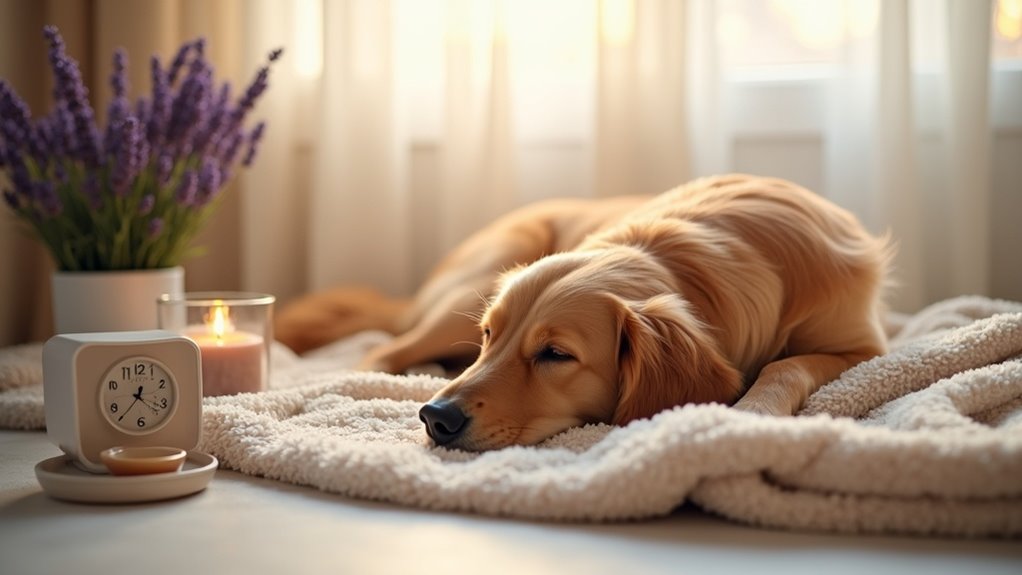
To calm your anxious dog, try establishing a consistent daily routine to create a sense of security. Incorporate mental stimulation with puzzle toys and engage in interactive play. Calming sounds or music can soothe their nerves, and aromatherapy with dog-safe scents might help too. Consider natural supplements under your vet’s guidance. Always consult with a veterinarian for tailored advice and techniques. There’s more to explore about specific methods that can enhance your dog’s well-being.
Key Takeaways
- Create a consistent daily routine with predictable feeding, exercise, and playtime to foster security and reduce anxiety.
- Use calming music or sounds to establish a soothing atmosphere for your dog.
- Provide a safe, quiet space where your dog can retreat when feeling anxious.
- Engage in regular exercise and interactive play to alleviate stress and promote mental stimulation.
- Consider natural supplements, like chamomile or melatonin, after consulting with a veterinarian for additional anxiety support.
Understanding Dog Anxiety
Understanding dog anxiety is essential for any pet owner, especially since it can greatly affect your dog’s well-being.
Dog anxiety can arise from various factors like separation, loud noises, or past trauma, leading to stress and anxiety that manifests in behaviors such as excessive barking or destructive actions.
To help your anxious dog, recognizing early signs of anxiety, like pacing or panting, is vital for timely intervention. A consistent routine and predictable environment can alleviate anxiety.
If concerns persist, consult your veterinarian for guidance on effective calming techniques tailored to your dog’s unique needs and background.
Recognizing Signs of Anxiety
Recognizing signs of anxiety in your dog is essential for maintaining their emotional well-being.
Look for common signs of stress, such as excessive barking, whining, or trembling. Pay attention to body language; panting, cowering, or avoiding eye contact can indicate anxiety in dogs. You might notice them pulling back their ears or licking their lips.
Early intervention is important, so be alert to subtle behaviors like pacing or attempts to hide. By understanding these signs, you can help your dog feel safe and secure, addressing their needs before anxiety escalates.
Your awareness is key to their comfort and happiness.
Creating a Consistent Routine
Creating a consistent routine is essential for your dog’s emotional well-being.
By establishing a daily schedule for feeding, exercise, and playtime, you help them feel secure and reduce any anxiety.
Predictable feeding times not only regulate their metabolism but also provide a comforting structure that your dog can rely on.
Daily Schedule Importance
Establishing a consistent daily schedule is essential for your dog’s emotional well-being, as it helps them feel secure and reduces anxiety triggers.
A predictable routine for feeding, exercise, playtime, and sleep fosters mental stability, allowing your dog to understand what to expect each day. Small changes can lead to increased stress, so maintaining a consistent schedule is vital for effective stress management.
Predictable Feeding Times
When you set predictable feeding times for your dog, you’re not just providing meals; you’re fostering a sense of stability that can greatly reduce anxiety. A consistent routine helps your dog anticipate events, creating a sense of security and reducing stress. Regular feeding times guarantee proper digestion and health, while also preventing confusion that can lead to destructive behaviors. Dogs thrive on structure, and a well-structured daily routine, including these feeding times, enhances their mental well-being.
| Benefits of Predictable Feeding Times | Impact on Your Dog |
|---|---|
| Reduces anxiety | Enhances sense of security |
| Promotes better digestion | Prevents destructive behavior |
| Fosters routine | Improves mental well-being |
Providing Mental Stimulation
To help your anxious dog, providing mental stimulation is key. Engaging puzzle toys, interactive training sessions, and varied play activities can keep your dog mentally sharp and prevent boredom.
Engaging Puzzle Toys
Many dog owners find that engaging puzzle toys can be a game changer for anxious pups.
These toys not only provide mental stimulation but also help reduce anxiety and destructive behaviors. By challenging your dog to solve problems, you can enhance their cognitive skills and emotional well-being.
Consider the following benefits:
- Treat-dispensing designs encourage critical thinking.
- Varied challenges prevent boredom, a common anxiety trigger.
- Extended playtime keeps your pup occupied and fulfilled.
Incorporating these toys into your dog’s routine can lead to a calmer, happier companion, allowing them to channel their energy productively.
Interactive Training Sessions
While engaging your dog in interactive training sessions, you’ll find that providing mental stimulation can greatly alleviate anxiety. Teaching new tricks and commands keeps your dog focused, helping to reduce anxiety levels.
Incorporating puzzle toys during these sessions enhances problem-solving skills and distracts anxious dogs from stressors. Regular obedience training not only improves manners but also fosters a stronger bond between you and your dog, enhancing their confidence.
Additionally, consistent training routines create predictability, allowing your anxious dog to feel more secure. Ultimately, these sessions serve as productive outlets for excess energy, leading to a calmer, more confident pet.
Varied Play Activities
Engaging your dog in varied play activities not only keeps them entertained but also provides essential mental stimulation that can greatly reduce anxiety.
Here are three effective ways to incorporate play:
- Puzzle Toys: These challenge your dog’s mind while rewarding them with treats, offering a sense of accomplishment.
- Scent Games: Hide treats around your home, encouraging your dog to use their natural instincts and explore.
- Obstacle Courses: Create fun challenges that foster confidence and provide physical exercise.
Utilizing Calming Sounds
Creating a soothing atmosphere with calming sounds can greatly benefit anxious dogs. You can use white noise machines or music therapy to help mask triggering noises, promoting a calm environment. Research shows that sounds around 50-60 beats per minute effectively reduce anxiety. Experimenting with different calming sounds tailored for dogs can make a significant difference.
| Sound Type | Benefits | Recommended Sources |
|---|---|---|
| Classical Music | Reduces stress | “Through A Dog’s Ear” |
| White Noise | Drowns out sudden noises | White noise apps/machines |
| Nature Sounds | Creates a peaceful atmosphere | Online playlists |
| Soft Melodies | Encourages relaxation | Specialized dog albums |
| Ambient Sounds | Provides continuous calm | Streaming services |
Helping your dog find comfort is essential.
Exploring Natural Supplements
Calming sounds can set the stage for a more relaxed environment, but for some dogs, additional support may be beneficial.
Calming sounds can create a serene atmosphere, but some dogs may require extra support for true relaxation.
Consider incorporating natural supplements to help your anxious dog achieve emotional well-being. Here are three options to explore:
- Nutramax® Solliquin – crafted to promote relaxation without pharmaceuticals.
- Purina® Calming Care Supplement Powder – utilizes probiotics to manage anxiety through gut health.
- Ingredients like chamomile or melatonin – known to reduce anxiety levels and enhance calmness.
Always consult with a veterinarian before introducing any natural supplements, ensuring they align with your dog’s specific health needs and history.
Consulting With a Veterinarian
When your dog shows signs of anxiety, consulting with a veterinarian is vital for crafting an effective management plan tailored to their unique needs.
Your vet can assess your dog’s anxiety level and rule out any underlying health issues. They may suggest behavior modification therapy or medication as part of a thorough treatment approach.
Additionally, a veterinary behaviorist can offer specialized insights. Be sure to ask about safe and effective natural supplements that can help alleviate your dog’s anxious symptoms.
Regular check-ins with your veterinarian will guarantee progress is monitored and adjustments are made for ideal results.






