
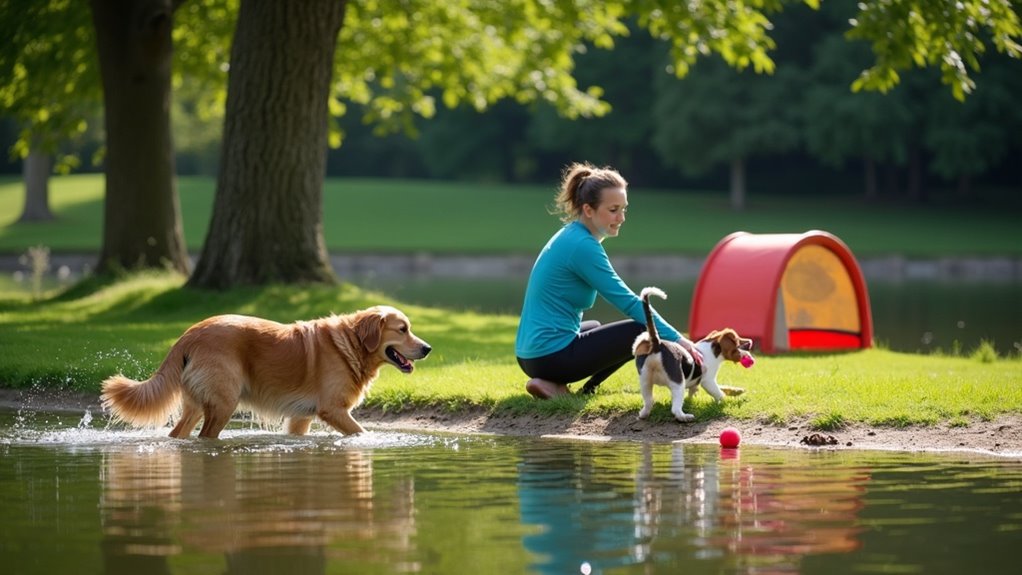
If your dog has joint issues, low-impact exercises are essential for managing pain and improving mobility. Walking on flat surfaces, swimming, and controlled treadmill sessions can minimize joint stress while keeping your dog active. Incorporating range of motion exercises and gentle stretching can enhance flexibility and comfort. Always monitor your dog’s activity levels and consult with a veterinarian for tailored plans that suit their needs. You’ll discover even more effective strategies to help your furry friend thrive.
Key Takeaways
- Engage in controlled leash walks on flat surfaces to improve joint mobility without excessive strain.
- Incorporate swimming sessions to leverage buoyancy, reducing joint stress while promoting movement.
- Utilize range of motion exercises to enhance flexibility and maintain joint health gently.
- Implement gradual intensity increases during activities to allow safe adaptation for your dog.
- Consult a veterinarian for personalized exercise plans and monitor activity levels regularly.
Understanding Joint Issues in Dogs
Joint issues in dogs can be a heartbreaking reality for many pet owners, as they often lead to chronic pain and reduced mobility.
Nearly 40% of canines suffer from conditions like osteoarthritis or hip dysplasia, which can greatly affect their quality of life. You might notice signs such as limping, reluctance to play, or difficulty rising. These symptoms indicate that veterinary attention is essential.
Managing joint issues effectively often requires a multifaceted approach, including low-impact exercise, weight control, and environmental modifications.
A comprehensive strategy involving gentle exercise, weight management, and home adjustments is crucial for effectively managing canine joint issues.
Tailoring a plan to your dog’s unique needs can help maintain mobility and alleviate discomfort, fostering a happier life.
Importance of Exercise for Dogs With Joint Problems
Exercise is essential for managing chronic pain and preserving muscle strength in dogs with joint issues.
By incorporating regular, low-impact activities into your dog’s routine, you can enhance their joint mobility and overall comfort.
This commitment not only supports their physical health but also contributes to a happier, more active life.
Chronic Pain Management
When your dog struggles with joint issues, finding a balance between comfort and activity can feel challenging.
Regular, low-impact exercise is essential for pain management, especially for dogs with hip dysplasia. Here’s how you can help:
- Incorporate 60 minutes of daily exercise to greatly reduce joint pain.
- Encourage swimming or controlled leash walks to minimize stress on joints.
- Gradually increase exercise intensity to help your dog adapt safely.
- Promote endorphin release through consistent activity, enhancing their overall comfort.
Muscle Strength Preservation
Maintaining muscle strength is vital for dogs dealing with joint issues, as it directly impacts their mobility and overall quality of life.
An effective exercise program incorporates low-impact activities, like swimming or walking on flat surfaces, which enhance muscle strength without straining the joints.
Therapeutic exercise, including controlled core strengthening routines, targets specific muscle groups, fostering stability and support.
Gradually adapting your dog to these exercises is essential for safely building muscle strength while minimizing injury risk.
Regular, low-impact exercise can greatly improve joint mobility and reduce pain, ensuring your furry friend remains active and engaged in life.
Enhanced Joint Mobility
For dogs facing joint issues, engaging in regular low-impact activities is essential not just for maintaining mobility, but also for enhancing overall joint health.
Here are a few ways exercise can help:
- Improves joint mobility by increasing the range of motion.
- Strengthens surrounding muscles, providing better support to affected joints.
- Stimulates joint-lubricating fluids, reducing friction and pain.
- Incorporates therapeutic exercises like gentle stretching, enhancing flexibility.
Recommended Low-Impact Exercises
While managing joint issues in dogs can be challenging, incorporating recommended low-impact exercises can greatly enhance their quality of life.
Start with simple activities like walking on flat surfaces, gradually increasing duration to boost joint mobility and muscle strength. Engage in range of motion exercises, moving joints gently through their full range to promote flexibility.
Begin with gentle walks on flat surfaces and incorporate range of motion exercises to enhance joint mobility and flexibility.
Controlled activities, such as treadmill sessions in a safe environment, let you monitor intensity and prevent overexertion. Additionally, consider stretching routines targeting muscles around affected joints, always guided by a veterinarian.
These exercises create a balanced approach to maintaining your dog’s wellbeing.
Benefits of Swimming for Joint Health
Swimming offers your dog a low-impact way to exercise without putting strain on their joints.
This activity not only strengthens their muscles but also helps alleviate pain and inflammation, improving their overall mobility.
Low-Impact Exercise Benefits
How can swimming transform your dog’s experience with joint pain? This low-impact activity offers numerous benefits for dogs with joint issues, including:
- Reduced Pressure: Buoyancy lessens stress on joints, allowing easier movement.
- Pain Relief: Regular sessions can effectively reduce pain and inflammation in affected areas.
- Enhanced Mobility: Swimming promotes joint mobility, helping your dog move more freely.
- Overall Fitness: The resistance of water improves muscle strength and helps maintain a healthy weight.
Incorporating swimming into your dog’s routine can greatly enhance their quality of life, making it an ideal choice for managing joint-related concerns.
Enhanced Muscle Strength
Engaging in swimming can greatly enhance your dog’s muscle strength, especially when dealing with joint issues. This low-impact exercise supports their body weight, allowing for movement without pain. Regular swimming sessions improve flexibility and range of motion, essential for joint health.
| Benefit | Description |
|---|---|
| Low Impact | Reduces stress on joints during exercise. |
| Muscle Strength | Builds muscle mass around affected joints. |
| Flexibility | Enhances range of motion, critical for mobility. |
| Cardiovascular Fitness | Boosts overall fitness with minimal injury risk. |
Incorporating swimming into your dog’s exercise plan can support their well-being considerably.
Pain Relief Mechanism
While it may seem counterintuitive, the gentle embrace of water can greatly alleviate your dog’s joint pain. Here’s how swimming benefits joint health:
- Buoyancy: Reduces pressure on joints, making it a low-impact exercise.
- Muscle Strength: Water resistance strengthens muscles around the joints, enhancing stability.
- Synovial Fluid Production: Regular swimming stimulates lubrication, reducing stiffness.
- Cardiovascular Fitness: Helps maintain a healthy weight, lowering strain on affected joints.
Incorporating Range of Motion Exercises
Incorporating range of motion (ROM) exercises into your dog’s routine can greatly improve their joint health and overall comfort. These gentle movements help maintain flexibility, enhancing joint function. It’s essential to consult a rehabilitation specialist for guidance to prevent discomfort or injury. Aim for several sessions each week, gradually increasing repetitions as your dog adjusts. Always watch for signs of fatigue or pain and modify the routine as needed.
| Exercise Type | Benefits |
|---|---|
| Flexing | Enhances flexibility |
| Extending | Improves joint lubrication |
| Monitoring | Prevents discomfort |
Stretching Techniques for Flexibility
Stretching techniques play an essential role in enhancing your dog’s flexibility, particularly for those with joint issues.
Incorporating regular stretching exercises for dogs can notably improve range of motion and alleviate stiffness.
Here are some effective techniques:
- Gentle Static Stretches: Hold a limb in a fully extended position for 10-30 seconds.
- Dynamic Leg Swings: Gently swing your dog’s leg back and forth to increase blood flow.
- Joint Bending: Slowly bend the affected joints to promote mobility.
- Consult with Your Veterinarian: Always seek tailored advice for your dog’s specific condition to guarantee safety.
Indoor Activities to Keep Your Dog Engaged
Keeping your dog mentally stimulated is just as important as physical activity, especially for those with joint issues. Engaging in indoor activities like hide and seek not only provides fun but also minimizes physical strain.
Interactive toys and puzzles encourage problem-solving through low-impact movements, reducing the risk of exacerbating joint pain. Rewarding your dog with low-calorie treats, such as carrots or snap peas, can support joint health while keeping them motivated.
Always monitor activity levels; if you notice signs of fatigue, such as decreased enthusiasm, adjust the intensity of play to guarantee your dog remains comfortable and engaged.
Consulting With a Veterinarian for Tailored Exercise Plans
When it comes to managing your dog’s joint issues, consulting with a veterinarian is essential for creating an exercise plan tailored to their specific needs.
Here are some key benefits of this collaboration:
- Assess severity of joint problems and recommend low-impact exercises.
- Schedule regular follow-ups to adjust the exercise plan based on progress.
- Access resources from veterinary rehabilitation specialists for therapeutic exercises.
- Receive guidance on incorporating weight management strategies to reduce joint strain.






