
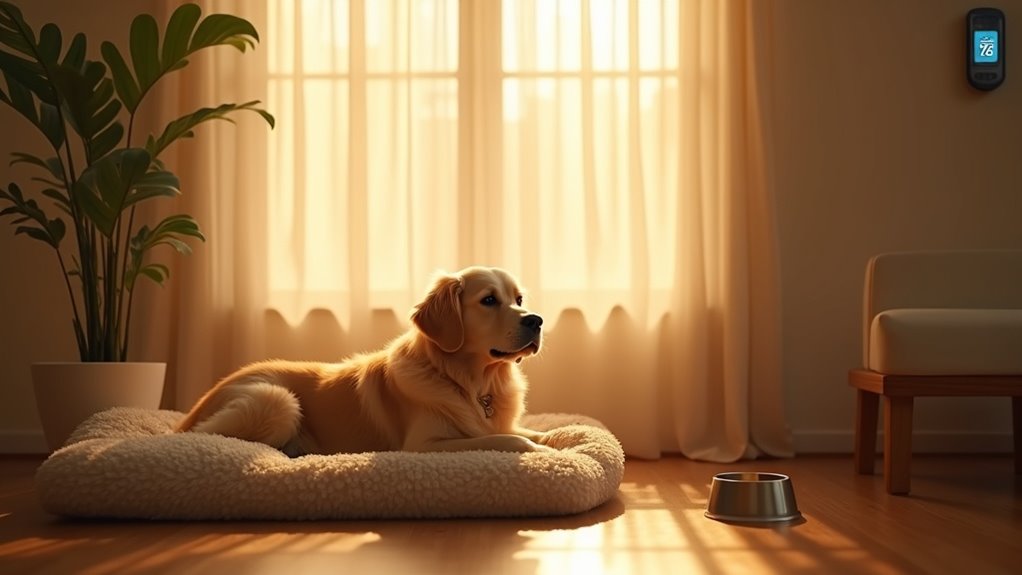
Safe home temperature ranges for dogs generally fall between 68°F to 72°F (20°C to 22°C) in winter and 75°F to 78°F (24°C to 26°C) in summer. It’s important to never let temperatures exceed 82°F (28°C) to prevent health risks. Short-haired dogs may struggle in colder than 32°F (0°C) conditions, while larger dogs with thick coats may prefer cooler settings. Understanding these ranges helps keep your dog comfortable and healthy, with more tips on managing temperature ahead.
Key Takeaways
- Indoor temperatures should be maintained between 68°F to 72°F (20°C to 22°C) during winter for optimal dog comfort.
- In summer, ideal indoor temperatures range from 75°F to 78°F (24°C to 26°C), avoiding extremes above 82°F (28°C).
- Smaller dogs may require warmer conditions, while larger breeds with thick coats may prefer the lower end of temperature ranges.
- Short-haired dogs should not be exposed to temperatures below 32°F (0°C) and need extra warmth indoors during cold weather.
- Monitor for signs of overheating, such as excessive panting, and take immediate action if temperatures exceed safe limits.
Understanding the Ideal Temperature Range
Understanding the ideal temperature range for your dog is essential to their comfort and health.
During summer, aim for a temperature between 75°F and 78°F (24°C–26°C) to help maintain their natural body temperature. Be cautious, as temperatures above 82°F (28°C) can pose health risks, particularly for thick-coated or brachycephalic breeds.
Aim for summer temperatures of 75°F to 78°F to keep your dog comfortable, avoiding risks above 82°F.
In winter, keeping the indoor temperature between 68°F and 72°F (20°C–22°C) is preferable.
Always monitor your dog’s individual preferences, as factors like breed, age, and health can influence their comfort and safety.
Ideally, maintain a safe indoor range of 50°F to 85°F (10°C to 29°C) to guarantee well-being.
Factors That Can Dictate House Temperature for Dogs
Several factors can dictate the house temperature that’s best for your dog. The coat type plays a significant role; long-haired breeds might overheat, while short-haired dogs prefer warmer spaces.
Size and weight also matter—smaller dogs lose heat quickly, and larger ones can struggle with overheating. Age affects preferences too; older dogs, especially those with health conditions like arthritis, often seek warmer environments for comfort.
Additionally, dogs with infections or joint issues may require higher temperatures to alleviate discomfort. Finally, consider your dog’s behavior; those who stay put may need localized warmth, especially during colder months.
What Temperature Is Too Cold for Short-Haired Dogs?
When it comes to short-haired dogs, temperatures that drop too low can pose significant discomfort and health risks. Generally, exposure to temperatures below freezing (32°F or 0°C) is too cold for them.
To guarantee their comfort, you should monitor their well-being closely during cold weather. Look for signs like shivering or reluctance to go outside. Providing coats or sweaters can help protect them from the elements.
Additionally, maintain indoor temperatures around 78 to 80 degrees Fahrenheit, adjusting as necessary based on your dog’s specific needs, age, or health conditions to keep them warm and comfortable throughout the winter.
Ideal Heat During Winter Temperatures for Dogs
To guarantee your dog’s comfort during winter, it’s important to maintain indoor temperatures between 68°F and 72°F (20°C to 22°C). This ideal heat guarantees their overall comfort and well-being.
Larger dogs with thick coats might prefer the lower end of this range, while smaller or short-haired breeds may need it a bit warmer.
When you leave your dogs at home, never let the temperature drop below 60°F (15°C).
Senior dogs or those with health issues often require extra warmth, so consider providing cozy resting areas.
Always monitor your dog’s behavior for signs of discomfort and adjust the thermostat as needed.
Breed-Specific Temperature Considerations
Understanding the specific temperature needs of different dog breeds is essential for their comfort and health.
Nordic breeds like Huskies thrive in cooler environments, ideally below 70°F (21°C). In contrast, short-haired breeds, such as Chihuahuas, prefer warmer settings around 75°F to 80°F (24°C to 27°C).
Brachycephalic breeds like Bulldogs struggle in heat, needing temperatures below 80°F (27°C). Large breeds, including Great Danes, should stay in environments below 75°F (24°C) to avoid overheating.
Smaller dogs lose body heat quickly and may need warmer temperatures of around 78°F (26°C) during cooler months to stay safe and comfortable.
Creating a Cool Environment for Your Dog
Creating a cool environment for your dog is essential, especially during the sweltering summer months. To guarantee their comfort in hot weather, provide multiple water stations throughout your home, keeping them hydrated.
Consider setting up cooling mats or raised beds in various rooms, helping with regulating body temperature. Outdoors, create shaded areas using umbrellas or tarps to give your dog a refuge from direct sunlight.
Ensure proper ventilation with fans to maintain a comfortable indoor temperature. Finally, make frozen treats using water or low-sodium broth to offer a fun and invigorating way for your dog to cool down.
Managing Temperature When You’re Away
When you leave your dog alone, set the thermostat to a maximum of 80°F (27°C) to keep them comfortable and safe.
Consider installing a smart thermostat for easy remote adjustments and guarantee your dog has access to cool areas like tiled floors.
Don’t forget to provide multiple water sources to help prevent dehydration while you’re away.
Thermostat Settings for Absence
To keep your dog safe and comfortable while you’re away, it is essential to set your thermostat correctly. Aim for a house temperature no higher than 80°F (27°C) to prevent overheating. Consider a smart thermostat for remote monitoring. Guarantee your dog has access to cool spots and multiple water sources to stay hydrated.
| Setting | Temperature (°F) | Comfort Level |
|---|---|---|
| Ideal | 70 – 75 | Ideal for dogs |
| Maximum | 80 | Safe limit |
| Minimum | 65 | Keep warm |
Consistent thermostat settings enhance your dog’s comfort while you’re away.
Cooling Solutions for Dogs
Ensuring your dog stays cool while you’re away requires a proactive approach to their environment. Set the thermostat no higher than 80°F (27°C) to maintain a comfortable atmosphere.
Consider installing a smart thermostat for remote monitoring and adjustments. Create cool areas at home, such as tiled floors or lower-level rooms, to help regulate their body temperature.
Provide multiple sources of fresh water throughout the house to keep your dog hydrated. Additionally, invest in cooling mats or raised beds in various rooms, offering your dog a comfortable resting spot while you’re not at home.
Hydration and Safety Measures
While you’re away, maintaining your dog’s hydration and safety is essential for their well-being.
Set the thermostat to no higher than 80°F (27°C) to keep your pup comfortable. Guarantee they’ve access to multiple water sources throughout your home to prevent dehydration, especially during warm weather.
Consider a smart thermostat for remote monitoring and adjustments. Create cool spots, like tiled floors or shaded areas, for your dog to retreat to when temperatures rise.
Most importantly, monitor your dog’s behavior for signs of discomfort or overheating, particularly during extreme weather, to guarantee their safety and happiness.
Recognizing Signs of Overheating
Recognizing signs of overheating in your dog is vital for their safety.
Look out for excessive panting, drooling, or a rapid heartbeat, as these indicate a need for immediate cooling.
If you notice lethargy, disorientation, or vomiting, it’s essential to take urgent action and seek veterinary help.
Overheating Symptoms
How can you tell if your dog is overheating? Recognizing overheating symptoms is essential for your pet’s safety.
Watch for these signs:
- Excessive Panting: If your dog is panting heavily or drooling, it’s trying to cool down.
- Increased Heart Rate: A rapid heartbeat indicates your dog is struggling to regulate its body temperature.
- Lethargy: Reduced activity or unusual weakness signals that your dog is affected by high temperatures.
- Disorientation: If your dog appears confused or collapses, seek immediate help, as these can be vital indicators of severe heat stress.
Immediate Action Steps
If you notice your dog showing signs of overheating, it’s crucial to act quickly to prevent serious health issues. Recognizing symptoms like excessive panting and lethargy enables you to take immediate action for your dog’s well-being. Check this table for quick reference on what to look for:
| Symptoms | Immediate Action |
|---|---|
| Excessive Panting | Move to a cooler area, provide water |
| Rapid Heart Rate | Cool down with wet towels |
| Vomiting or Diarrhea | Contact a vet for guidance |
Maintaining safe home temperature ranges can prevent overheating in dogs, ensuring their health and comfort.






