
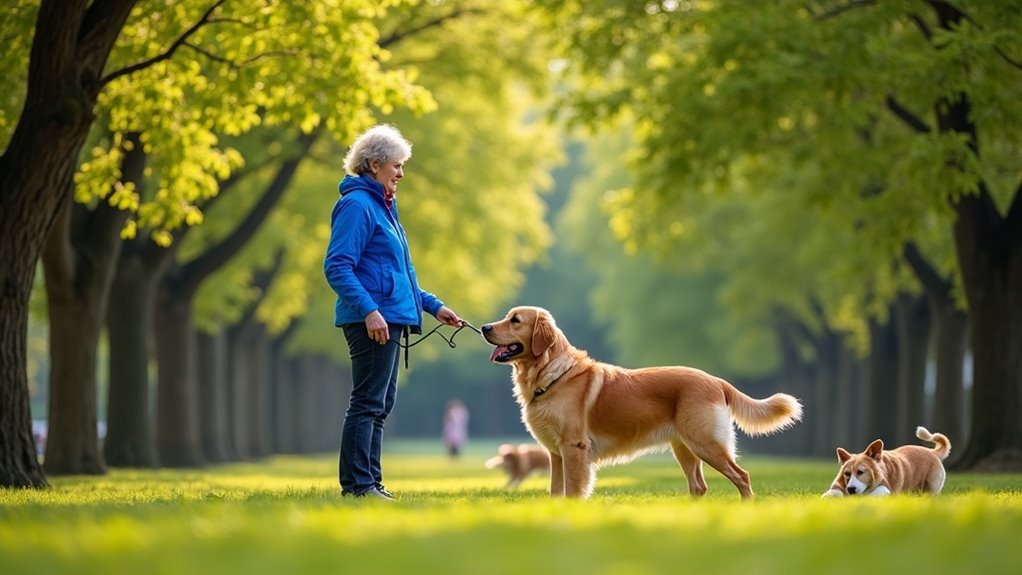
To stop leash pulling safely, always reward your dog for good leash behavior, using treats or praise. Never let them walk while pulling; instead, stop immediately and wait for a loose leash. Incorporate life rewards, like allowing sniffing or greeting other dogs, to keep your pup engaged. Consistency is key—follow a strict no-pulling rule to reinforce good manners. Stick with these methods, and you’ll improve your walks considerably. There’s even more to discover about effective techniques.
Key Takeaways
- Stop walking immediately when your dog pulls to reinforce that pulling leads to no progress.
- Wait for a loose leash and the dog’s attention before resuming walking.
- Consistently reward loose leash walking with treats or praise to encourage good behavior.
- Use the “J-shape” in the leash to identify when the dog is relaxed and ready to move.
- Incorporate life rewards like sniffing or greeting other dogs to maintain engagement during walks.
Always Reward Good Leash Behavior
One of the most effective ways to curb leash pulling is by consistently rewarding good leash behavior. Whenever your dog walks with a loose leash, reward your dog with treats, praise, or opportunities to explore.
Initially, offer rewards frequently to establish positive habits, then gradually reduce treats as their skills improve. Focus on positive reinforcement instead of just correcting bad behavior; this makes training enjoyable for both of you.
Incorporate life rewards, like allowing sniffing or greeting other dogs, to reinforce that polite walking leads to fun. Keeping walks engaging and positive encourages your dog to repeat good behavior and stop pulling.
Never Let Your Dog Walk When They Are Pulling
To effectively address leash pulling, it’s important to establish clear boundaries during walks.
Whenever your dog pulls, immediately stop walking. This reinforces the connection between pulling and halted movement, helping them learn to stop leash pulling.
Wait for a loose leash and your dog’s attention before resuming. This teaches that pulling results in no progress.
Consistency is key, even amidst distractions. By praising and rewarding your dog when the leash is slack, you encourage calm walking.
Regular practice in different environments strengthens their understanding of loose leash walking, leading to improved focus and better leash manners over time.
Wait for a Loose Leash Before You Walk
While walking your dog, it’s important to wait for a loose leash before moving forward. When your dog pulls, stop walking immediately. This teaches them that pulling leads to halted movement. Look for that “J-shape” in the leash, indicating they’ve relaxed. Reward them with treats or praise to reinforce good leash manners.
| Action | Result |
|---|---|
| Dog pulls | Stop walking |
| Leash slack | Resume walking |
| Reward good behavior | Reinforce learning |
| Practice patience | Build understanding |
| Consistent training | Improve leash manners |
Patience is key!
Incorporate Life Rewards on Your Walk
Incorporating life rewards during your walks can greatly enhance your dog’s leash manners and overall experience. By allowing your dog to sniff or greet other dogs, you reinforce that polite walking leads to enjoyable moments.
These life rewards, including exploration or play, provide mental stimulation and break the structure of your walk, keeping your dog engaged. When you reward your dog for walking without pulling, you create positive associations with loose leash walking.
Regularly integrating these rewards not only helps manage leash pulling but also enriches your dog’s well-being, making each walk a fun adventure for both of you.
Be Consistent With Your No-Pulling Rule
Establishing a consistent no-pulling rule is essential for teaching your dog proper leash manners. When your dog pulls, stop moving immediately. Wait for the leash to be slack before resuming, reinforcing the link between loose leash behavior and progress. Avoid exceptions, as they can confuse your dog and hinder training. Try the “red light, green light” game: pulling means stopping (red light), while slack leash means walking (green light). Remain patient; consistent practice will help your dog understand polite walking.
| Action | Result | Purpose |
|---|---|---|
| Pulling | Stop | Teach no-pulling rule |
| Loose leash | Walk | Reinforce positive behavior |
| Inconsistency | Confusion | Hinder training progress |
| Patience | Learning | Gradual improvement |






