
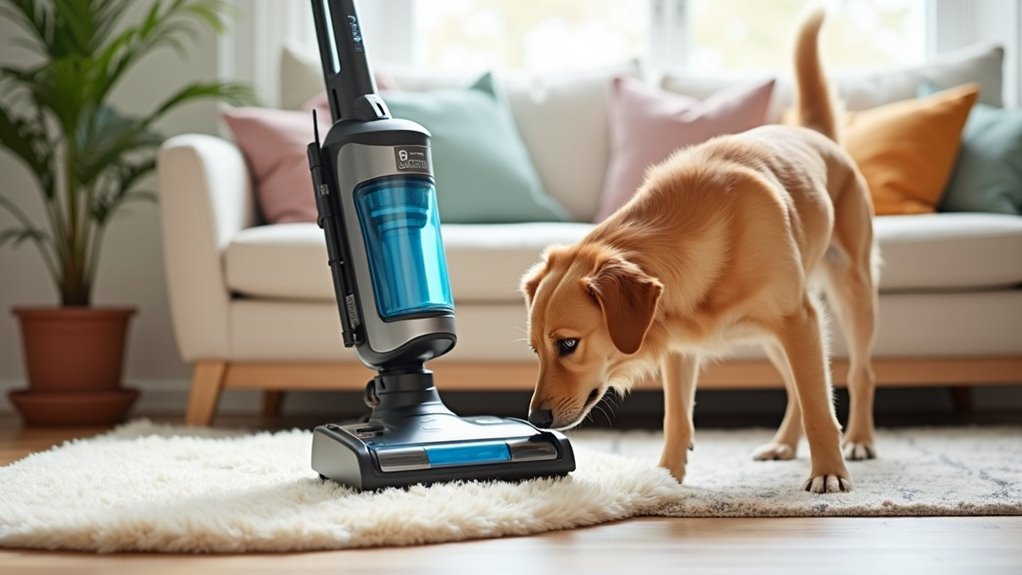
To help your dog accept the vacuum cleaner, start by letting them explore it while it’s off. Scatter treats around the vacuum to spark curiosity. Gradually turn it on without moving it, rewarding calm behavior. As they adjust, increase the volume slowly and continue to offer treats. If your dog shows signs of anxiety, consider giving them a safe space during cleaning. With patience and positive reinforcement, you can make this experience better for both of you. There’s more to explore on making this process seamless.
Key Takeaways
- Start by allowing your dog to explore the vacuum when it’s turned off to reduce initial fear.
- Scatter high-value treats around the vacuum to encourage curiosity and positive associations.
- Gradually turn on the vacuum while keeping it stationary, rewarding calm behavior with treats.
- Increase the vacuum’s volume slowly, continuing to reward your dog for remaining calm.
- If anxiety persists, consult a veterinarian or animal behaviorist for tailored support and strategies.
Understanding Your Dog’s Fear of Vacuums
Many dogs see vacuums as a source of fear due to their loud noises and unpredictable movements.
If your dog shows signs of anxiety, like hiding or barking, it’s essential to recognize that they might hate the vacuum. Understanding these fear responses can help you create a more comfortable environment.
Recognizing your dog’s anxiety towards vacuums can help foster a more comforting environment for them.
Dogs lacking early exposure to vacuums often react negatively when faced with one. When you’re aware of your dog’s feelings, you can work to ease their anxiety and help them feel more comfortable around this cleaning device.
Patience and empathy are key to transforming their fear into acceptance.
Step-by-Step Introduction to the Vacuum
As you introduce your dog to the vacuum cleaner, it’s essential to approach the situation with patience and understanding.
Start with the vacuum off, letting your dog explore it while you scatter treats around. Once they seem comfortable, turn it on without moving it, rewarding calm behavior.
Gradually move the vacuum cleaner while providing distractions. Here are some helpful tips:
- Use treats to create positive associations.
- Introduce the vacuum in a quiet space.
- Encourage calmness with a chew toy or bed.
- Consult a professional if anxiety persists.
These dog training tips help guarantee a smoother introduction for your furry friend.
Creating Positive Associations
Creating positive associations with the vacuum cleaner starts by making the experience enjoyable for your dog.
Begin by pairing the presence of the cleaner with high-value treats, rewarding your dog for calm behavior. Gradually increase the vacuum’s volume while offering treats, helping your dog link the sound to positive experiences.
Engage in playtime or training exercises nearby to foster a fun atmosphere, showing that the vacuum isn’t a threat. Scatter treats around the vacuum to encourage exploration.
Always monitor your dog’s body language, ensuring they remain comfortable and relaxed, adjusting the exposure if needed to maintain a positive experience.
Managing Your Dog During Vacuuming
While vacuuming can be a noisy and unsettling experience for your dog, managing their environment effectively can make all the difference.
Here are some strategies to help:
- Keep your dog in a separate room or outside to prevent distractions.
- Use long-lasting food-releasing toys or chews to keep them occupied and create a positive association with vacuuming.
- Gradually introduce your dog to the vacuum cleaner while it’s off before vacuuming.
- Consistently reward calm behavior with treats to reinforce positive associations.
Always monitor your dog’s body language; if they show signs of anxiety, seek professional advice for further support.
Seeking Professional Help for Overly Anxious Dogs
Even with careful management, some dogs may still struggle with intense anxiety around vacuum cleaners. In such cases, seeking professional help is essential. Start by consulting a veterinarian to rule out health issues. If anxiety persists, consider referrals to accredited animal behaviorists or professional trainers who specialize in desensitization techniques.
| Action | Professional Help | Additional Support |
|---|---|---|
| Consult a veterinarian | Tailored training strategies | Calming aids |
| Observe body language | Systematic desensitization | Medication if necessary |
| Monitor reactions | Adjust training techniques | Supportive environment |
| Build confidence | Gradual exposure | Positive reinforcement |






