
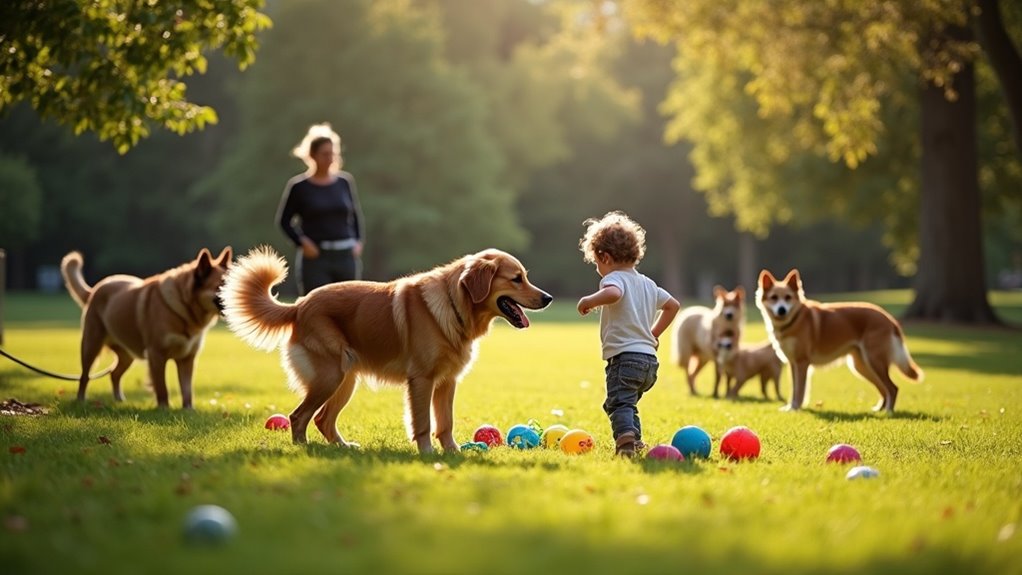
To safely socialize your adult rescue dog, observe their behavior for signs of fear or aggression. Gradually introduce them to new experiences and maintain control during introductions. Use positive reinforcement, rewarding calm behavior with treats. Consider low-pressure environments like quiet parks or dog-friendly cafes. If you notice aggressive behaviors or extreme anxiety, seeking professional help can be beneficial. With patience and the right techniques, you’ll help your dog feel more comfortable in social situations. There’s much more to explore on this topic.
Key Takeaways
- Introduce new experiences gradually, focusing on one trigger at a time to avoid overwhelming your dog.
- Use positive reinforcement by rewarding calm behavior with high-value treats during socialization attempts.
- Monitor your dog’s body language closely for signs of stress and adjust the environment accordingly.
- Engage in low-pressure settings, like quiet parks or dog-friendly cafes, for controlled social interactions.
- Seek professional help if aggressive behaviors or extreme anxiety persist during socialization efforts.
Signs Your Adult Rescue Dog Needs Socialization
When you notice signs of fearfulness or aggression in your adult rescue dog around unfamiliar people or animals, it’s often a clear indication that they need socialization.
Look for signs like nervousness during walks, where your dog may hesitate to explore. Shyness around others, such as avoiding interaction or hiding, often highlights a lack of experience.
Overexcitement in social situations can lead to anxiety, further signaling a need for exposure. Additionally, signs of resource guarding, like growling over food, indicate your adult dog needs socialization to build confidence and trust around people and other animals through positive reinforcement.
Steps for Safe Socialization
Recognizing the signs that your adult rescue dog needs socialization is just the beginning; taking effective steps to facilitate this process is key to their development.
Start by introducing your dog to new experiences gradually, focusing on one trigger at a time. Use positive reinforcement to reward calm behavior around new people, dogs, and environments.
Maintain control during introductions, ensuring interactions occur at a comfortable distance. Monitor your dog’s body language closely for signs of stress, ready to increase distance if needed.
Engaging a professional trainer can provide tailored guidance, especially if your dog shows significant fear or reactivity.
Positive Reinforcement Techniques
Positive reinforcement techniques are essential for helping your adult rescue dog feel more comfortable and confident in social situations. By rewarding desired behaviors with high-value treats, you create positive experiences that enhance your dog’s social skills.
Focus on consistently rewarding calm behavior around new stimuli, reinforcing their ability to remain relaxed. Gradual exposure to triggers, paired with immediate praise and rewards, helps reshape their emotional responses over time.
This approach not only strengthens the bond between you and your dog but also makes the socialization process more effective. Ultimately, you’re fostering a happier, more confident companion through positive reinforcement.
Recommended Socialization Environments
Creating safe socialization environments is essential for helping your adult rescue dog adjust and thrive. Consider these settings for positive interactions and gradual acclimatization:
| Environment | Benefits |
|---|---|
| Quiet Parks | Observe others from a distance, reducing stress. |
| Dog-Friendly Cafes | Low-pressure situations for new experiences. |
| Controlled Playdates | Build confidence with calm, well-mannered dogs. |
| Training Classes | Structured learning of social skills with peers. |
Attending community events can also gently expose your dog to crowds, ensuring a comfortable experience. Each environment encourages growth and helps your dog develop social skills in a supportive atmosphere.
When to Seek Professional Help
If you notice your adult rescue dog exhibiting aggressive behaviors, such as barking, lunging, or growling towards people or other animals, it’s essential to seek professional help.
Dogs showing anxiety or fear in new environments may struggle to relax, indicating a need for a trained behaviorist.
If your attempts at socialization lead to negative reactions, tailored strategies from a professional can make a difference.
For dogs with trauma histories, techniques like desensitization and counterconditioning can reshape emotional responses.
Engaging a professional trainer enhances the likelihood of successful socialization, particularly if you feel uncertain or inexperienced in handling these challenges.






