
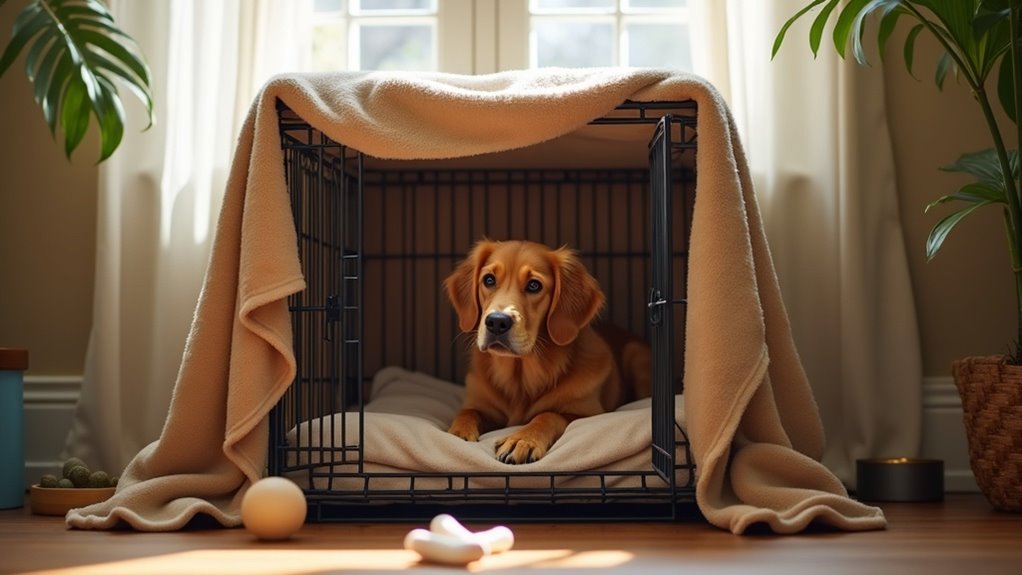
Using a crate cover can greatly benefit your dog by providing a sense of security and comfort. Start by choosing a breathable, durable cover that fits your crate well. Gradually introduce the cover, monitoring your dog’s behavior for any signs of anxiety. Guarantee proper airflow to keep your dog safe and comfortable. Regularly clean and inspect the cover for wear. If you’re curious about more tips and effective techniques, there’s much more to explore!
Key Takeaways
- Choose a crate cover that fits properly, ensuring breathable materials for ventilation and comfort.
- Introduce the cover gradually, starting with partial coverage and monitoring your dog’s comfort and anxiety levels.
- Ensure the cover allows for proper airflow and regularly check for signs of distress or overheating in your dog.
- Use washable and water-resistant fabrics for easy cleaning and hygiene maintenance, inspecting for wear and damage frequently.
- Supervise your dog during initial use to prevent excessive chewing or scratching and adjust the cover based on their preferences.
Understanding the Benefits of Crate Covers
When you cover your dog’s crate, you might notice a significant change in their behavior. A crate cover creates a den-like environment that can reduce anxiety by limiting visual stimuli, helping your dog feel secure.
With distractions minimized, they’re more likely to relax and enjoy better sleep quality. Covering the crate signals that it’s time to rest, reinforcing the routine essential for effective crate training.
During travel, a crate cover shields your dog from overwhelming sights and sounds, fostering calmness.
Ultimately, these covers enhance your dog’s comfort, regulating temperature and blocking excessive light for a peaceful retreat.
Safety Considerations When Using Crate Covers
When using crate covers, it’s essential to guarantee proper airflow to keep your dog comfortable and safe.
Regularly check on your pup’s behavior, especially during the initial adjustment, as it can reveal their comfort level and any signs of distress.
Airflow and Temperature Control
Ensuring your dog’s comfort and safety while using a crate cover involves careful attention to airflow and temperature control.
It’s vital to avoid completely covering the crate, as restricted airflow can lead to overheating, especially in warm weather. Opt for breathable fabrics that allow air circulation, preventing heat buildup inside.
Regularly monitor the internal temperature, especially during humid conditions, to keep your dog comfortable. Be mindful of your dog’s behavior; some may feel claustrophobic or sensitive to heat if airflow is insufficient.
A secure cover is important for puppies who might chew, ensuring their safety while they rest.
Monitoring Dog Behavior
While you might think a crate cover provides a cozy space for your dog, it’s important to keep a watchful eye on their behavior. By monitoring your dog closely, you can catch signs of anxiety or distress that may arise from the cover.
Always supervise them to prevent excessive chewing or scratching, which can lead to safety hazards. Guarantee proper airflow to avoid overheating, especially in warmer weather.
If your dog shows aggression or fear with the cover, consider removing it. Tailor the covering to their preferences, as some dogs thrive with partial or no cover at all.
How to Introduce Your Dog to a Covered Crate
Introducing your dog to a covered crate can be a gradual and rewarding process, as it helps create a safe and cozy environment for them.
Start by placing a blanket over just the top, leaving the sides open for airflow. Allow your dog to enter this partially covered crate independently, building a positive association.
Progressively cover one side, then two, and finally three, always monitoring for signs of anxiety. If they seem distressed, take a step back.
Use positive reinforcement, like treats and praise, to encourage acceptance of the crate cover, ensuring your dog feels comfortable throughout the process.
Observing Your Dog’s Behavior With the Cover
As you introduce the crate cover, keep a close eye on your dog’s reactions to gauge their comfort level.
If you notice signs of anxiety, like barking or pacing, it might be time to adjust how much of the crate is covered.
Monitor Anxiety Levels
When you start using a crate cover, it’s essential to closely observe your dog’s behavior to gauge their comfort level.
Monitor anxiety levels by watching for signs of distress, like excessive barking, whimpering, or attempts to escape. Notice their body language; a relaxed posture and calm breathing indicate comfort, while panting or pacing suggests unease.
If you see agitation develop over time, it may signal that the cover isn’t suitable. Regularly assess how different configurations affect your dog’s comfort levels, as individual preferences vary.
This attentive approach guarantees your furry friend feels secure and content in their crate.
Adjust Covering Techniques
To guarantee your dog feels comfortable with the crate cover, pay close attention to their reactions as you adjust the covering techniques.
Monitor their behavior closely; if you notice signs of anxiety, a fully covered crate might be too much. Instead, try a partially covered crate for a balance of privacy and visibility.
Watch for distress signals, like excessive barking or pacing, indicating the need for adjustments. If your dog tries to chew the cover or seems uncomfortable, revert to previous methods or explore alternative options.
Regularly assess the environment to assure it remains a safe, comforting space for your pup.
Individual Preferences Matter
Monitoring your dog’s reactions to the crate cover reveals a lot about their individual preferences. Pay attention to their body language; a relaxed dog will enter willingly, while signs of distress like barking or whining indicate discomfort.
Some dogs thrive in a fully covered crate, while others prefer partial coverage or even no cover at all. Gradually introducing the cover helps you gauge their comfort level. If your dog shows signs of anxiety, adjust accordingly or leave the crate uncovered.
Ultimately, respecting your dog’s unique needs guarantees a positive crate experience, fostering a sense of safety and security.
Adjusting to New Crate Covers
Adjusting to a new crate cover can be a gradual process, as dogs often need time to familiarize themselves with changes in their environment. To help your dog, start by placing the cover over the top while leaving the sides uncovered. Use an old cover to mask unfamiliar smells. Gradually add side panels, monitoring your dog’s behavior closely during the adjustment period. If you notice signs of anxiety, revert to previous steps. Patience and consistency are essential; give your dog enough time to acclimate before fully enclosing the crate.
| Step | Action |
|---|---|
| 1 | Cover top, leave sides open |
| 2 | Add old cover to mask smells |
| 3 | Add one side panel at a time |
| 4 | Monitor behavior throughout |
Choosing the Right Material for Crate Covers
When selecting the right material for your dog’s crate cover, it’s essential to prioritize their comfort and safety.
Choose breathable materials to guarantee proper airflow, preventing overheating, especially in warmer weather.
Prioritize breathable materials for your dog’s crate cover to ensure proper airflow and prevent overheating in warm weather.
Opt for water-resistant fabrics to handle spills or accidents, making cleanup easier.
Machine washable options are a must for maintaining hygiene, allowing for hassle-free cleaning.
Consider quilted designs, which enhance comfort and reduce noise, soothing anxious dogs.
Most importantly, make certain the material is non-toxic, avoiding any harmful substances that could jeopardize your dog’s health.
Your thoughtful choices can create a safe and cozy haven for your furry friend.
Training Tips for Successful Crate Cover Usage
Introducing a crate cover can be a significant change for your dog, especially after carefully selecting the right material for their comfort.
Gradually introduce the cover by starting with just the top covered, allowing your dog to enter independently. Use positive reinforcement like treats and praise to create a positive association.
Monitor reactions closely; if anxiety arises, consider partial coverage. Consistency in training is essential, so cover the crate at the same times daily to signal relaxation.
If destructive behavior occurs, opt for a more durable, chew-resistant material or remove the cover to guarantee your dog’s safety and comfort.






