
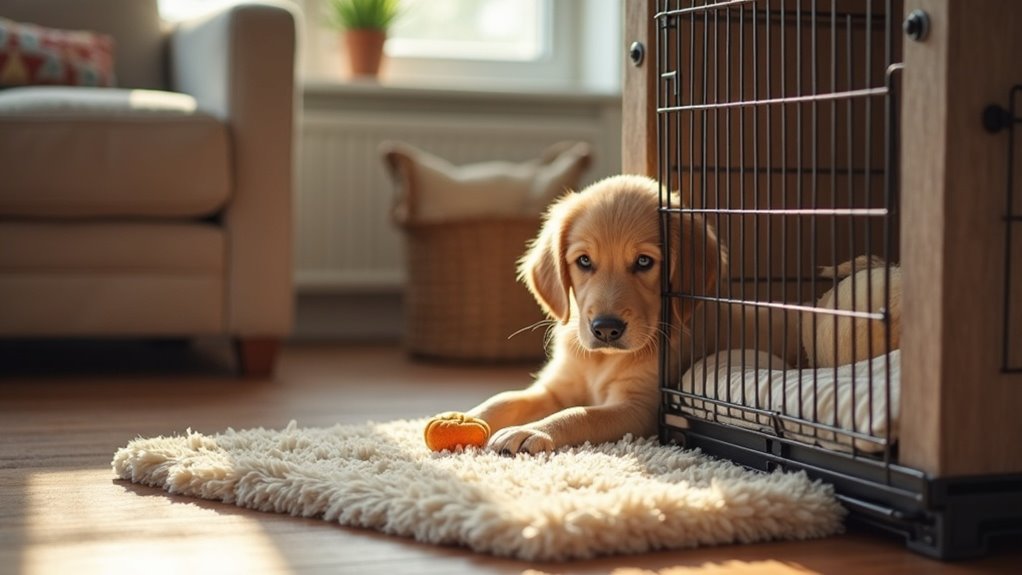
Crate training is essential for providing your dog with a safe space and establishing good behavior. To create positive associations, use treats and calm encouragement to promote crate entry. Make certain the crate is comfortable with bedding and toys, and consistently reinforce commands like “kennel up” for orderly behavior. If issues arise, address them early with high-value treats and training guidance. There’s much more to explore for making crate training a success for both you and your dog.
Key Takeaways
- Create a positive association with the crate using treats and meals to encourage entry and relaxation.
- Establish a calm environment by placing the crate in a quiet area and using reassuring body language.
- Implement specific cues like “kennel up” for crate entry and maintain consistency in rules for clarity.
- Gradually introduce feedings and safe toys inside the crate to enhance comfort and ownership.
- Address any crate issues early, using high-value treats and consulting a professional trainer if anxiety persists.
Importance of Crate Training and Behavioral Structure
When you crate train your dog, you’re not just providing a safe space; you’re also establishing a structured environment that helps guide their behavior.
Crate training promotes safety by preventing access to harmful items and reducing destructive tendencies. By setting clear boundaries, you help your dog understand acceptable behaviors, minimizing confusion that could lead to aggression or other behavioral issues.
Crate training establishes boundaries that safeguard your dog, reducing risks and promoting positive behavior.
This structured approach fosters a positive association with the crate, creating a secure space for relaxation and decision-making.
Ultimately, effective crate training enhances your dog’s well-being, supporting a harmonious relationship between you and your furry companion.
Making Peace With the Crate
To help your dog make peace with the crate, start by creating positive associations around it, like using treats and meals as rewards.
Maintain a calm demeanor and use reassuring body language when introducing the crate, so your dog feels secure in their space.
Positive Crate Associations
Creating positive associations with the crate is essential for your dog’s comfort and well-being. View the crate as a positive place where your dog can feel secure and relaxed.
Use a happy tone and encourage your dog to enter by offering a treat for entering. Gradually introduce meals in the crate to reinforce this rewarding experience.
Consistent practice with calm entries and exits helps establish clear expectations. Inside, provide a comfortable blanket and safe toys to enhance their environment.
Calm Crate Environment
Establishing a calm crate environment is essential for helping your dog feel at ease in their space. Place the crate in a quiet area, avoiding high traffic spots while ensuring your dog doesn’t feel isolated.
Use positive language and confident body language when introducing the crate, fostering a secure and relaxed atmosphere. Encourage your dog to explore the crate voluntarily, rewarding them with treats to build a positive association.
Provide comfortable bedding and safe toys, reinforcing their sense of ownership. This thoughtful approach promotes relaxation, making the crate a haven where your dog feels safe and content.
Reassuring Body Language
Reassuring body language plays an essential role in helping your dog feel at ease with their crate. Use these techniques to foster a calm and confident atmosphere:
- Maintain a relaxed posture to convey security.
- Offer gentle, reassuring eye contact as your dog enters the crate.
- Avoid lingering or apologizing; this can create anxiety.
- Describe the crate as a cozy personal space, enhancing their positive association.
Your emotions and demeanor greatly affect your dog’s experience, so approach training with a positive attitude.
This fosters trust and encourages your dog to view their crate as a safe haven.
Practical Steps for Crate Training
When you start crate training your dog, it’s essential to create a positive environment that encourages exploration and comfort.
Place the crate in a common area, allowing your puppy to explore independently with treats nearby. Feed them meals inside with the door closed to build a positive association.
Begin with short periods of time in the crate, gradually increasing the length as they adjust. Teach a down/stay command to promote relaxation, and always monitor their comfort level to avoid anxiety.
Leadership and Exit Commands
Establishing a clear command structure is essential for effective crate training.
By teaching your dog specific exit commands, you reinforce their understanding of boundaries and your leadership role.
Consistent exit protocols not only promote impulse control but also strengthen the bond between you and your dog.
Establishing Command Structure
To effectively guide your dog through crate training, it’s essential to establish a clear command structure that reinforces your leadership.
Focus on these key elements:
- Teach specific cues like “kennel up” for positive crate entry.
- Implement exit commands to control how your dog leaves the crate, promoting discipline.
- Treat the crate door as a threshold, instilling proper threshold manners and boundaries.
- Maintain consistency in enforcing rules to clarify expectations.
Utilizing training videos can enhance your leadership techniques, ensuring successful crate training while strengthening the bond between you and your dog.
Reinforcing Exit Protocols
Reinforcing exit protocols is an essential part of crate training that strengthens your leadership while promoting good behavior.
Establish clear exit commands like “out” or “free” to signal when it’s time to leave the crate. Consistently enforce waiting for this command, which teaches self-control and prevents rushing. Treat the crate door as a threshold, helping your dog remain calm until given the command.
Use positive reinforcement—treats and praise—when your dog waits patiently, reinforcing desired behavior. Regularly practice these protocols to guarantee your dog understands and can generalize this behavior across different contexts, enhancing the overall training process.
Addressing Crate Issues
While crate training can be a valuable tool for both you and your dog, addressing any issues that arise early on is crucial for a positive experience.
Addressing crate training issues early is essential for ensuring a positive experience for both you and your dog.
Here are some effective strategies:
- Use high-value treats to encourage exploration and build a positive association with the crate.
- Confirm all needs are met before crating; ignore non-distress whining to avoid reinforcement.
- Teach exit commands to promote calm behavior when leaving the crate.
- If crate anxiety persists, consult a professional trainer to develop tailored training methods.
Selecting the Right Crate
Selecting the right crate is essential for your dog’s comfort and well-being. Confirm the crate allows your dog to stand up, turn around, and lie down comfortably. Choose an appropriate size and durable material based on your dog’s individual behavior. Adjustable crates can be beneficial for growing puppies. Avoid crating multiple dogs together, as each needs a secure environment. Explore budget-friendly options like second-hand crates in good condition.
| Feature | Recommendation |
|---|---|
| Size | Adult size for growing dogs |
| Material | Metal for chewers, plastic for others |
| Type | Adjustable for puppies |
| Environment | Individual crates only |






