
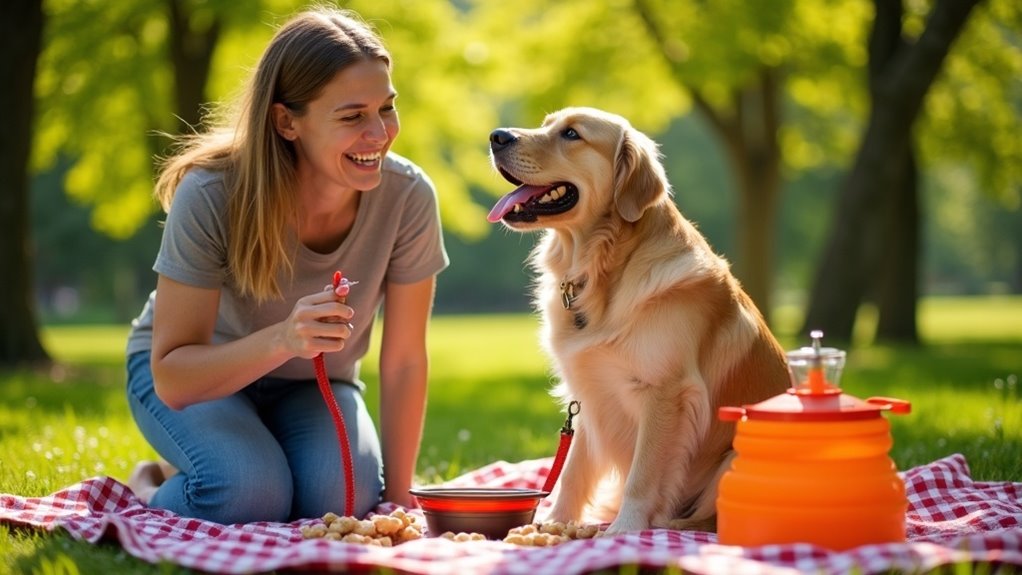
As a dog walker, your checklist should include understanding canine body language to gauge emotions, implementing proper pack management techniques for safety, and maintaining safe group sizes. It’s essential to comply with local regulations regarding leash laws and group limits. Additionally, stay prepared for emergencies with first aid knowledge and supplies. Incorporating positive reinforcement can foster good behavior. There’s so much more to explore about enhancing your dog walking experience and skills.
Key Takeaways
- Assess each dog’s behavior to ensure compatibility and prevent conflicts during walks.
- Establish a structured routine with clear commands to reinforce leadership and control.
- Maintain group sizes of 4-6 dogs for better supervision and attention to individual needs.
- Comply with local regulations regarding leash laws and the number of dogs allowed per walk.
- Carry a first aid kit and be certified in canine first aid for emergency situations.
Understanding Canine Body Language
Understanding canine body language is essential for any dog walker, as it allows you to interpret a dog’s feelings and intentions effectively.
Pay attention to tail position—wags can indicate excitement, while a lowered tail may signal fear. Ears also communicate; forward-facing ears show curiosity, while pinned-back ears suggest anxiety. A dog’s body posture reveals comfort or tension, and vocalizations like barking or whining add context.
Proper Pack Management Techniques
Being aware of canine body language not only helps you connect with individual dogs but also plays an essential role in managing a group effectively.
Proper pack management involves understanding canine behavior to assess compatibility among dogs, minimizing conflicts during dog walking. Establishing a structured routine, with designated lead positions and consistent commands, reinforces your role as the leader.
Continuously monitoring interactions allows you to detect potential conflicts early, enabling timely intervention. Using positive reinforcement fosters a harmonious environment, encouraging good behavior and strengthening your bond with the dogs.
Prioritize these techniques for successful pet care and a rewarding walking experience.
Maintaining Safe Group Sizes
To guarantee a safe and enjoyable experience for both you and the dogs, it’s crucial to maintain appropriate group sizes during walks. Limiting groups to 4-6 dogs guarantees better control and individual attention. This way, you can address each furry friend’s specific needs. Always keep small dogs separate from larger ones to prevent injuries. Remember, staying compliant with local regulations is fundamental for your role as a dog sitter. Here’s a quick reference table with key aspects you need to know:
| Group Size | Benefits | Safety Measures |
|---|---|---|
| 1-2 dogs | Individual attention | Monitor closely |
| 3-4 dogs | Better socialization | Keep them calm |
| 5-6 dogs | Fun interactions | Separate by size |
| 7+ dogs | Not recommended | Too chaotic |
| Backup Contact | Always crucial | Emergency vet info |
Local Regulations and Compliance
As you commence your dog walking journey, it’s important to stay informed about local regulations and compliance requirements that affect your responsibilities.
Different municipalities set limits on how many dogs you can walk at once, usually between 3 to 6. You may need a business license, which often requires a background check or proof of insurance.
Compliance with leash laws is essential, as many areas mandate leashes in public spaces. Additionally, be aware of waste disposal regulations—cleaning up after pets is a must.
Finally, familiarize yourself with any restrictions on specific dog breeds to avoid legal complications.
Emergency Preparedness and First Aid
When you’re out walking dogs, it’s essential to be prepared for emergencies that can arise unexpectedly. Certification in canine first aid equips you to handle injuries effectively.
Always carry a lightweight first aid kit with bandages, gauze, and antiseptic wipes for minor treatments. Familiarize yourself with emergency protocols, ensuring safety for all dogs, especially if one gets injured.
Always be prepared with a first aid kit and know emergency protocols to ensure the safety of all dogs in your care.
Know the quickest routes to veterinary clinics and keep emergency contact information handy to save precious time during crises.
Regularly practicing emergency scenarios, like sudden escapes or aggressive encounters, prepares you and the dogs, enhancing your overall emergency preparedness.
Positive-Reinforcement Training Methods
When it comes to training dogs, using reward-based techniques can make all the difference in your approach.
By consistently reinforcing positive behaviors, you’ll not only encourage your dog to repeat those actions but also strengthen your bond.
Reward-Based Training Techniques
Reward-based training techniques, which focus on reinforcing positive behaviors, allow you to build a strong bond with your dog while teaching them essential commands.
By using positive reinforcement, you can motivate dogs to repeat desirable behaviors through immediate rewards, like treats or praise.
Remember, consistency is key; always reward the same behavior to help your dog understand what you expect.
Timing is also vital—give rewards within seconds of the desired action so your dog connects the dots.
Mixing up rewards, including toys or playtime, keeps training engaging and effective, enhancing your dog’s learning experience and strengthening your relationship.
Consistency in Reinforcement Strategies
Building on the foundation of reward-based training techniques, consistency in reinforcement strategies plays an essential role in shaping your dog’s behavior. By rewarding desired actions promptly, you help your pet connect the dots between their behavior and the reward. Tailor reinforcement to your dog’s favorites—whether it’s treats, praise, or playtime. Regular practice in varied environments guarantees they learn to generalize commands.
| Reward Type | Example | Effectiveness |
|---|---|---|
| Treats | Small bites | High motivation |
| Praise | Verbal encouragement | Builds confidence |
| Playtime | Fetch or tug | Strengthens bond |
Using these strategies, you can enhance your care as a dog walker or pet sitter.






