
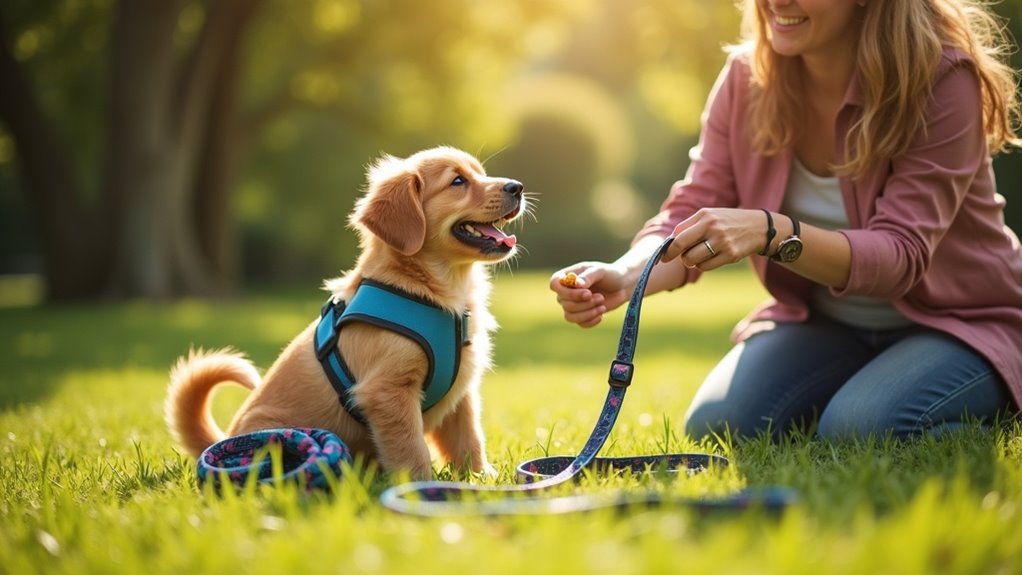
Leash training is essential for your puppy’s development and your walking experience. Start between 8 and 12 weeks to build good habits early. Use a comfortable harness or collar and a fixed leash, ideally 4-6 feet long. Incorporate basic commands like “sit” and reward good behavior with praise or treats. Keep training sessions short and enjoyable to maintain your puppy’s focus. As you progress, you can tackle common challenges and discover effective techniques for a successful training journey.
Key Takeaways
- Start leash training between 8 and 12 weeks to establish good habits early on.
- Use a firm-fitting harness or collar and a 4-6 feet leash for safety and comfort.
- Incorporate basic commands like “sit” and “come” to enhance training effectiveness.
- Utilize positive reinforcement, such as treats and praise, to encourage desired behaviors.
- Keep training sessions short (5 to 10 minutes) to maintain your puppy’s attention and interest.
Importance of Leash Training
Leash training is essential for any puppy owner who wants to enjoy stress-free walks and outings. By starting early leash training, you foster good behavior and proper leash manners, making outings more pleasant for you and your puppy.
Teaching your puppy these skills strengthens your bond through positive reinforcement, creating trust and respect. It also helps reduce common problems like pulling or jumping, ensuring a smoother experience in public spaces.
Consistency in leash training is vital, as it prepares your puppy for real-world scenarios and promotes comfort in various environments. Embrace this important skill for a harmonious relationship with your furry friend!
Timing for Starting Leash Training
Starting leash training at the right age can make a world of difference for your puppy. Ideally, you should begin between 8 and 12 weeks when they’re most receptive to learning.
If your puppy shows curiosity about the leash and excitement for outdoor adventures, it’s a good sign they’re ready. Early training helps prevent unwanted behavior like excessive pulling or jumping as they grow.
Ascertain your puppy knows basic commands like “sit” or “come” to enhance the process. With consistency and gradual exposure to different environments, you’ll foster proper leash manners, making walks enjoyable for both of you.
Essential Tools for Leash Training
When you’re ready to begin leash training, having the right tools can greatly enhance the experience for both you and your puppy. A firm-fitting harness or flat-buckle collar guarantees comfort and safety.
Opt for a fixed leash, typically 4-6 feet long, to avoid safety hazards. For positive reinforcement, keep treats and praise handy to reward your puppy for good behavior.
Supervision is key during the initial acclimatization to the collar and leash, helping your puppy to use them without fear. These training tools will lay a solid foundation for enjoyable walks and a strong bond between you and your furry friend.
Steps for Teaching a Puppy to Walk on a Leash
To teach your puppy to walk on a leash, start by incorporating basic commands and cues during your training sessions.
Use positive reinforcement techniques, like treats and praise, to encourage good behavior and keep your puppy engaged.
Basic Commands and Cues
Leash training your puppy can be a rewarding experience, especially when you incorporate basic commands and cues that lay the foundation for good behavior.
Start by having your puppy sit beside you, using treats to encourage them to stay seated as you prepare to walk. Move forward slowly, allowing your puppy to follow, and reward them for staying engaged.
Change pace and direction during walks to enhance responsiveness. Practice commands like “sit” and “heel” to reinforce walking etiquette.
Keep training sessions short and enjoyable, gradually increasing complexity as your puppy improves, ensuring a positive experience for both of you.
Positive Reinforcement Techniques
Incorporating positive reinforcement techniques can make all the difference in teaching your puppy to walk on a leash.
Start with leash training indoors using short walks, rewarding your puppy immediately when they display good leash manners. Use treats or a sound cue, like a clicker, to reinforce positive behaviors.
As you walk, vary your pace and direction, rewarding your puppy for staying close and following your lead.
Stay consistent in your approach, always ending sessions on a positive note. This keeps your puppy enthusiastic to learn more and encourages a joyful experience while walking on a leash.
How to Prevent Your Puppy From Pulling on a Leash
While it might be tempting to let your puppy pull ahead during walks, establishing good leash manners early on can make all the difference.
Here are some tips to help you prevent pulling:
- Invest in a chest-led harness for better control.
- Reward your dog for calmly walking beside you.
- Avoid reinforcing bad behavior by stopping when they pull.
- Make walks enjoyable by changing directions and exploring.
- Use a command word like “easy” to regain focus.
Teaching a puppy proper leash walking techniques is essential.
With patience and consistency, you’ll turn your new puppy into a gentle leader on walks!
Common Challenges in Leash Training
Even with solid techniques in place to prevent pulling, you might still face challenges during leash training. New puppies often get excited when they see distractions, like other dogs or people, making it tough to focus.
To help your puppy learn to walk on a leash, maintain consistency in commands and corrections. Short training sessions, around 5 to 10 minutes, keep their attention without causing fatigue.
Use positive reinforcement, like treats and praise, to redirect unwanted behaviors and encourage better manners. With patience and practice, you’ll help your puppy explore the world while mastering leash training together!
Leash Training Techniques and Tips
To get started with leash training, begin indoors where your puppy feels comfortable wearing the collar and leash.
Use positive reinforcement, like treats or praise, to encourage good behavior and make learning enjoyable.
Acclimatization Indoors
As you begin leash training your puppy, acclimatizing them indoors is an essential first step. Start by letting them wear the collar or harness and leash for short sessions, gradually increasing the duration.
Here are some tips to make indoor training effective:
- Incorporate playtime and treats for positive reinforcement.
- Practice commands like “sit” and “stay” while on the leash.
- Use gentle leash pressure to guide them and change direction.
- Keep sessions engaging and around 5-10 minutes long.
- Create a fun atmosphere to help them follow your lead comfortably.
This will foster a positive experience with their gear!
Positive Reinforcement Methods
Once your puppy is comfortable wearing their leash indoors, it’s time to introduce positive reinforcement methods during your training sessions.
Use treats and praise to reward desired behaviors, like walking beside you without pulling. Establish a cue word or sound, such as “yes” or a clicker, to signal rewards are coming.
Remember to reward immediately after the action to strengthen the connection. Incorporate short, engaging training sessions to maintain your puppy’s attention and enthusiasm.
Benefits of a Pet Wellness Plan
A pet wellness plan serves as a safety net for your furry friend’s health, making veterinary care more affordable and accessible. By enrolling, you can enjoy significant savings while ensuring your pet receives essential veterinary services.
A pet wellness plan ensures affordable veterinary care, providing essential services and significant savings for your furry friend’s health.
Here are some benefits:
- Regular health check-ups promote early detection of issues.
- Preventive care and wellness exams keep your pet healthy.
- Dental services are often included for thorough care.
- A proactive approach helps manage your pet’s wellness.
- Frequent visits strengthen the bond between you and your pet.
With a wellness plan, you’re investing in your pet’s long-term health and happiness while making training your puppy easier!






