
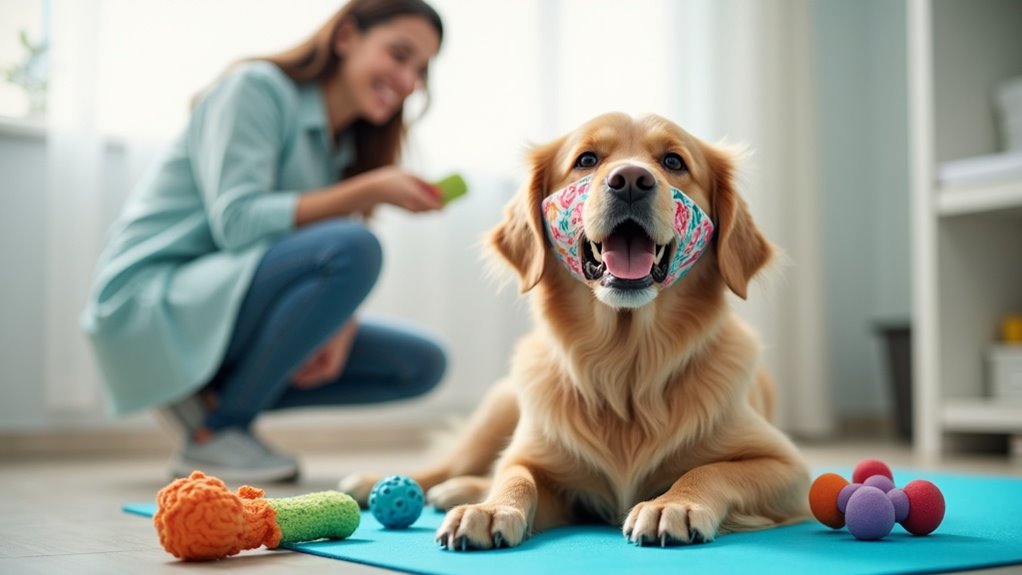
Muzzle conditioning games help create positive associations for your dog before vet visits. For instance, in the “Licky Sticky” game, you can place treats inside the muzzle, encouraging your dog to explore and lick it. In “Dinner Time,” use the muzzle during meal times so your dog learns to associate it with something enjoyable. These engaging activities reduce anxiety and stress during vet visits, and you’ll discover even more helpful techniques as you continue exploring this topic.
Key Takeaways
- Licky Sticky: Place favorite treats inside the muzzle to encourage licking and exploration, gradually increasing the duration of wearing it.
- Dinner Time: Use the muzzle during meal times, placing food inside to promote comfort and normalization with the muzzle.
- Short Sessions: Keep training sessions brief (3-5 minutes) to maintain the dog’s interest and focus during muzzle conditioning.
- Positive Reinforcement: Use high-value treats and praise to reward your dog for positive interactions with the muzzle, building trust and reducing anxiety.
- Consistent Practice: Regularly practice in different environments to enhance your dog’s comfort level and confidence with wearing the muzzle.
Understanding Muzzle Conditioning
When you start muzzle conditioning your dog, it’s important to remember that this process is all about making positive associations.
Begin by introducing the muzzle in a non-threatening manner, allowing your dog to explore it freely. During training sessions, reward them with high-value treats for positive interactions.
Gradually build their comfort by encouraging them to wear the muzzle for increasing durations, always pairing it with praise.
Positive muzzle conditioning not only fosters trust but also prepares your dog for potentially stressful situations, such as vet visits, reducing anxiety and promoting calm behavior.
Your patience and empathy will pave the way for success.
Benefits of Muzzle Training for Vet Visits
Muzzle training can greatly reduce the stress your dog experiences during vet visits, helping them associate these situations with positive outcomes.
By ensuring safety for both your pet and the veterinary staff, muzzles allow for smoother examinations and treatments.
This proactive approach not only calms your dog but also creates a more efficient and pleasant experience for everyone involved.
Reduces Stressful Experiences
While many dogs experience anxiety during vet visits, muzzle training can greatly reduce these stressful encounters. By familiarizing dogs with muzzles through fun training games, you can help them associate the muzzle with positive experiences. This not only reduces anxiety but also creates a safety barrier for everyone involved.
Consider these benefits of proper muzzle conditioning:
- Promotes calmness in unfamiliar environments.
- Encourages smoother interactions during examinations.
- Prevents biting incidents, ensuring safety for staff and pets.
- Eliminates negative stigma, fostering a relaxed atmosphere at the vet.
Investing in muzzle training leads to happier vet visits for both you and your dog.
Enhances Safety Protocols
Ensuring safety at the vet is paramount for both your dog and the veterinary staff, and muzzle training plays an essential role in achieving that.
A well-fitted muzzle allows your dog to wear it comfortably during cooperative care, reducing the risk of biting incidents. Through the conditioning process, your dog learns to accept the muzzle, easing anxiety for everyone involved.
This training can prevent snapping when your dog feels frightened or in pain, creating a calmer environment. Plus, muzzles keep dogs from ingesting harmful items in the clinic, ensuring a safer experience for all during vet visits.
Game 1: Licky Sticky
Creating positive associations with a muzzle can be a rewarding experience for both you and your dog, and one effective way to achieve this is through the game Licky Sticky.
Creating a positive relationship with your dog’s muzzle can be enjoyable for both of you through fun games like Licky Sticky.
Here’s how to play:
- Place your dog’s favorite treats inside the muzzle.
- Hold the muzzle still, allowing your dog to lick and explore it.
- Gradually increase their interaction by encouraging them to wear it longer.
- Keep sessions short (3-5 minutes) and end with praise.
Game 2: Dinner Time
In the “Dinner Time” game, you can use the muzzle as a feeding tool, transforming it into a source of positive experiences for your dog.
Start by placing their regular meals inside the muzzle, encouraging them to explore and eat from it, which builds a positive association with feeding time.
This practice not only helps your dog become comfortable with the muzzle but also creates a calmer atmosphere during mealtimes, ultimately easing anxiety during vet visits.
Muzzle as Feeding Tool
While your dog may initially resist the idea of wearing a muzzle, using it as a feeding tool during mealtime can transform that perception into a positive experience.
Here’s how to implement this effectively:
- Confirm the muzzle is properly fitted for comfort.
- Incorporate it into daily feeding routines to normalize its presence.
- Encourage your dog to willingly place its face inside the muzzle for meals.
- Consistently use the muzzle to desensitize your dog, easing future vet visits.
This approach fosters a positive association, making your dog more comfortable wearing the muzzle and reducing stress in various situations.
Positive Association With Meals
To help your dog develop a positive association with wearing a muzzle, integrating it into mealtime can be incredibly effective. Using the muzzle as a food bowl allows your dog to experience good things while wearing it. This low-pressure context helps mitigate any anxiety about the muzzle during stressful situations. Gradually introducing the muzzle at dinner time promotes familiarity, making it easier for your dog to wear it comfortably. Remember to offer a treat as a reward during training your dog.
| Step | Action | Outcome |
|---|---|---|
| 1 | Introduce muzzle at meals | Positive association with meals |
| 2 | Allow your dog to eat | Familiarity with the muzzle |
| 3 | Gradually increase duration | Less resistance |
| 4 | Consistent practice | Manageable vet visits |
Game 3: The Cup Game
The Cup Game offers an engaging way to introduce your dog to their muzzle, making the process feel like a fun activity rather than a chore.
Follow these steps for a successful session:
- Hold a cup filled with high-value treats to encourage your dog to target it.
- Guide your dog to touch the cup with their nose, gradually introducing the muzzle.
- Reward them with treats and praise for any interaction with the muzzle.
- Keep sessions short (3-5 minutes) and move the cup around to maintain enthusiasm.
This game fosters a positive association between the muzzle and rewards while promoting fun learning.
Game 4: Chase Me
Engaging your dog in the “Chase Me!” game turns the muzzle into an exciting object rather than a source of anxiety.
Start by tossing the muzzle a short distance, encouraging your dog to chase it. When they interact with the muzzle, reward them with treats to create positive associations.
Gradually increase the distance and excitement, using a playful tone to entice your dog further. This game not only makes training fun but also prepares your dog for vet visits, reducing fear or resistance.
Keep sessions short—around 3-5 minutes—to maintain enthusiasm and guarantee your dog enjoys playing with the muzzle.
Tips for Successful Muzzle Training
While starting muzzle training can feel intimidating, following a few key tips can make the process smoother and more effective for both you and your dog.
- Keep sessions short (3-5 minutes) to maintain interest.
- Use high-value treats to create positive associations with the muzzle.
- Incorporate games like “Licky Sticky” to help your dog enjoy wearing their muzzle.
- Gradually increase the duration your dog wears the muzzle, rewarding them frequently.
Repeat this process in various environments to reinforce comfort and help your dog adapt, ensuring they feel secure and confident throughout the training journey.
Additional Resources for Muzzle Training
Finding the right resources can greatly enhance your muzzle training experience. Engaging with communities and experts can build positive associations with the muzzle. Here’s a helpful table to guide you in your training journey:
| Resource | Description |
|---|---|
| Leash and Learn | Personalized muzzle conditioning assistance. |
| Muzzle Up, Pup! | Guidance for choosing the right muzzle fitting. |
| Amanda Ferry | Videos on cooperative care methods for success. |
| Online Blogs & Guides | Various tips for effective muzzle training. |
Utilizing these resources helps create a better experience for both you and your dog while wearing a muzzle.






