
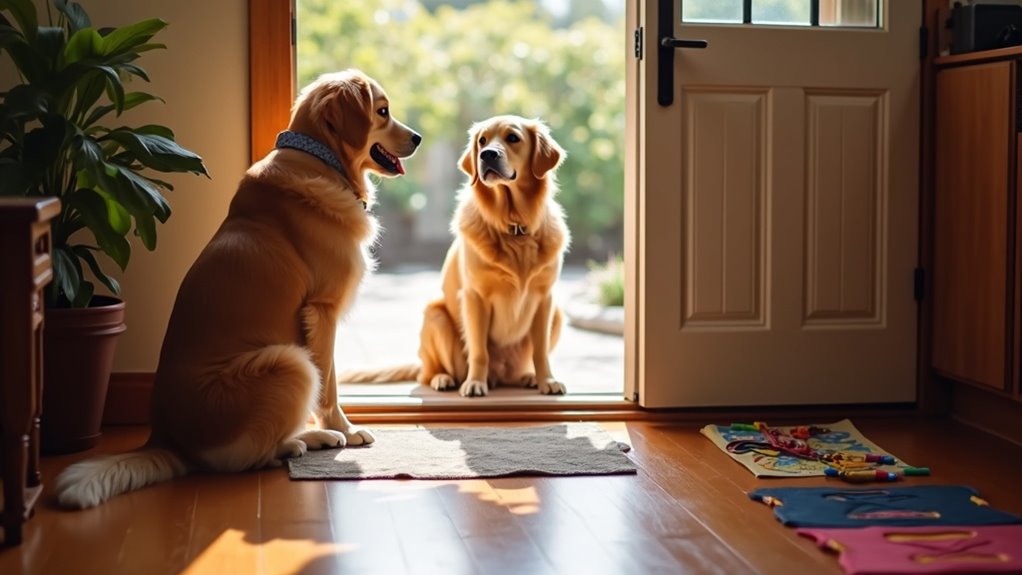
To teach your dog polite door manners, start by having them sit at the door while you open it slightly. Reward their calm behavior. Gradually increase the door’s opening as they remain seated. Introduce the “wait” command by opening the door and rewarding them for staying still. When guests arrive, direct your dog to a designated area using the “place” command. With patience and consistency, you’ll foster a safe environment. Continue to explore effective techniques for success.
Key Takeaways
- Teach your dog to sit at the door before it opens, rewarding them for remaining calm.
- Introduce the “wait” command by slightly opening the door and rewarding stillness.
- Use a leash during training to prevent bolting and maintain control.
- Direct guests to ignore the dog initially and use the “place” command for them to settle.
- Reinforce calm behaviors with treats and praise to encourage good door manners.
Understanding the Importance of Door Manners
When you teach your dog polite door manners, you’re not just preventing them from bolting out; you’re also creating a safer and more controlled environment for everyone.
Good door manners establish you as the authority, easing anxiety during arrivals. By encouraging your dog to wait patiently at the door, you promote self-control and calm behavior, leading to more enjoyable interactions with guests.
This essential dog training builds a foundation for further good behavior in various situations. Reinforcing doorway manners not only enhances safety but also enriches social experiences, making every visit a positive one for both your dog and your guests.
Steps to Teach Your Dog to Sit at the Door
Teaching your dog to sit at the door is a straightforward yet effective way to promote good manners and safety. Follow these steps to guarantee your pup waits patiently:
- Position your dog near the door, using the cue “sit” as you reach for the doorknob.
- Reward your dog with treats or praise when they stay seated as you slightly open the door.
- Gradually increase the door opening, reinforcing calm behavior, even with distractions like a doorbell.
With consistent training sessions using a leash, your dog will learn that waiting leads to the door opening and positive experiences.
Introducing the Wait Command
To guarantee your dog learns the valuable “wait” command, start by creating a calm environment where distractions are minimal.
Begin the training process by slightly opening the door. If your dog moves forward, close it immediately. Reward calm behavior when they remain still.
Gradually increase the door’s opening while using the “wait” cue and hand signals. Make sure your dog understands to stay back until released.
Use a clear cue like “Okay” to let them know it’s time to go, and reward them with treats or praise.
Consistent practice at various doorways helps reinforce impulse control and reduces anxiety.
The Door Game: A Fun Training Exercise
While your dog may be enthusiastic to rush through the door, the Door Game turns this excitement into an opportunity for training.
Transform your dog’s door-rushing excitement into a valuable training moment with the Door Game.
Follow these steps to teach your dog polite door manners:
- Open the door slightly and reward your dog for staying calm.
- If they rush forward, close the door immediately, showing that excitement leads to the door shutting.
- Gradually widen the opening and increase wait times, using a cue like “okay” to indicate permission to go.
Consistency in your training plan is key.
Reinforcing Calm Behavior During Guest Arrivals
When guests arrive, it’s important to set the tone for calmness.
Instruct your visitors to ignore your dog initially, allowing them to relax before any interaction.
Guest Interaction Guidelines
How can you help your dog stay calm during guest arrivals? Establishing clear guest interaction guidelines is essential.
Here are three steps to reinforce calm behavior:
- Instruct guests to ignore your dog initially, minimizing excitement.
- Use the command “place” to direct your dog to a designated area for waiting, promoting calmness.
- Encourage guests to extend their hand for a brief sniff while respecting personal space, limiting interaction to 10 seconds.
If your dog struggles to maintain calmness, use authoritative body language to reinforce structure.
This approach fosters positive interactions, ensuring your dog feels secure and your guests feel welcomed.
Calm Waiting Techniques
To guarantee your dog remains calm during guest arrivals, it’s essential to implement effective waiting techniques that promote good behavior.
Start by using the “place” command, directing your dog to a designated spot before guests arrive. This helps reduce excitement and anxiety.
Practice impulse control drills with family, reinforcing the “wait” command so your dog stays in position when the door opens.
Utilize a leash to manage their behavior and correct any rushing.
Establish a rule that they must stay seated until invited to greet guests.
Celebrate their calm behaviors with treats or playtime to reinforce positive interactions!
Troubleshooting Common Issues
While training your dog to exhibit polite door manners, you might encounter some common issues that can be frustrating. Here are a few tips to troubleshoot:
- If your dog rushes the door, calmly close it and reset—only calm behavior leads to the door opening.
- Use a dog on leash during training to prevent bolting; this keeps control while they learn.
- If they struggle to maintain position, back away from the door and practice “sit” or “wait” to reinforce impulse control.
Applying Door Manners Beyond the Front Door
As you work on your dog’s door manners, remember that these skills can be applied in various situations beyond just your front door. Practicing door manners not only helps at home but also at car doors, crates, and gates, enhancing safety and calmness. Use verbal cues and a leash to teach your dog to wait patiently before exiting any space.
| Situation | Skills to Practice | Verbal Cue |
|---|---|---|
| Car Door | Wait, Calm | “Wait” |
| Crate | Remain Calm, Wait | “Release” |
| Garden Gate | Stay Behind Threshold | “Go” |
Extending training promotes better behavior everywhere!
Consistency and Patience in Training
Consistency and patience are essential components of effective dog training, especially when teaching door manners.
Consistency and patience are key to successful dog training, particularly when instilling proper door manners.
To guarantee your training is successful, remember to:
- Establish a Routine: Use the same permission cue every time to create clarity and reinforce desired behavior.
- Practice Frequently: Short, regular training sessions help solidify learning and improve your dog’s behavior over time.
- Reinforce Immediately: Provide positive reinforcement right after your dog exhibits the desired action to strengthen the connection between behavior and reward.






