
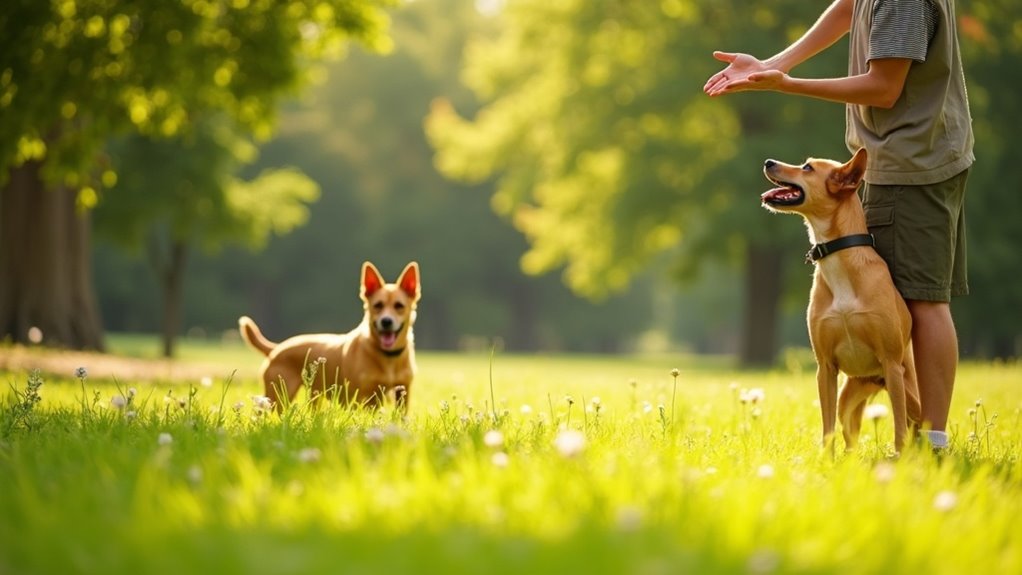
To achieve reliable recall, start by establishing a clear cue, like a distinct word or whistle, ensuring everyone in your household uses it consistently. Charge this cue with rewards, using high-value treats to create positive associations. Practice in low-distraction environments before gradually introducing challenges. Monitor your dog’s performance and make necessary adjustments to training methods. Celebrating successful recalls builds motivation and reinforces the behavior. By continuing, you can discover more nuanced techniques to enhance your training approach.
Key Takeaways
- Choose a distinct recall cue, ensuring consistency among all household members to avoid confusion.
- Start training in low-distraction environments, gradually introducing distractions as your dog becomes more reliable.
- Pair the recall cue with high-value treats and immediate rewards to create positive associations.
- Maintain a cheerful tone and enthusiastic body language to reinforce positive experiences during training sessions.
- Regularly evaluate and adjust training methods based on your dog’s performance and interest levels in various environments.
Understanding the Importance of Reliable Recall
Reliable recall is vital for maintaining your dog’s safety in off-leash environments, especially during activities like hiking where potential hazards abound.
Different breeds show varied recall reliability due to genetics and training. To cultivate reliable recall, focus on positive reinforcement techniques rather than traditional negative methods, which can instill fear.
Recall reliability varies among breeds; prioritize positive reinforcement for effective training and to avoid instilling fear.
As you implement training tips, consider distractions that may hinder your dog’s response. Understanding why your dog might struggle with recall is important for effective dog training.
Ultimately, solid recall skills not only guarantee safety but also strengthen the bond between you and your furry companion, enhancing your shared experiences outdoors.
Establishing a Clear Recall Cue
Establishing a clear recall cue is essential for effective training, as it provides your dog with a specific signal to respond to. Choose a distinct word or whistle that stands out from other commands to minimize confusion.
Consistency is key; guarantee everyone in your household uses the same recall cue. Start training in low-distraction environments, gradually increasing challenges as your dog learns.
Avoid using the cue when outcomes might be unreliable to prevent cue poisoning. When calling your dog, remember that pairing the recall cue with high-value treats will help reinforce the desired behavior and create positive associations.
Charging the Recall Cue With Rewards
Charging the recall cue with rewards is an essential step in ensuring your dog responds enthusiastically when called. By associating your dog’s name and the recall cue with high-value treats, you create positive experiences that encourage keen responses.
- Use immediate rewards, like treats or toys, as soon as your dog returns.
- Maintain a cheerful tone and enthusiastic body language to reinforce positive emotions.
- Gradually increase the frequency of rewards while using high-value treats intermittently to sustain motivation.
This method fosters strong associations, making your dog’s recall behavior more reliable over time in various environments.
Practicing in Low-Distraction Environments
To effectively train your dog’s recall, start in a quiet space where distractions are minimal, allowing them to focus on your cues.
Gradually introduce distractions, ensuring that your reward system remains consistent to reinforce the desired behavior.
This approach not only builds confidence but also enhances your dog’s responsiveness across varying environments.
Choose a Quiet Space
Finding a quiet space for recall training is essential for your dog’s learning process. Practicing in low-distraction environments allows your dog to focus solely on you and the recall cue without competing stimuli. Start in familiar areas to build a strong foundation.
- Choose a secluded yard or your home.
- Guarantee minimal noise and interruptions.
- Gradually increase training difficulty after consistent success.
This approach reinforces desired behaviors and helps your dog generalize recall skills to more challenging environments.
Avoid distractions until your dog demonstrates reliable recall in a quiet space to maintain enthusiasm and prevent cue poisoning.
Gradual Distraction Introduction
As you progress in your dog’s recall training, introducing distractions gradually becomes essential for reinforcing their learning. Begin in low-distraction environments, like quiet parks or familiar indoor spaces, where your dog can focus on the recall cue without competing stimuli. Use a long line to maintain control while practicing. As your dog demonstrates reliability, slowly increase distractions, ensuring they can generalize the behavior. High-value treats and a cheerful tone will keep them engaged.
| Environment | Distraction Level | Example Activities |
|---|---|---|
| Indoor Quiet | Low | Fetch, Hide and Seek |
| Outdoor Quiet | Low | Walking, Basic Commands |
| Indoor Moderate | Medium | Light Noise |
| Outdoor Moderate | Medium | Other Dogs Nearby |
| Busy Environment | High | Crowds, Sounds |
Consistent Reward System
Introducing a consistent reward system in low-distraction environments greatly enhances your dog’s recall training.
By using high-value treats, you create positive associations that motivate your dog to respond enthusiastically to recall cues.
This controlled setting allows your dog to focus without competing stimuli, reinforcing desired behaviors effectively.
- Maintain excitement when rewarding successful recalls.
- Gradually introduce the recall cue in familiar environments.
- Avoid high-distraction situations to prevent cue poisoning.
Gradually Introducing Distractions and Challenges
To effectively enhance your dog’s recall, it’s essential to gradually incorporate distractions and challenges into training sessions.
Start with a long lead (20-50 feet) to guarantee safety while allowing your dog to explore. Begin with mild distractions, like other people or toys, and as your dog becomes more reliable, gradually increase the difficulty by introducing more enticing elements, such as squirrels or other dogs.
Observe your dog’s responses closely, adjusting the environment as needed. Reinforce successful recalls with high-value treats to motivate your dog to come despite distractions, ultimately fostering a robust recall in various situations.
Evaluating and Adjusting Training Methods
Effective evaluation of your dog’s recall training hinges on consistent observation of their performance across various environments and situations. By regularly reviewing their performance, you can identify patterns and challenges.
- Adjust training methods based on distractions and your dog’s interests.
- Gradually increase complexity in recall challenges, ensuring positive responses before advancing.
- Monitor recall cues for effectiveness, and be open to introducing new ones if necessary.
Flexibility in your approach is key; adapt techniques based on your dog’s progress to foster reliable recall.
Evaluating and adjusting your methods will enhance your dog’s responsiveness in diverse scenarios.
Celebrating Successful Recalls
Celebrating successful recalls plays a pivotal role in reinforcing your dog’s training efforts.
By enthusiastically acknowledging their return, you strengthen their association with the recall cue, increasing the likelihood of them coming when called in the future. Use high-value treats or toys to create a joyful experience.
Verbal praise, like a cheer, enhances their emotional engagement, making each successful recall memorable. Documenting these achievements boosts your confidence and motivates further practice.
Regularly celebrating recalls, especially in challenging environments, helps generalize this behavior, solidifying your dog’s reliability across various situations.
Embrace these moments to foster a stronger bond and effective training.






