
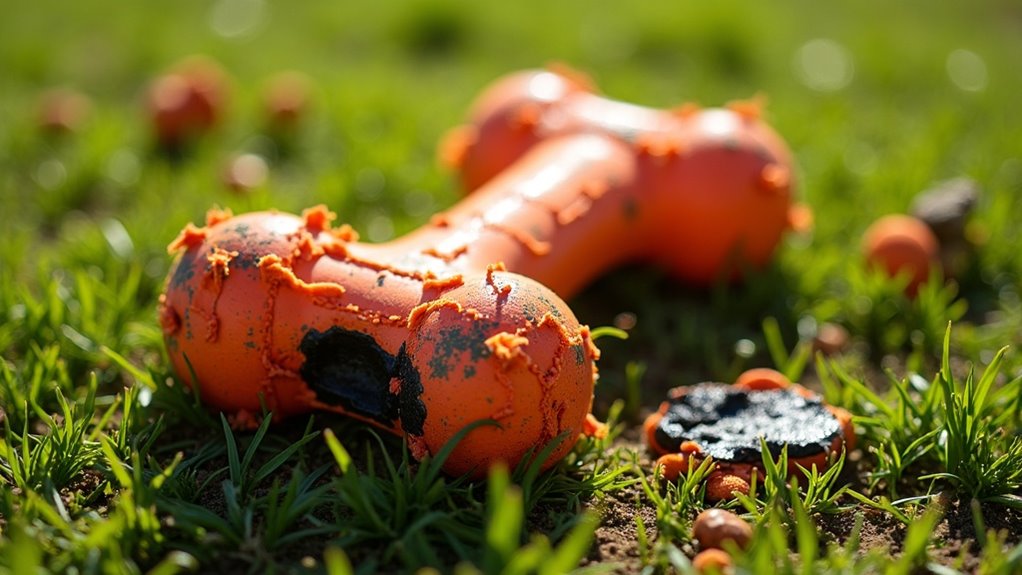
If you notice visible wear and tear on your dog’s toy, like frayed edges or cracks, it’s a warning sign. Unusual smells or tastes can mean harmful chemicals are present. Check for dangerous materials too, like PVC or BPA. Make sure the toy’s size is appropriate to avoid choking hazards, and watch for any small parts that could be ingested. Staying informed about these risks can help keep your pup safe, and there’s more you should consider.
Key Takeaways
- Visible wear and tear, such as frayed edges or cracks, can pose choking hazards or cause injuries to a dog’s mouth.
- Unusual smells or tastes, including strong chemical odors, may indicate the presence of harmful substances or bacteria.
- Toys made from dangerous materials, like PVC or those containing BPA, can leach toxic chemicals into your dog’s system.
- Toys that are too small or irregularly shaped can lead to choking hazards or unpredictable movements during play.
- Ingestible small parts, such as squeakers or buttons, can break off and result in serious gastrointestinal blockages.
Visible Wear and Tear
Visible wear and tear on dog toys is a clear warning sign that they may no longer be safe for your pet. Frayed edges or broken pieces can create choking hazards, and regular inspections are vital.
Visible wear on dog toys signals potential dangers, making regular inspections essential for your pet’s safety.
If you notice cracks or sharp edges, discard the toy to prevent injuries to your dog’s mouth or gums. Aggressive chewing can compromise a toy’s structure, leading to potential breakage.
Additionally, loose small parts or stuffing may pose risks of gastrointestinal blockages. Always guarantee your dog’s toys meet safety standards, avoiding those that show signs of discoloration or harmful substances.
Your pet’s safety depends on it.
Unusual Smells or Tastes
While many dog toys may seem safe at first glance, unusual smells or tastes can be significant indicators of potential hazards. A strong chemical odor often suggests harmful chemicals, like phthalates or BPA, which are toxic if ingested.
If your dog refuses to chew or play with a toy due to an odd taste, it might contain toxic coatings. Foul or rancid smells could indicate bacteria or mold presence, particularly in porous materials.
Regularly inspect toys for these unusual odors to prevent health risks. Prioritizing dog toy safety can protect your furry friend from harmful substances lurking in seemingly innocent toys.
Dangerous Material Composition
Unusual smells or tastes can be a warning sign, but the materials used in dog toys can pose even greater risks. Many toys contain dangerous material compositions like PVC, which may leach harmful chemicals into your dog’s gums. Look out for toys with Bisphenol A (BPA) linked to health issues, and check for paints with high lead levels that can harm puppies. Regular inspections of toy materials are essential for pet owners. Here’s a quick reference table:
| Material | Risk | Health Effect |
|---|---|---|
| PVC | Phthalates | Gum irritation |
| BPA | Endocrine disruptor | Metabolism issues |
| Lead | High levels | Neurological damage |
| Cadmium | Cancer-causing metal | Affects joints & lungs |
| Formaldehyde | Adhesives | Skin irritation, respiratory issues |
Size and Shape Concerns
When choosing a dog toy, size and shape are essential for safety.
A toy that’s too small can become a choking hazard, while an irregular shape may lead to unpredictable movements that could cause injury.
Always evaluate whether the toy fits comfortably in your dog’s mouth without the risk of swallowing it whole.
Choking Hazard Assessment
How can you guarantee your dog’s safety while they play? Start by evaluating the choking hazard of their toys.
Choose safe toys that are appropriately sized; for instance, larger breeds need toys at least the size of a tennis ball. Avoid toys with small pieces or detachable components, as these can be easily swallowed.
Inspect toys regularly for wear and tear; worn-out toys can break into small pieces, creating choking risks. Remember, elongated or thin toys are more likely to get lodged in your dog’s throat.
Prioritizing these factors helps guarantee your furry friend stays safe while enjoying their playtime.
Size Appropriateness Evaluation
To guarantee your dog plays safely, it’s essential to evaluate the size and shape of their toys. Confirm toys for your dog are appropriately sized; those too small can pose a choking hazard, while oversized ones may be difficult to handle.
Regular inspection of the toy against your dog’s mouth and jaw is vital; it should be large enough to prevent swallowing. For aggressive chewers, choose tougher, larger toys that won’t break into small pieces.
Always monitor your dog while they play; if they struggle to manipulate a toy, it mightn’t be the proper size or shape for them.
Ingestible Small Parts
Many dog toys contain small parts that can easily become a choking hazard. Ingestible small parts like squeakers, buttons, or plastic eyes can break off during play, risking your dog’s safety. Regular inspections of toys are essential; visible wear, cracks, or loose components mean it’s time to dispose of the toy. Anything a dog can fit in its mouth poses a risk for gastrointestinal blockages. To minimize danger, choose toys made from solid rubber or nylon without small removable parts.
| Risk Level | Toy Type |
|---|---|
| High | Toys with small parts |
| Medium | Plush toys with squeakers |
| Low | Solid rubber toys |
| Very Low | Nylon toys without parts |
Poor Durability and Construction
After guaranteeing your dog’s toys don’t contain ingestible small parts, it’s important to contemplate the durability and construction of those toys.
Poor durability can lead to sharp cracks or frayed edges, posing a choking hazard during playtime. Regular inspections are vital; discard any toy showing wear signs or loose parts immediately.
Regularly inspect your dog’s toys for wear and tear, as damaged toys can pose serious choking hazards. Discard any worn-out items immediately.
Use the fingernail test to assess durability—if it leaves a mark, it might be too hard, risking your dog’s teeth.
Opt for heavy-duty toys designed for aggressive chewers, as they’re less likely to break and provide a safer, healthier play experience for your furry friend.






