
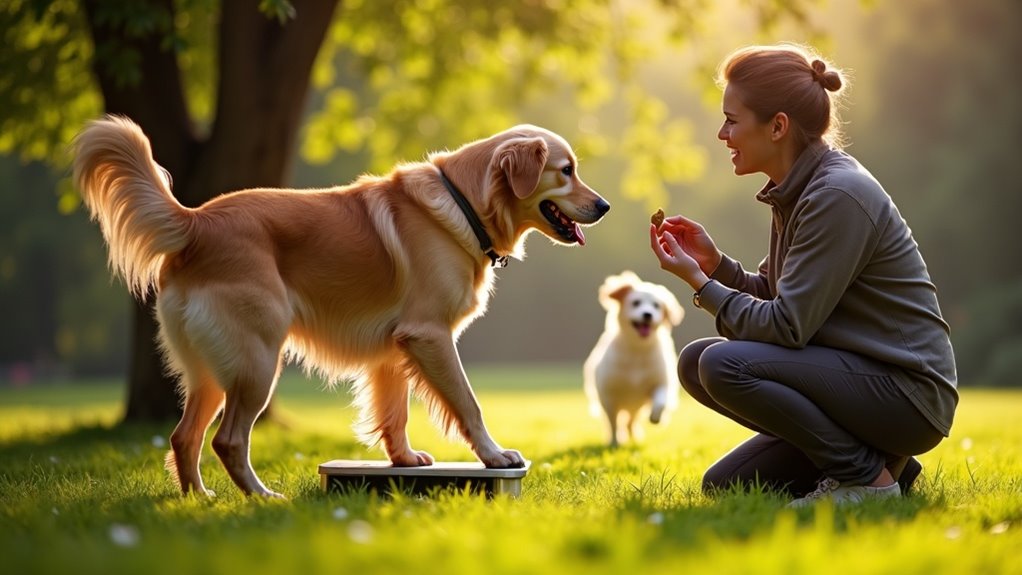
Weigh-in training is essential for maintaining your dog’s health. Start by creating a calm environment and gradually introducing the scale to build comfort. Use healthy treats as rewards during weigh-ins to motivate without overindulging. Establish a consistent routine for weigh-ins, preferably every 2-4 weeks, and log your dog’s weight alongside their diet and exercise habits. Monitoring their progress helps in making timely adjustments for ideal weight management. Discover more effective strategies to enhance this process.
Key Takeaways
- Create a calm, familiar environment for weigh-ins to reduce anxiety and distractions.
- Gradually introduce the scale and reward any interaction to build confidence in your dog.
- Use healthy, low-calorie treats immediately after weighing to reinforce positive behavior.
- Monitor your dog’s weight every 2-4 weeks and log changes alongside diet and exercise.
- Keep weigh-in sessions short and fun to alleviate stress and encourage participation.
Understanding the Importance of Weigh-Ins
Understanding the importance of weigh-ins is essential for every dog owner, as regular monitoring can greatly impact your pet’s health.
For small dogs, consistent weigh-ins help you track weight fluctuations, which can signal issues like obesity or malnutrition. By weighing your dog at home, you maintain an ongoing health assessment between veterinary practice visits.
Consistent weigh-ins for small dogs help identify weight issues early, supporting ongoing health assessments between vet visits.
Combining weight measurements with the body condition score offers a clearer picture of your dog’s overall fitness. Regular weigh-ins empower you to make timely adjustments in diet and exercise, ultimately contributing to a longer, healthier life for your beloved pet.
Stay proactive for their well-being!
Creating a Positive Environment for Weigh-Ins
Creating a positive environment for weigh-ins is essential for your dog’s comfort and cooperation. To achieve this, make sure to:
- Create a calm space: Reduce noise and distractions, allowing your dog to feel safe during weigh-ins.
- Introduce the scale gradually: Let your dog explore the scale without pressure, fostering familiarity and comfort.
- Maintain a consistent routine: Weigh your dog at the same time and under similar conditions to help them anticipate the process.
Using Treats and Rewards Effectively
To make weigh-ins more enjoyable for your dog, focus on using healthy, low-calorie treats that they love.
Timing is essential; reward them immediately after they step on the scale to reinforce positive behavior.
Employing consistent positive reinforcement techniques will help your dog associate weigh-ins with a rewarding experience.
Choose Healthy Treats
Choosing healthy treats is essential when rewarding your dog during weigh-in training, as it helps maintain their weight without sacrificing motivation.
Here are three effective options:
- Low-Calorie Treats: Opt for low-calorie options or small portions of regular kibble to limit calorie intake.
- Fruits and Vegetables: Incorporate carrot slices or apple chunks as nutritious, low-calorie alternatives.
- High-Protein, Low-Fat Treats: Use freeze-dried meat to boost energy levels while supporting weight management.
Always monitor your dog’s response to treats and adjust quantities accordingly, ensuring they stay within a healthy weight range throughout their training.
Timing of Rewards
Reward timing plays a significant role in effective dog training, especially during weigh-in sessions. You should give treats immediately after your dog displays the desired behavior to strengthen their understanding. Use high-value treats like cooked chicken or cheese to keep them motivated. Here’s a quick reference table:
| Timing Strategy | Treat Frequency | Additional Rewards |
|---|---|---|
| Immediate after action | Every weigh-in | Verbal praise |
| Gradually reduce | Every few weigh-ins | Affection |
| Monitor body language | Adjust as needed | Calm environment |
This approach fosters a positive experience, ensuring your dog remains comfortable.
Positive Reinforcement Techniques
When training your dog for weigh-ins, employing positive reinforcement techniques can considerably enhance the experience and foster a willingness to step on the scale.
Here are three effective strategies:
- Use high-value treats: Choose your dog’s favorite treats to encourage them to step on the scale willingly.
- Gradually introduce the scale: Allow your dog to explore the scale first, rewarding any interaction to build their confidence.
- Keep sessions short and fun: Engage your dog with brief training sessions, using praise and treats to reinforce calm behavior, alleviating anxiety associated with weighing.
Consistently reward immediately to strengthen positive associations.
Building Comfort and Familiarity With the Scale
To guarantee a smooth weigh-in experience for your dog, building comfort and familiarity with the scale is essential.
Start by introducing the scale gradually, letting your dog explore it without pressure. Use treats and positive reinforcement to encourage them to step on, creating a positive association.
Practice having your dog stand on the scale for short periods, gradually increasing the time as they grow more comfortable.
Ascertain the scale is in a quiet, familiar environment to reduce distractions.
Regular practice will help your dog adjust to the routine, transforming weigh-ins into a stress-free experience over time.
Establishing a Routine for Regular Weigh-Ins
To effectively monitor your dog’s weight, establish a consistent weighing schedule, ideally once a month.
Pick a specific day and time to guarantee the conditions remain similar, which helps in tracking changes accurately.
Incorporating positive reinforcement techniques during weigh-ins can also make the process more enjoyable for your dog, fostering a routine they look forward to.
Set Consistent Weighing Schedule
Establishing a consistent weighing schedule is essential for effectively monitoring your dog’s weight. By adhering to a routine, you can gain valuable insights into their health.
Here are three key steps to contemplate:
- Choose a specific day and time each week to weigh your dog, making it a regular part of your routine.
- Weigh them in the same environment each time to minimize stress-related fluctuations.
- Use the same scale for every weigh-in, ensuring accuracy in measurements.
Don’t forget to log each weight to track trends, helping you identify any significant changes that may need attention.
Use Positive Reinforcement Techniques
While weighing your dog might seem like a straightforward task, using positive reinforcement techniques can greatly enhance the experience for both you and your pet.
Start by incorporating weigh-ins into your dog’s routine, scheduling them at the same time each week. Use treats or praise immediately after the weigh-in to create a positive association.
Gradually acclimate your dog to the scales, rewarding them for exploring the area without fear. Begin with short sessions to build comfort, increasing the duration as they adjust.
Maintain a calm demeanor to alleviate any anxiety, ensuring weigh-ins become a positive experience for your furry friend.
Monitoring Your Dog’s Weight Progress
Monitoring your dog’s weight progress is essential for maintaining their overall health and well-being. To effectively track changes, consider these strategies:
- Weigh your dog every 2-4 weeks using a consistent method, like weighing yourself with and without your dog.
- Keep a detailed log of weight changes alongside their diet and exercise routine, helping you identify lifestyle impacts.
- Consult your veterinarian for personalized advice on healthy weight ranges and body condition scoring.
Utilizing digital scales designed for pets guarantees accuracy, especially for larger dogs.
Regular monitoring lets you catch any unusual changes early and adjust accordingly.






