
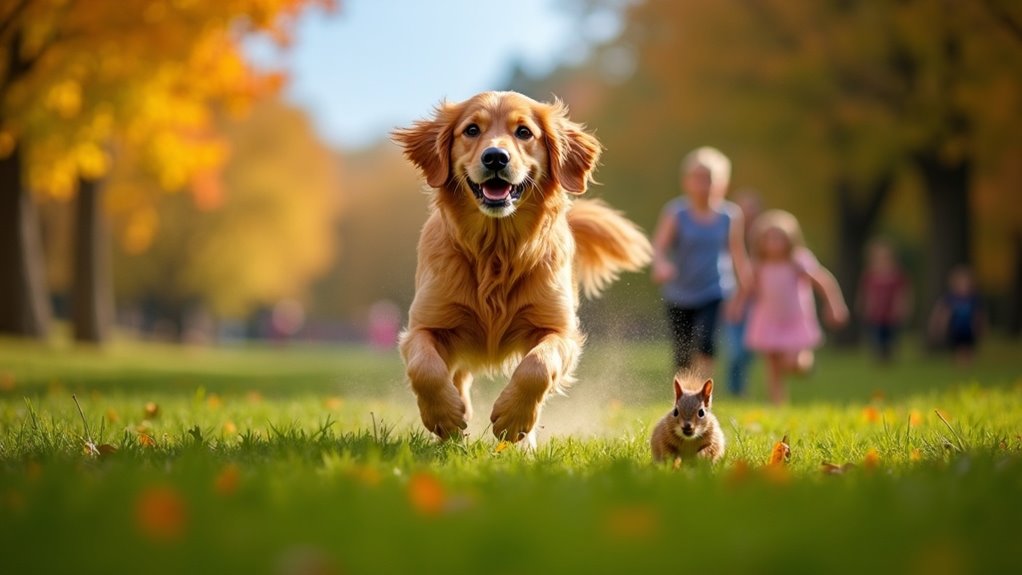
Dogs chase squirrels mainly due to their natural instincts. Their curiosity and playful nature drive them to pursue fast-moving creatures. This behavior also links to their predatory ancestors, who instinctively spotted, chased, and captured prey. Breeds like terriers and sighthounds often have stronger chasing impulses. While this instinct can be fun, it’s essential to manage it for safety. Understanding these behaviors can lead to effective training techniques and engaging activities that keep your dog happy and healthy.
Key Takeaways
- Dogs chase squirrels due to their natural curiosity and instinctive predatory drive, inherited from their ancestors.
- Puppies often view small animals like squirrels as potential playmates, leading to chasing behavior.
- Certain breeds, like terriers and sighthounds, have stronger predatory instincts, making them more prone to chase.
- Chasing behaviors can be managed through training techniques like impulse control and leash training.
- Engaging dogs in structured activities channels their instincts constructively, reducing the urge to chase wildlife.
Curiosity or Playfulness
Dogs are naturally curious creatures, and when they see a squirrel darting across the yard, their instinct often kicks in.
This behavior often stems from their innate curiosity, as young puppies are intrigued by the fast movements of these small animals.
Additionally, dogs may perceive the squirrel’s swift actions as an invitation to play, igniting their instinct to chase.
It’s important to supervise your dog outdoors, as this curiosity can lead them into potentially dangerous situations.
Predatory Drive
While many pet owners may see their dogs chasing squirrels as simply playful behavior, it’s important to recognize that this instinct is rooted in the predatory drive inherited from their ancestors. This drive can manifest through a sequence of actions, from spotting prey to chasing. Different breeds exhibit varying levels of this instinct. Teaching impulse control is essential to guarantee safety for your dog and those around them.
| Behavior | Description | Importance |
|---|---|---|
| Spotting | Noticing quick movements | Triggers predatory drive |
| Chasing | Pursuing the target | Engages natural instincts |
| Training | Redirecting energy through activities | Guarantees safe interactions |
Which Breeds Are the Biggest Chasers?
When it comes to chasing squirrels, certain breeds stand out due to their strong predatory instincts.
Sighthounds like Afghan hounds and Whippets are particularly adept at this behavior, having been bred for speed and agility in pursuit of prey.
Additionally, herding breeds and terriers also showcase a notable drive to chase, reflecting their historical roles and high energy levels.
Predatory Instincts by Breed
Many breeds possess strong predatory instincts that drive them to chase, making certain dogs more likely to pursue squirrels and other small animals.
Here are three breeds known for their notable prey drive:
- Sighthounds (e.g., Afghan Hounds, Whippets) – Bred for speed and agility in dog sports.
- Terriers (e.g., Jack Russells, Airedales) – Tenacious and enthusiastic about chasing.
- Herding Breeds (e.g., Border Collies, German Shepherds) – Instinctively chase to control livestock.
While individual behavior varies, understanding these traits can help you manage your dog’s chasing instincts, ensuring a safe and enjoyable experience during outings.
Sighthounds and Chasing Behavior
Sighthounds, known for their remarkable speed and agility, are among the most enthusiastic chasers of all dog breeds.
Breeds like Afghan hounds and Whippets possess a strong desire to chase, fueled by their keen eyesight and long legs. This predatory drive is instinctively triggered by the quick movements of small animals, such as squirrels, making them irresistible targets.
While sighthounds lead the pack in chasing behavior, remember that any dog can develop this instinct if conditioned to view small animals as exciting.
Understanding these traits helps you better serve and manage your furry friend’s natural inclinations.
Herding Dogs’ Chasing Drive
Although herding dogs like Border Collies and German Shepherds are renowned for their intelligence and versatility, their breeding also endows them with a strong chasing drive. This instinct stems from their history of herding livestock, which necessitates agility and quick movements.
Here are three key reasons why herding dogs tend to chase:
- High Prey Drive: They see small animals like squirrels as intruders.
- Natural Behavior: Their instinct isn’t just to chase but to control movement.
- Individual Differences: Training and temperament can influence chasing tendencies.
With consistent training, you can help channel their energy appropriately.
Can Dogs Be Trained Not to Chase?
Canines can indeed be trained not to chase, but it often requires a dedicated approach, especially if you start early.
Utilizing techniques like leash training and impulse control cues can help redirect their attention away from potential prey.
Your commitment to consistent practice will play a critical role in shaping your dog’s behavior.
Training Techniques Overview
Many dog owners wonder if it’s possible to train their pets not to chase squirrels, and the answer is yes.
Here are three effective training techniques you can use:
- Impulse Training Techniques: Teach cues like “leave it” or “watch me” to redirect your dog’s focus.
- Leash Training: Keep your dog on a leash during walks to maintain control and discourage chasing.
- Positive Reinforcement: Use toys or treats to reward good behavior, enhancing your dog’s motivation to listen.
Consult Professional Dog Trainers for tailored guidance, as success varies by breed and individual behavior, requiring patience and persistence.
Importance of Early Training
Starting training early is key to shaping your dog’s behavior, especially when it comes to chasing squirrels. Initiating training at a young age helps curb impulsive chasing before habits form.
Leash training, along with toys and treats, can effectively redirect your dog’s instincts. Techniques like “leave it” and “watch me” manage their natural drive by refocusing attention on you.
Consistency is essential; regular practice reinforces obedience in distracting situations. While some dogs may adapt quickly, others with stronger predatory impulses might need tailored approaches.
Early intervention not only enhances safety but also strengthens your bond with your furry companion.
How to Keep Chasing Dogs Safe
While it’s natural for dogs to chase squirrels due to their instinctual prey drive, ensuring their safety during these escapades is crucial.
Here are three key strategies to keep your dog safe:
- Leash Up: Always keep your dog on a leash in public areas to prevent escape or injury.
- Use a Harness: A harness offers better control and reduces neck strain during sudden pulls or chases.
- Block Escape Routes: Secure your backyard to minimize the chances of your dog darting off after squirrels.
The Nature of Dogs
Understanding the nature of dogs requires recognizing their deep-rooted instincts and social behaviors, which have evolved over thousands of years from their ancestors, the wolves.
Dogs exhibit instinctual behaviors, including the strong urge to chase, driven by their genetic makeup. This predatory instinct is particularly evident when they encounter squirrels, perceived as exciting intruders in their territories.
Different breeds reflect varying levels of this drive, with hounds and terriers often showing a heightened inclination to chase.
Grasping these instinctual behaviors is essential for effective training, helping you better manage their natural tendencies while fostering a harmonious relationship.
Managing Strong Prey Drive
Managing a dog’s strong prey drive is essential not only for the safety of your pet but also for the well-being of others around you.
Here are three strategies to help you effectively manage this instinct:
- Impulse Control Training: Teach your dog to pause and think before acting, using commands like “leave it.”
- Redirection Techniques: Distract your dog with toys or treats when you notice their prey drive kicking in.
- Structured Activities: Engage your dog in dog sports or games that mimic predatory behavior, providing a safe outlet for their instincts while strengthening your bond.
Positive Aspects of Prey Drive
Prey drive in dogs isn’t just a challenge; it can also be a powerful asset that enhances their lives and enriches their relationships with you.
When you engage your dog in activities like FastCAT or Dock Diving, you allow them to channel their instincts in structured environments. Games such as fetch not only satisfy their prey drive but also reinforce your bond.
Flirt poles offer interactive ways to exercise, showcasing their athleticism while fulfilling their chasing instincts. A strong prey drive promotes mental and physical stimulation, leading to happier, healthier dogs who thrive through active engagement in their natural behaviors.






