
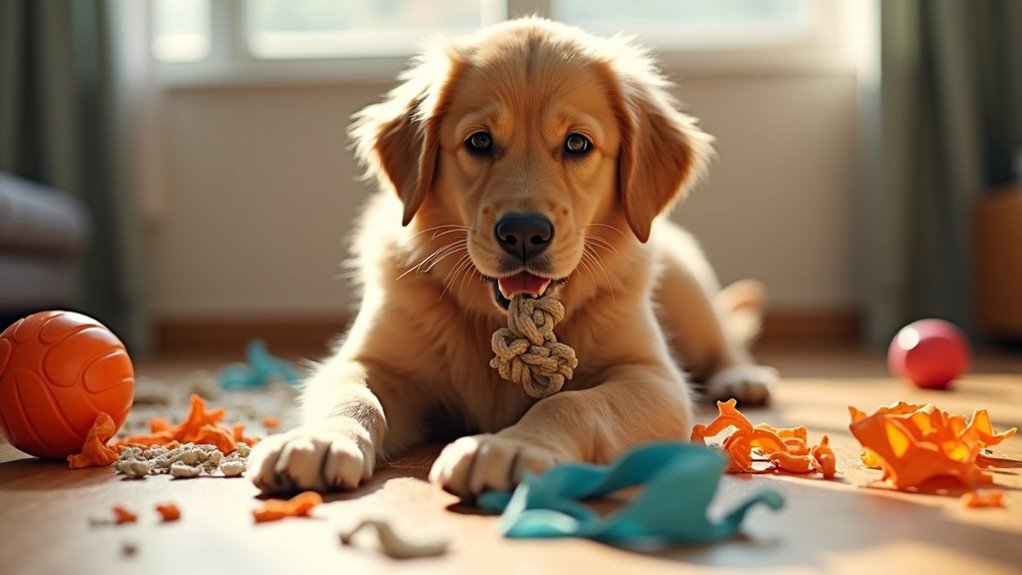
Dogs destroy toys quickly for various reasons, including their need for mental stimulation and the instinctual prey drive to tear apart items. This behavior can also indicate separation anxiety or boredom, especially in high-energy breeds. If the toys aren’t durable enough for your dog’s chewing strength, they’ll break easily. Rotating toys and selecting heavy-duty options can reduce destruction and improve playtime. There’s more to explore about how breed characteristics impact toy durability and behavior.
Key Takeaways
- Dogs destroy toys quickly due to their instinctual prey drive, mimicking ancestral hunting behaviors to disorient prey.
- Aggressive chewers require heavy-duty toys; standard toys can’t withstand their strength, leading to rapid destruction.
- Mental stimulation and fun motivate dogs to tear apart toys, engaging their instincts and providing satisfaction.
- Boredom or separation anxiety can cause dogs to destroy toys as a coping mechanism when left alone.
- Rotating toys and offering variety can maintain interest, reducing the likelihood of quick destruction.
It’s Fun
For many dogs, the sheer joy of tearing apart toys is undeniable. This fun activity provides essential mental stimulation, engaging their instincts as they discover weak points in durable toys.
As your dog shakes, pulls, and dismantles, they experience satisfaction and happiness, reinforcing the desire to destroy toys. The challenge of uncovering seams and squeakers keeps them entertained, mimicking playful ancestral behaviors.
To enhance this enjoyment, regularly rotate toys to maintain novelty and prevent boredom. By understanding this playful nature, you can create an enriching environment that supports your dog’s well-being and happiness through fun and engaging activities.
It Fulfills an Instinctual Prey Drive
While many dog owners might view toy destruction as mere mischief, it actually fulfills a deep-rooted instinctual prey drive embedded in their behavior.
Dogs, particularly those with a high prey drive like Labradors or Terriers, instinctively shake and tear apart toys, mimicking their ancestral hunting techniques. This behavior serves to disorient perceived prey, tapping into their natural instincts.
Dogs with strong prey drives, like Labradors and Terriers, shake and tear toys, echoing their ancestral hunting instincts.
Even gentle lap dogs display this instinctual behavior, showcasing that the urge to destroy isn’t limited to working breeds.
To reduce rapid toy destruction, consider durable dog toys that can withstand their strong chewing ability while satisfying their innate desires.
It’s a Sign of Separation Anxiety or Boredom
When your dog destroys toys, it could signal deeper issues like separation anxiety or boredom.
Recognizing signs of anxiety and finding effective solutions to combat boredom are essential for your pet’s well-being.
In some cases, seeking professional help may be necessary to address these behaviors effectively.
Identifying Separation Anxiety Signs
How can you tell if your dog’s destructive behavior is a sign of separation anxiety or simply boredom? Look for specific signs.
If your dog engages in excessive barking, whining, or pacing when left alone, it may indicate separation anxiety. Destructive behavior, like shredding toys, often serves as a coping mechanism for distressed dogs.
If this behavior occurs only when you’re not home, boredom might also be a factor. Certain dog breeds are more prone to anxiety.
If you suspect severe separation anxiety, seeking professional help from a veterinarian or animal behaviorist is essential for effective management and support.
Addressing Boredom Solutions
To effectively address boredom in dogs, it’s essential to implement strategies that not only entertain but also engage their minds. A bored dog often resorts to destructive behaviors, so providing interactive toys and puzzle feeders can foster mental stimulation.
High-energy breeds, like Retrievers and Beagles, especially benefit from engaging activities that combine physical exercise with cognitive challenges. Regular playtime and structured routines can keep boredom at bay, preventing the urge to chew on toys or household items.
Professional Help Needed
Even with engaging toys and structured routines, some dogs may still exhibit destructive behaviors that signal deeper issues like separation anxiety or unresolved boredom.
If your dog is using destruction as a coping mechanism, it’s essential to recognize the signs. This behavior often intensifies when they’re left alone.
Insufficient mental exercise can exacerbate boredom, leading to further destruction. Identifying the root cause is important; dogs lacking engagement may need professional help.
Expert guidance can provide effective strategies to manage these behaviors, ensuring your furry friend feels secure and stimulated in their environment, ultimately reducing their destructive tendencies.
Your Dog Needs a Heavier-Duty Toy
When your dog is an aggressive chewer, investing in heavier-duty toys becomes essential to prevent destruction and guarantee safety.
Standard toys often can’t withstand the strong jaws of breeds like American Pit Bull Terriers or Rottweilers, leading to safety hazards when they destroy a toy.
Opt for durable options specifically labeled as “heavy-duty” or “indestructible” to assure longevity.
Choose toys marked as heavy-duty or indestructible to ensure they last longer and keep your dog safe.
Interactive toys made from tough rubber or reinforced fabric can engage your dog’s chewing instincts without risking quick destruction.
Regularly assess your dog’s toys and replace them as needed to promote safer playtime and minimize wasteful spending.
The Behavior Is Reinforced
Why do dogs often engage in destructive behavior with their toys? This behavior is often reinforced by the reactions they receive. When you’re around, a puppy may destroy toys and gain your attention, creating a cycle of reinforcement.
Here are some key points to contemplate:
- Positive reinforcement: Dogs associate destruction with affection when you respond positively.
- Scolding: Harsh reactions can increase anxiety, worsening the behavior.
- Play patterns: Encouraging rough play can unintentionally teach your dog to tear toys apart.
To promote healthier play habits, redirect focus and provide consistent training, ensuring your puppy understands acceptable behaviors with toys.
Boredom and Lack of Stimulation
To keep your dog from destroying toys, it’s essential to meet their daily exercise and mental stimulation needs.
Engaging in interactive play alternatives not only satisfies their physical requirements but also provides the mental challenges they crave.
When dogs lack sufficient stimulation, they often resort to destructive behaviors as a way to cope with boredom and excess energy.
Daily Exercise Needs
Although dogs thrive on companionship and interaction, their daily exercise needs are essential in preventing boredom that often leads to destructive behaviors.
High-energy breeds, like Border Collies and Siberian Huskies, require at least 1-2 hours of physical activity daily. Without proper stimulation, your dog may resort to tearing apart toys and chewing on furniture.
To keep them engaged, consider:
- Regular walks or runs
- Engaging activities like agility training
- Puzzle toys that challenge their minds
Interactive Play Alternatives
When dogs lack sufficient mental and physical stimulation, they often resort to destructive behaviors, such as tearing up toys.
To keep your dog entertained and engaged, incorporate interactive play, like puzzle toys and fetch. Activities such as hide-and-seek or tug-of-war fulfill their need for exercise and social interaction.
Regular training sessions challenge their problem-solving skills, redirecting energy away from destructiveness. Rotating toys keeps their interest alive, preventing boredom.
Additionally, daily walks or playdates with other dogs provide essential social interaction, greatly reducing the impulse to destroy toys.
Dogs love engaging activities that stimulate both mind and body.
Breed Characteristics and Chewing Strength
Understanding the breed characteristics that influence chewing strength is essential for dog owners aiming to select the right toys.
Different breeds exhibit varying chewing abilities, which can lead to quicker toy destruction.
Consider the following:
- Breeds like Bull Terriers and American Pit Bull Terriers have powerful jaws, easily damaging softer toys.
- Dogs with higher prey drives, such as Retrievers, tend to engage in vigorous play, leading to faster wear.
- Larger breeds, like Mastiffs, exert significant pressure, necessitating toys with higher durability.
Matching the durability of toys to your dog’s breed and chewing strength can help address their weak spots, prolonging toy life.
The Impact of Toy Selection and Access
Selecting the right toys and managing access to them considerably impacts your dog’s behavior and the longevity of their playthings.
For aggressive chewers, durability is essential; softer toys won’t withstand their strength.
Consider rotating toys to keep your dog engaged, as constant access can lead to boredom and rapid destruction.
Incorporating interactive toys into your selection not only provides mental stimulation but also reduces the likelihood of destructive behavior.






