
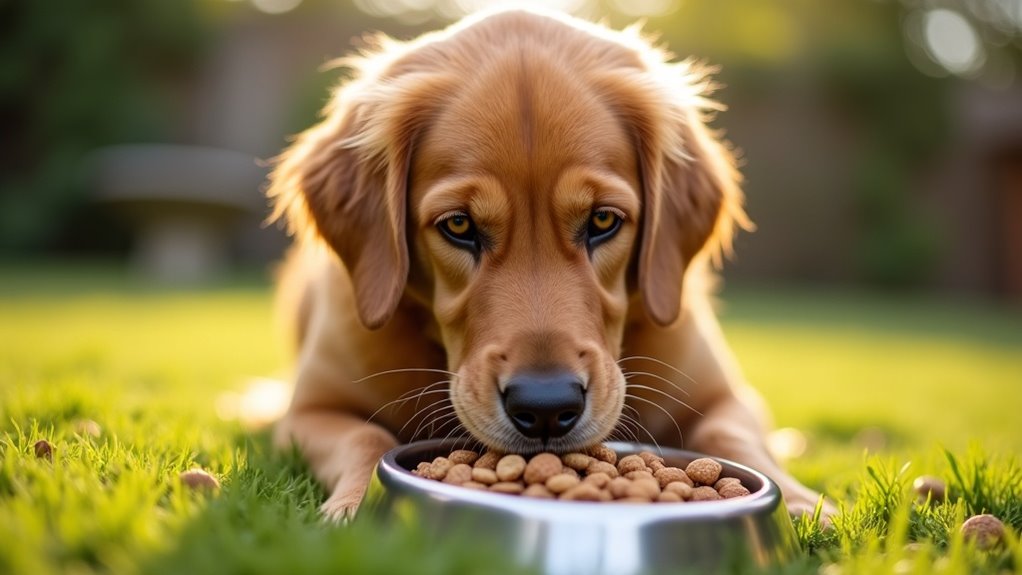
Dogs guard their food bowls due to instinctual survival behaviors rooted in their evolutionary history. This protective response often stems from anxiety or fear around competition for resources. When dogs feel threatened, they may display signs like eating quickly, growling, or stiffening their bodies. Understanding these behaviors is essential for creating a safe environment and managing food guarding. By exploring further, you’ll uncover effective strategies to help your dog feel more secure during mealtime.
Key Takeaways
- Dogs guard food bowls due to instinctual survival behaviors, ensuring access to resources in competitive environments.
- Fear or anxiety from past experiences can trigger aggressive guarding behaviors in dogs.
- Resource guarding often stems from insecurity, especially in situations of scarcity or multi-dog households.
- Warning signs include eating quickly, stiffening bodies, or showing aggression like growling or snapping.
- Early intervention and structured feeding environments can help mitigate food guarding behaviors effectively.
Understanding Resource Guarding in Dogs
When you observe your dog guarding their food bowl, it’s important to recognize that this behavior stems from a natural instinct rooted in survival.
Resource guarding is a protective response, often triggered by fear or anxiety, stemming from past experiences. You might notice warning signs like eating faster or growling if someone approaches.
Such aggressive behavior can escalate, especially in homes with children who may not understand these signals.
The Instinctual Roots of Food Guarding
Although it may seem surprising, food guarding behaviors in dogs are deeply rooted in their evolutionary history, where survival often depended on protecting scarce resources.
These instincts manifest as guarding behavior, ensuring access to food amidst competition. Understanding this can foster empathy for your resource-guarding dog, as they may display signs of aggression out of fear or past insecurities.
Understanding your dog’s food guarding behavior can foster empathy, as aggression often stems from fear or past insecurities.
- Survival instincts drive food guarding
- Resource guarding reflects threat displays
- Growling and body blocking are common behaviors
- Past experiences may influence current behavior
Recognizing these roots can help you support your dog in overcoming their anxieties surrounding food.
Signs of Food Guarding Behavior
Understanding the instinctual roots of food guarding helps clarify the signs that a dog may exhibit when feeling threatened about their resources.
You might notice your dog eating quickly, as if to protect their food. Common signs of guarding behavior include stopping eating when approached, stiffening their body, or giving an intense stare as a warning.
Aggressive behaviors like growling or snapping can occur if their food bowl is disturbed.
Don’t overlook subtle signs, such as sudden stillness or a watchful gaze, as these indicate your dog’s need for space. Recognizing these signs early is crucial for ensuring a safe environment.
Causes Behind Resource Guarding
Resource guarding in dogs often arises from instinctual survival behaviors, rooted in their ancestry.
If your dog feels fearful or insecure—whether due to past negative experiences or changes in routine—they might become protective over their food.
Understanding these causes can help you create a safer environment for your furry friend, reducing their need to guard their resources.
Instinctual Survival Behavior
Dogs guard their food bowls as an instinctual behavior rooted in survival, reflecting a deep-seated need to protect valuable resources from perceived threats. This normal behavior stems from their evolutionary past, where competition for food was fierce.
Here are some key points to take into account:
- Resource guarding can manifest through growling or snapping.
- Past experiences of scarcity can heighten a dog’s guarding instincts.
- Multi-dog households may escalate guarding displays due to perceived competition.
- An insecure environment often triggers more aggressive resource guarding.
Understanding these instinctual behaviors helps you support your dog’s needs and guarantee a harmonious household.
Fear and Insecurity
Fear and insecurity often drive dogs to adopt resource guarding behaviors, creating a barrier between them and a sense of safety. When faced with fearfulness or anxiety, dogs may feel compelled to protect their food. A lack of confidence can heighten this response, especially with disruptions in routine.
| Behavior | Body Language |
|---|---|
| Stiff posture | Ears pinned back |
| Growling | Tail tucked |
| Snapping | Wide eyes |
| Rapid panting | Excessive licking |
| Avoiding eye contact | Low body position |
Understanding these signals can help you support your dog’s emotional needs.
Past Negative Experiences
When a dog has faced negative experiences in the past, it often leads to heightened resource guarding behaviors, especially regarding food. These experiences shape their reactions, making them protective of their food bowls.
Consider the following factors:
- Past confrontational experiences that involved punishment or startling during meals
- Insecurity due to food scarcity or competition in their environment
- Negative interactions, like aggressive approaches or having food taken away
- Fearfulness stemming from previous trauma, prompting them to guard their resources
Understanding these past negative experiences can help you foster a more secure and trusting relationship with your dog.
Prevention Strategies for Food Aggression
To prevent food aggression, you can start by establishing a structured feeding environment that helps your dog feel secure.
Early socialization techniques also play an essential role in teaching your pup to accept human presence around their food.
Early Socialization Techniques
While many dog owners may not realize it, early socialization techniques play an essential role in preventing food aggression in puppies. By fostering positive interactions during feeding, you can help your puppy feel safe and secure around food.
Consider these strategies:
- Hand-feed your puppy to build trust and reduce competition.
- Gradually introduce the food bowl, rewarding relaxed behavior.
- Engage in structured exercises like the All Good Things Game during meals.
- Consistently use positive reinforcement to create pleasant experiences.
Implementing these techniques can greatly reduce food guarding behavior, ensuring your dog maintains a relaxed attitude towards their meals.
Structured Feeding Environment
Creating a structured feeding environment can greatly influence your dog’s behavior around food, especially when it comes to preventing food aggression.
Establish a structured feeding schedule to provide predictability, reducing anxiety related to food guarding.
Utilize physical barriers like crates or baby gates to create a safe space during mealtime, minimizing perceived threats.
Promptly remove empty bowls to discourage possessive behaviors, fostering a sense of security.
Educate family members, particularly children, on not approaching the dog while it eats.
Finally, toss high-value treats near the bowl to help your dog associate positive experiences with human presence during feeding.
Management Techniques for Resource Guarding
Managing resource guarding in dogs requires a thoughtful approach to create a safe and calm environment during mealtimes.
Managing resource guarding in dogs involves creating a safe, calm mealtime environment for your pet.
To effectively implement management techniques, consider these strategies:
- Feed your dog in a separate room to minimize distractions and anxiety.
- Avoid approaching or disturbing your dog while he’s eating; this helps reduce guarding behavior.
- Teach children to respect the dog’s space during meals to prevent misunderstandings.
- After meals, promptly take the bowl away to prevent associations with threats.
Training Approaches to Reduce Aggression
To effectively reduce aggression related to food guarding, it’s essential to implement training approaches that promote positive interactions between your dog and their food bowl.
Start the “All Good Things Game” by tossing high-value treats toward the bowl while your dog eats. Gradually decrease your distance as they become comfortable.
Use a structured training plan, advancing from treats to touching the bowl while offering rewards. Involve all family members to maintain consistency.
If aggression persists, consult a behavior professional; they can offer tailored strategies for managing guarding in dogs, ensuring a happier, more relaxed feeding experience for everyone involved.
Tips for Creating a Safe Feeding Environment
Establishing a safe feeding environment is essential for reducing food guarding behaviors in dogs, as it helps them feel secure and less anxious during mealtime.
To create this environment, consider these tips:
- Set designated feeding times for structure and predictability.
- Use physical barriers like crates or baby gates to guarantee a safe space while eating.
- Avoid approaching your dog during meals to respect its space and decrease aggressive reactions.
- Remove the food bowl promptly after your dog finishes to reinforce that its food source is dependable and secure.
These steps foster a positive mealtime experience for both you and your dog.






