
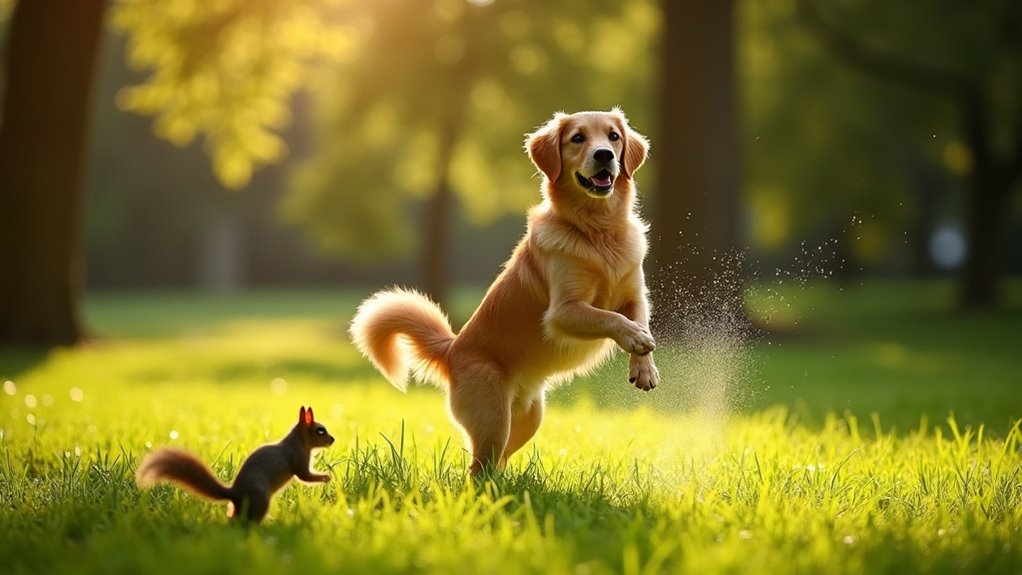
Dogs kick grass after pooping primarily to mark their territory. This behavior releases pheromones from their paw pads, conveying essential information about their identity and health to other dogs. It also serves as a visual signal, indicating claimed areas and reinforcing social etiquette after elimination. This instinctual action enhances communication among canines, presenting a way for them to assert dominance and confidence. Discovering the nuances of this behavior can deepen your understanding of your dog’s instincts.
Key Takeaways
- Dogs kick grass after pooping to communicate with other canines using scent markers from their paw pads.
- This behavior releases pheromones that convey identity and health information to other dogs.
- Ground-scratching reinforces social etiquette by signaling claimed areas, especially after defecation.
- The kicking motion can indicate dominance or confidence, particularly in higher-ranking dogs.
- Redirecting this behavior through training can help manage kicking while maintaining the dog’s natural instincts.
Understanding Ground-Scratching Behavior
When observing your dog kick grass after pooping, it’s essential to recognize this behavior as a natural instinct rooted in communication.
This ground-scratching behavior is a visual and olfactory signal that dogs exhibit, primarily to mark territory and communicate their presence to other canines.
Dogs engage in ground-scratching as a vital way to mark territory and communicate with fellow canines.
As your dog scratches the ground, it activates pedal scent glands in their paws, dispersing pheromones that convey important information about social status and territorial boundaries.
Notably, approximately 9% of dogs display this behavior, with senior shelter dogs showing a higher prevalence, emphasizing its significance in canine social interactions rather than an attempt to bury feces.
The Role of Scent in Communication
When your dog kicks grass after pooping, it’s not just a quirky habit—it’s a critical part of their communication strategy.
The pheromones released from their paw pads during this behavior serve to mark territory and convey specific messages to other dogs in the area.
Understanding this scent-based communication can enhance your awareness of how your dog interacts socially within its environment.
Pheromone Release Mechanism
Although it may seem like a simple act, dogs’ tendency to kick grass after pooping plays an essential role in their communication through scent.
When dogs kick and scratch the ground, they activate specialized glands in their paw pads, releasing pheromones that enhance scent marking. This pheromone release is vital for conveying information about their territory, as the scent lingers longer than urine or feces.
Each pheromone communicates unique messages, enriching social interactions among dogs. You might notice that dogs engage in this behavior more frequently in the presence of others, underscoring its importance in social signaling and communication.
Territory Marking Behavior
Understanding territory marking behavior in dogs reveals the intricate ways they communicate through scent.
When dogs kick grass post-defecation, they engage in marking their territory by spreading pheromones from scent glands in their paws. This ground-scratching action creates a unique scent trail, signaling their presence and boundaries to other dogs.
Each dog’s pheromone signature conveys essential information about identity, reproductive status, and health.
Significantly, about 9% of dogs exhibit this behavior, especially in familiar areas or around other dogs, highlighting its social significance.
Visual Signals in Canine Interactions
When dogs kick grass after pooping, they’re not just being playful; they’re communicating through visual signals.
This ground-scratching behavior creates markers that convey important information about their identity and territory to other dogs.
You’ll notice that this action often follows defecation, reinforcing social interactions and etiquette among canine populations.
Ground-Scratching as Communication
Ground-scratching after pooping serves as a crucial visual signal in canine communication, allowing dogs to convey their presence and assert their territory. This behavior not only scratches the ground but also enhances the scent of urine, further informing other dogs nearby.
Consider these key aspects:
- Identity Communication: The patterns left can indicate the dog’s identity and status.
- Social Interaction: Dogs engage in this behavior more frequently when other canines are present, showcasing its role in social dynamics.
- Territorial Marking: Ground-scratching traces back to wild canids, marking territory and communicating rank and health.
Visual Marking for Territory
Canines utilize visual marking as a fundamental aspect of their territorial behavior, especially after pooping. When your dog kicks the ground, it’s not just a quirky habit; it’s a deliberate act of marking territory.
The kicking motion creates visual slashes, signaling to other dogs that this area has been claimed. You’ll notice this behavior more in familiar settings, such as parks or yards, where dogs assert their presence.
Often observed alongside other dogs, this behavior communicates dominance or confidence, particularly in higher-ranking individuals. By kicking, your dog reinforces its status, establishing boundaries within its environment.
Factors Influencing Kicking Behavior
Although many dogs engage in kicking behavior after pooping, several factors influence the frequency and context of this action.
Understanding these factors helps you better appreciate your dog’s instincts:
- Dogs may kick to communicate using pheromones released from their paw glands.
- The presence of other dogs can heighten this behavior, as they mark their territory.
- Older dogs in shelters tend to kick more frequently, indicating that social environment and age play a role.
Reasons for Kicking After Pooping
Kicking grass after pooping is a behavior rooted in instinct and serves multiple purposes for dogs. When they kick their hind legs, they engage in ground-scratching, a natural form of communication. This action helps spread their scent, marking territory with pheromones from their paw pads. Additionally, it can serve as a way to cover their feces, inherited from their wild ancestors to evade predators. This animal behaviour is observed in both male and female dogs equally, highlighting its universal nature.
| Purpose | Description | Example |
|---|---|---|
| Marking Territory | Spreading scent to signal presence | Kicking near other dogs |
| Communication | Social display among canines | Ground-scratching |
| Hiding Waste | Instinctively covering feces | Ancestral behavior |
When to Be Concerned About Ground-Scratching
While ground-scratching is a natural behavior for dogs, it’s important to recognize when it may signal underlying issues.
As dog parents, you should be alert for the following signs:
- Damage to your dog’s paw pads, like soreness or bleeding
- Excessive ground-scratching leading to discomfort or injury
- Ground-scratching accompanied by signs of anxiety or stress
If you notice any of these symptoms, it’s essential to seek veterinary attention.
Monitoring your dog’s scratching habits can help identify any potential health concerns, ensuring their well-being and preventing property damage.
Don’t hesitate to consult professionals when needed.
Training Techniques to Curb Kicking
To effectively address your dog’s kicking behavior after pooping, implementing specific training techniques can be essential.
To stop your dog from kicking, redirecting their focus with treats or toys can greatly minimize this behavior. Teaching incompatible actions, like targeting or heeling, offers alternatives that you can reward instead of ground-scratching.
Short jogs away from the elimination area can also distract dogs from the urge to kick. Designating specific spots for ground-scratching and rewarding dogs for using those areas helps protect your property.
Consistent training through programs like the Canine Good Citizen (CGC) can further manage and curb excessive kicking behavior.
Additional Resources for Dog Owners
As you seek to better understand your dog’s behaviors, a wealth of additional resources is available to help you navigate canine communication and care.
Explore a wealth of resources to deepen your understanding of your dog’s behavior and improve your communication skills.
Consider exploring:
- Downloadable e-books on canine behavior and communication.
- Access to local Canine Good Citizen (CGC) evaluators for effective training.
- Educational articles on dog body language and anxiety management.
These resources provide expert advice, enhancing your understanding of dog behavior and strengthening your bond.






