
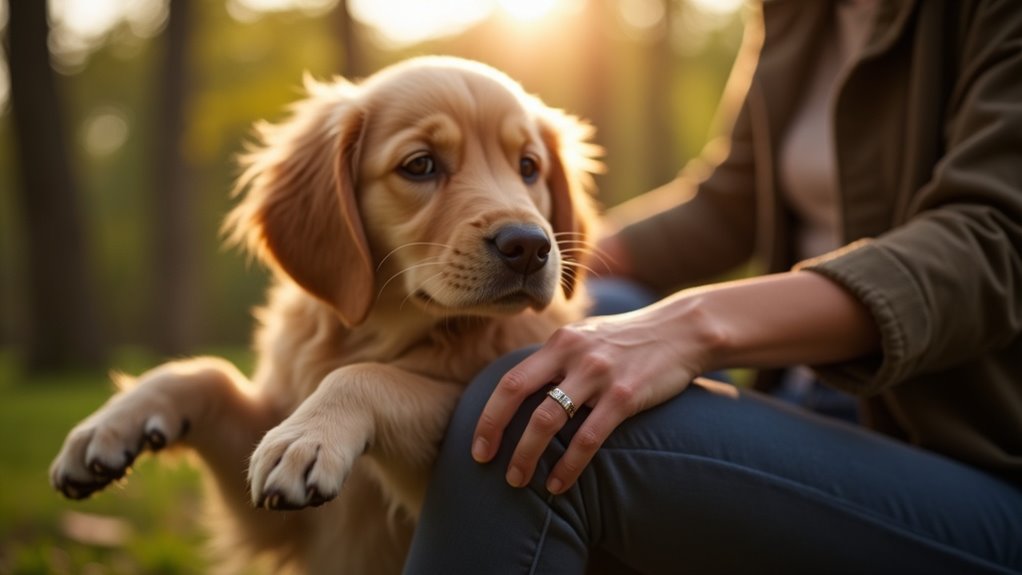
Dogs paw at people for several reasons. They might want your attention, signal that they need to go outside, or express hunger. Pawing can also be a sign of affection or anxiety. In some cases, it may indicate health issues if your dog is persistent or changes their pawing habits. Understanding these behaviors helps you respond to your dog’s needs effectively. If you’re curious about the specific meanings behind their pawing, there’s more to discover about these signals.
Key Takeaways
- Dogs paw at people to communicate needs such as hunger, affection, or a desire for attention.
- Pawing often signals a need for a bathroom break, especially near doors.
- This behavior can express love and comfort, strengthening the bond between dog and owner.
- Anxious pawing may indicate fear or discomfort, requiring attention to the dog’s emotional state.
- Pawing can also signal health issues if it becomes persistent or changes suddenly.
They Want Your Attention
One of the main reasons dogs paw at you is to get your attention. This behavior serves as a direct way for your dog to communicate its needs, whether it’s for food, play, or affection.
When you respond positively, your dog learns that pawing is an effective method to gain interaction, reinforcing this behavior.
Observing the context of pawing can reveal specific desires, such as companionship or stimulation. Understanding that this action is a form of body language helps you respond appropriately, ultimately strengthening the bond between you and your dog while meeting their emotional and physical needs.
They Need To Go Out
When your dog starts pawing at you, it’s often a clear signal that they need to go outside for a bathroom break. This behavior is their way of trying to communicate urgency, especially if they stand by the door or whine.
As pet parents, recognizing this pawing can help prevent indoor accidents and maintain a regular bathroom routine. Dogs may learn that pawing leads to being let out, reinforcing this action.
Understanding the context—like after meals or play—enhances your dog training efforts, allowing you to respond promptly to their needs and strengthen your bond.
They’re Hungry
Dogs often paw at you when they’re hungry, using this behavior to signal their desire for food or treats. This action often develops as dogs learn that pawing leads to receiving rewards.
If your dog shifts from barking to pawing, it shows they’ve figured out that pawing is a more effective way to communicate their hunger. This behavior can become routine during mealtimes, where they paw to express their needs.
Recognizing this signal is essential for maintaining a healthy feeding routine and preventing the reinforcement of unwanted pawing behavior. Understanding your dog’s needs helps you serve them better.
They’re Showing Their Love
When your dog paws at you, it’s often their way of expressing love and affection.
This behavior is rooted in their instinct to seek physical connection, similar to how they interacted with their mothers as puppies.
Affectionate Behavior
Affectionate behaviors, like pawing, reveal a dog’s deep emotional connection with you.
When your dog rests its paws on your body, it’s not just seeking attention; it’s offering comfort and emotional support. This pawing is rooted in the release of love-inducing neurotransmitters, strengthening your relationship.
Your dog senses your feelings, responding to moments of sadness or loneliness with their affectionate behavior. Recognizing this gesture of love helps you understand their emotional needs, fostering a deeper bond.
Each touch of those dog paws is a reminder of the unique connection you share, reinforcing the love and trust between you both.
Strengthening Bonds
While it might seem like a simple gesture, pawing serves as a profound way for your dog to express love and strengthen your bond. Your dog’s paw resting on you signifies comfort and affection, deepening your emotional connection.
This behavior releases neurotransmitters like serotonin and oxytocin, enhancing feelings of trust and security between you. Responding positively, through petting or cuddling, reinforces this companionship, showing your dog that you appreciate their affection.
They’re Anxious
Dogs often paw at people as a way to express their anxiety or fear, especially in situations that trigger stress. This dog pawing can signal emotional changes, such as heavy breathing or pacing, indicating your furry friend is anxious.
They may respond to your own stress by reaching out, seeking comfort and reassurance. Common triggers include loud noises or sudden changes in their environment.
They Need Veterinary Care
When a dog paws at you, it might be more than just a playful gesture; it could signal that they need veterinary care.
Persistent pawing, especially at a specific area, often indicates pain or discomfort, urging you to investigate further. This behavior may also reflect distress, serving as an essential form of communication from your furry friend.
Sudden changes in their pawing habits can be significant indicators of underlying health issues that warrant immediate attention.






