
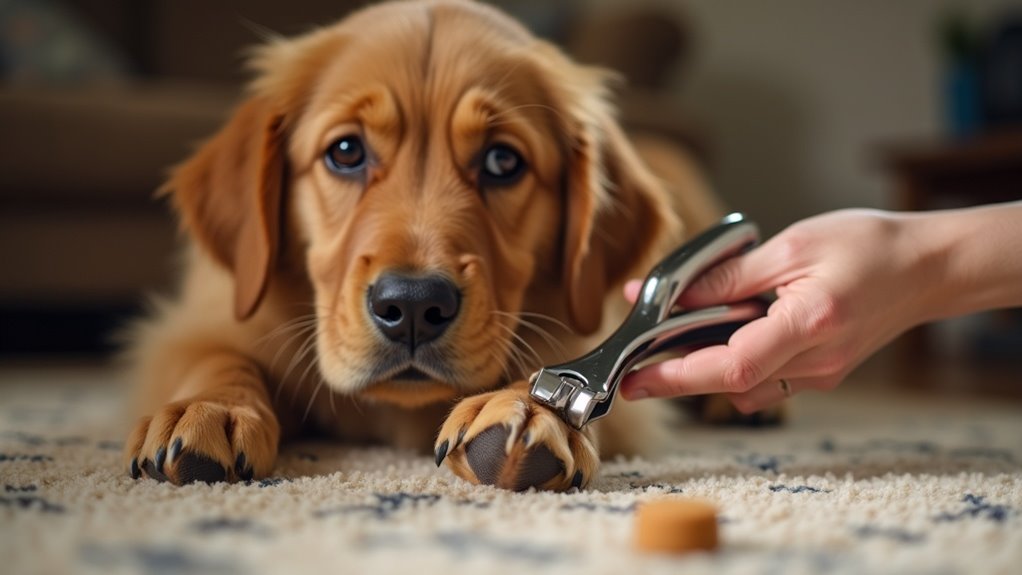
Many dogs resist nail trims due to fear and discomfort. Past negative experiences can create them, along with the sensitivity of their paws. When dogs feel restrained, it can trigger anxiety and a fight-or-flight response, making the process even harder. You might notice signs like pulling away or whining. Understanding these behaviors can help you approach nail trims more effectively. If you’re curious about ways to ease this anxiety, there’s more you can discover.
Key Takeaways
- Dogs often resist nail trims due to fear or discomfort from past negative experiences with clippers.
- Sensitive nerves in their paws can heighten their perception of pain during trimming.
- Signs of anxiety, such as pulling away or whining, indicate discomfort during the process.
- Physical restraint during nail trimming can trigger fight-or-flight responses, complicating the experience.
- Building a positive association with nail trims through gradual desensitization can help reduce resistance.
Understanding the Fear of Nail Trims
When you attempt to trim your dog’s nails, you might notice their resistance often stems from fear or discomfort rooted in past experiences.
Many dogs associate nail clippers with pain, especially if they’ve had their quick cut too short before. The sensitive nerves in your dog’s paws heighten this fear, making them perceive any handling as a threat.
Watch for signs like pulling away, whining, or shaking; these body language cues indicate anxiety.
The Role of Restraint in Nail Trimming
While it might seem necessary to restrain your dog during nail trims to secure safety, doing so can actually exacerbate their stress and anxiety. Instead of creating a comfortable environment, it can lead to a fear response that complicates future grooming.
Consider these three points:
- Restraint can trigger a fight-or-flight reaction, making nail trimming harder.
- It may damage the trust between you and your dog, leading to lasting behavioral issues.
- Cooperative care strategies promote comfort, allowing your dog to feel safe while you trim nails.
Ultimately, your goal is to guarantee your dog is comfortable and trusts you during the process.
Benefits of Cooperative Care for Nail Trims
Cooperative care for nail trims not only alleviates your dog’s anxiety but also fosters a deeper bond between you and your furry friend.
By allowing your dog to participate in nail trimming, you enhance their trust and create a more positive grooming experience. When dogs feel they’ve agency over their bodies, they’re calmer and more compliant, leading to smoother sessions.
Research shows minimizing physical restraint lowers stress levels, ultimately benefiting their mental health.
Regularly practicing cooperative care methods improves your dog’s comfort and establishes a routine that contributes to their overall wellness and strengthens your relationship.
Gradual Desensitization Techniques
To help your dog feel more comfortable with nail trims, implementing gradual desensitization techniques is essential.
Start by gently touching your dog’s paws during relaxed moments to acclimate them to having their feet handled.
Next, allow your dog to sniff the clippers to create a non-threatening association.
Finally, begin trimming a small amount of nail, rewarding with treats and praise immediately after.
- Touch paws gently to build trust.
- Introduce clippers through sniffing.
- Reward after each small nail trim.
These steps will help reduce anxiety for both you and your dog during trimming sessions.
Building a Positive Experience for Nail Care
Creating a positive experience around nail care can greatly enhance your dog’s comfort during trimming sessions. Start by establishing a calm environment, introducing nail clippers slowly, and using treats to create positive associations. Employ positive reinforcement consistently, rewarding your dog for calm behavior. Break the trimming into manageable segments, trimming only a few nails each session. This approach helps reduce anxiety and builds a more enjoyable experience.
| Step | Action | Reward |
|---|---|---|
| 1 | Gentle paw handling | Treats |
| 2 | Introduce clippers | Calm praise |
| 3 | Sniff and examine tools | High-value treats |
| 4 | Trim a few nails | Extra playtime |
| 5 | Celebrate completion | Special treat |






