
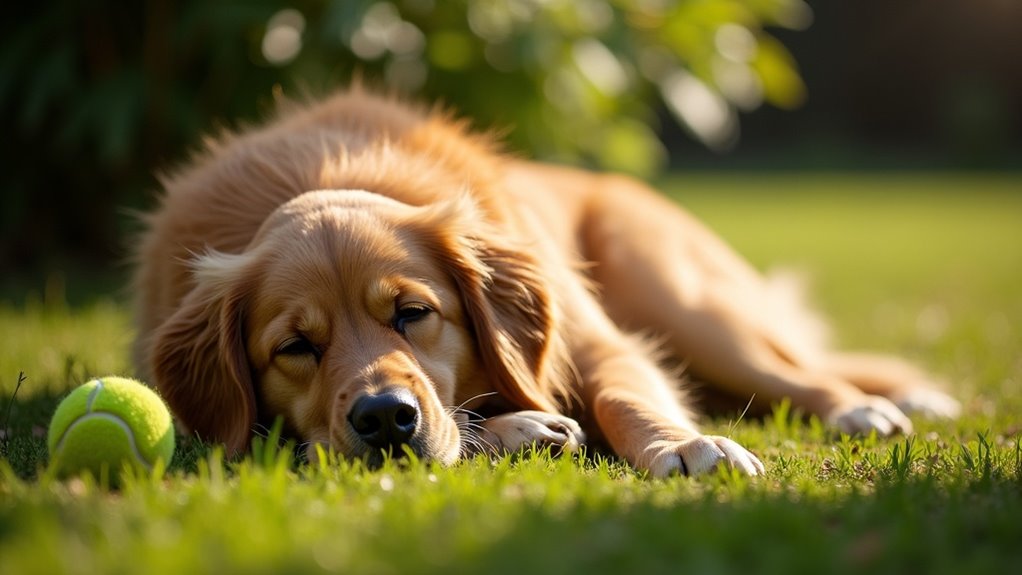
Dogs sleep a lot due to factors like age, breed, and health. Adult dogs typically sleep 12-14 hours daily, while puppies may need 18-20 hours for growth. Larger breeds often require more rest, while working dogs sleep less due to higher activity levels. Environmental influences, like temperature and routine, also affect sleep patterns. If you notice changes in your dog’s sleep, it might indicate health issues. Discover more about your dog’s sleep needs and patterns ahead.
Key Takeaways
- Dogs sleep extensively to support their growth, especially puppies who need 18-20 hours for development.
- Adult dogs typically sleep 12-14 hours daily, influenced by their activity levels and overall health.
- Larger breeds generally require more sleep due to higher energy demands compared to smaller breeds.
- Environmental factors, such as temperature and routine stability, significantly affect dogs’ sleep patterns and quality.
- Sleep helps dogs recover from daily activities and maintain their mental and physical well-being.
How Long Do Dogs Sleep Each Day?
On average, adult dogs sleep about 12 to 14 hours each day, balancing nighttime rest with daytime naps.
Puppies, however, require more sleep, often resting 18 to 20 hours daily to support their rapid growth.
As dogs age, senior dogs typically prefer to rest more, which can lead to increased sleep durations.
Dogs generally spread their sleep throughout the day, taking multiple short naps rather than one long stretch.
It’s essential to recognize that total sleep duration can vary based on individual factors such as age, breed, health status, and activity levels, with some dogs sleeping as much as 16 hours daily.
Factors Influencing Sleep Duration
While many might assume that all dogs need a similar amount of sleep, several factors greatly influence how long your canine companion rests each day.
Age plays a significant role; puppies often sleep 18-20 hours for growth, while senior dogs may sleep more due to age-related changes.
Age significantly influences a dog’s sleep patterns, with puppies needing 18-20 hours for growth and seniors resting more due to aging.
Breed also impacts sleep duration, with larger breeds requiring more rest than smaller ones, and working dogs needing less due to higher activity levels.
Additionally, health status, like diabetes or depression, can affect sleep.
Finally, a balanced diet is essential, as a nutrient-deficient diet can lead to fatigue and increased sleep, influencing energy levels.
The Impact of Life Stage on Sleep
As your dog progresses through different life stages, their sleep needs evolve greatly.
Puppies require 18-20 hours of sleep daily, supporting their rapid growth, while adult dogs typically sleep about 12-14 hours.
Senior dogs often sleep more, with altered sleeping patterns possibly indicating health issues.
- Puppies: 1 hour of sleep per month of age plus one.
- Adult dogs: Sleep spreads between nighttime and daytime naps, influenced by daily activity.
- Senior dogs: Monitor for significant changes in sleep patterns, as they may signal cognitive dysfunction or other health problems.
Understanding these changes guarantees you meet your dog’s sleep needs effectively.
Breed-Specific Sleep Requirements
Understanding breed-specific sleep requirements is essential for ensuring your dog’s well-being, since each breed has distinct characteristics that influence their sleep patterns.
Larger breeds typically need more sleep than smaller ones, as their energy demands and size affect overall duration. Working dogs, however, often sleep less due to higher activity levels.
Additionally, older dogs require extra rest to maintain their health, as age can exacerbate issues like cognitive dysfunction.
Environmental Influences on Sleep Patterns
Breed-specific sleep requirements aren’t the only factor affecting how much your dog sleeps; environmental influences play a significant role as well.
Breed-specific sleep needs are important, but environmental factors also greatly impact your dog’s sleep patterns.
Consider these key aspects:
- Temperature: Extreme heat can increase your dog’s sleepiness, prompting longer sleep durations.
- Calm Environment: A familiar, tranquil space enhances sleep quality, reducing anxiety and promoting deeper rest phases.
- Routine: Consistent daily activities help establish a stable sleep pattern, allowing your dog to acclimate effectively to their environment.
Recognizing Signs of Health Issues Through Sleep
While many dogs enjoy lengthy naps, significant changes in their sleep patterns can signal underlying health issues.
If you notice your dog exhibiting excessive sleep or a sudden change in sleeping habits, it’s essential to monitor their behavior closely. Regular monitoring can help you detect signs of restlessness or lethargy when awake, which may indicate discomfort or medical problems.
Dogs sleeping more than their typical 12-14 hours, particularly with symptoms like loss of appetite or isolation, should be evaluated by a veterinarian. Early detection is important for ensuring your dog maintains good health and well-being.






